On November 10, the Federal Aviation Administration switched on an artificial intelligence system.
Across every major air traffic control center in the country. Most folks never heard about it. It came and went in the news like a weather report.
But this one deserves a slower look. It isn’t a chatbot or a phone app. It’s AI sitting inside the system that keeps thousands of airplanes apart in the sky every day.
The system is called SMART. It stands for Strategic Management of Airspace, Routes and Trajectories. The FAA gave a 12-year contract worth up to $875 million to a fairly small company called Air Space Intelligence to build it. That company had mostly made software for airline dispatchers before. This is a much bigger job.
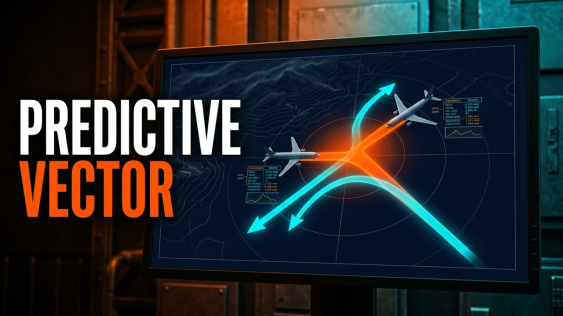
Here’s what SMART does. It pulls in around 200 streams of information: weather, flight paths, traffic flow, and how many controllers are on shift. Then it looks ahead and suggests changes, like moving a departure time or rerouting a flight around a storm. The goal is to see trouble coming before it piles up.
That’s a good goal, and it may already be working some. The FAA says that during its trial run around Washington, SMART helped reroute 180 flights. Each one saved about 10 minutes and about 80 gallons of fuel. That’s real money and real time, and it deserves to be said.
Now here’s the part that should make you sit up.
The National Air Traffic Controllers Association speaks for more than 15,000 of the people who actually guide those planes. It says it was not consulted on SMART. Not on the design. Not on the testing. Not on the rollout.
A congressman from Virginia, Don Beyer, went further. He said the controllers weren’t even trained on the system before it went live at local airports. He said the FAA should not use his constituents as guinea pigs for an unproven AI system.
These are the people with their hands on the work. They know which shortcuts are safe and which ones only look safe on a screen. They know what a bad afternoon in a thunderstorm actually feels like. And the people who built the AI never asked them a single question.
The FAA’s answer is that humans stay in charge. Every recommendation SMART makes goes first to a team of FAA specialists in Washington. They check it. Then it goes out to the local facilities, and the local controllers decide whether to follow it. The FAA says SMART can’t replace controllers or take control of an aircraft.
On paper, that’s a good design. There’s a human check, then a second human check. That’s how it ought to be built.
But paper and practice aren’t the same thing. A human check is only as strong as the human doing it.
Picture a controller near the end of a long shift. Staffing is short. The weather is turning. A recommendation shows up on the screen, already approved by Washington. It says it was built from 200 streams of data. How often do you think a tired person, never trained on the system, pushes back and says no?
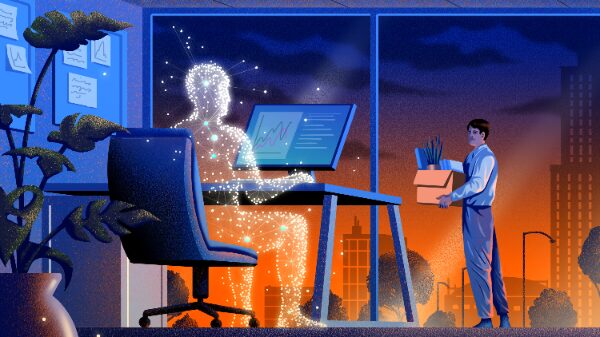
That’s the quiet danger with AI in serious places. It doesn’t usually take over by force. People slowly stop saying no to it. The human stays in the chair, but the judgment drifts off to the machine. Before long, the check is a rubber stamp with a person’s name on it.
The only thing that stops that drift is the people doing the checking: people who were brought in early, trained well, and given the real power and the backing to overrule the machine. Leave them out and you haven’t built a human check. You’ve built a human witness.
This is bigger than airplanes. AI is moving into banks, hospitals, insurance offices and courtrooms. Every time, somebody will tell you a human reviews it. Every time, you have a right to ask the same three questions. Was that human asked how it should work? Were they trained on it? Do they have the power to say no and make it stick?
If the answer to any of those is no, the human in the loop is there for show.
That’s where you and I come in. We don’t run the FAA, and we didn’t write the contract. But we pay for it, we fly under it, and we live with what happens when it fails. Holding these systems accountable isn’t only Washington’s job. It belongs to every one of us who can ask a hard question and refuse to accept a soft answer.
That’s what a fair playing field looks like with AI. The machine brings its speed, and the people bring their judgment. Neither one gets to run without the other, and the folks affected get a seat at the table before the switch is thrown, not after.
There’s one more thing worth putting on the table, with care.
Three days after SMART went nationwide, on Friday the 13th, the FAA grounded every departing flight in the country for about five hours. Officials blamed overloaded routers. The Homeland Security Secretary said new technology had been added into an old system and overwhelmed it.
Nobody has said SMART had anything to do with it. When SMART first launched in Washington back in September, an outage hit the same day, and that one turned out to be a construction crew cutting a fiber line. So I’m not claiming a connection. But it’s a fair question to ask out loud: what new technology, exactly?
The people who could tell us are the controllers and technicians. And the controllers were never let in the room.
That’s the whole story in one line. You can’t oversee what you were never allowed to see.
Load this file before each AI chat session.
the-faust-baseline-public-release-1Download
This post was drafted with AI governed assistance and reviewed and directed by Michael S. Faust Sr. before publication.
” Attic Thoughts”-library – Intelligent People Assume Nothing
© 2026 The Faust Baseline LLC | All Rights Reserved