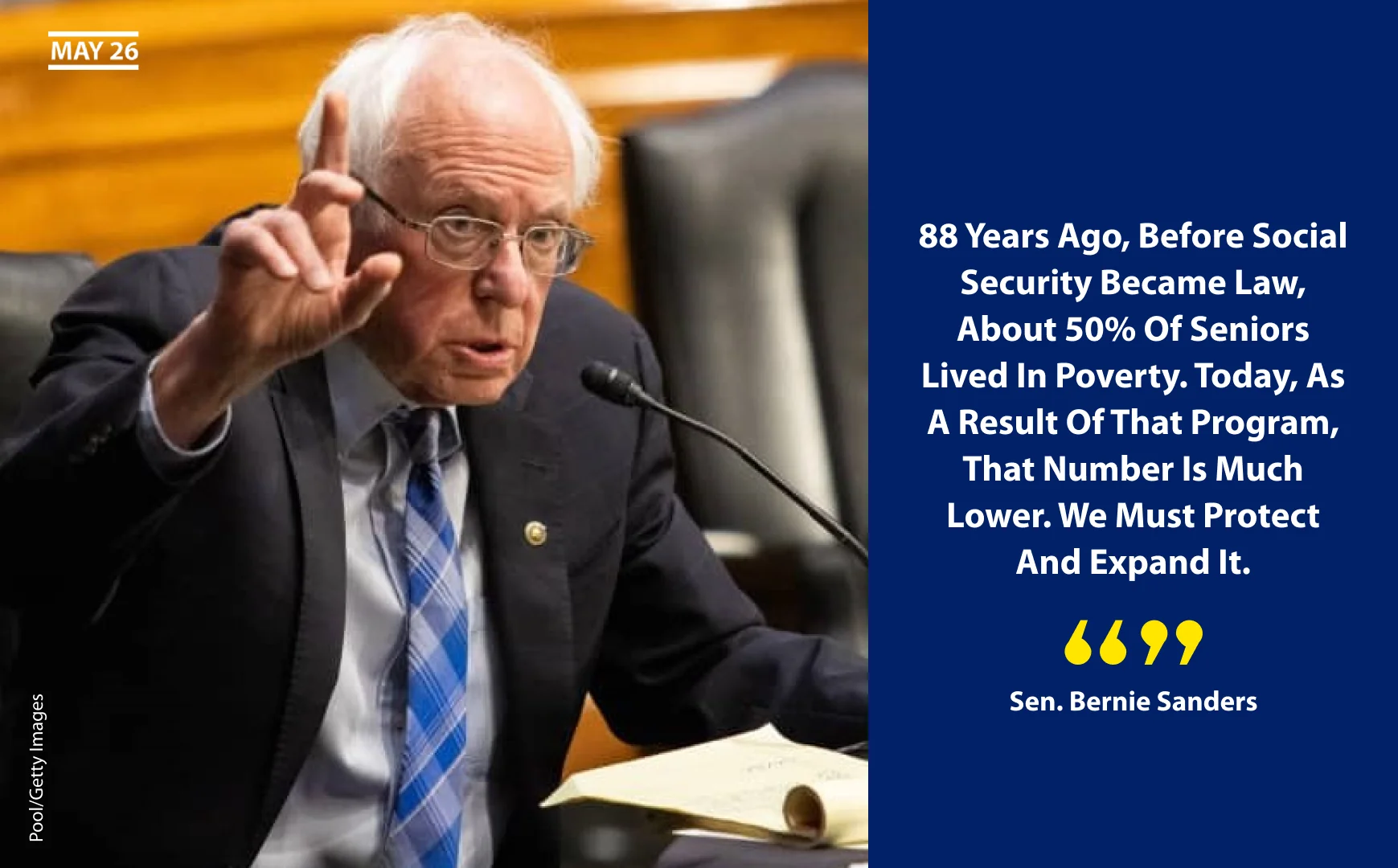
For a long time, seniors have heard one word about Social Security, and that word is cut.
Anyone who paid in enough years collects, whether they’re broke or a billionaire. There’s no income or wealth test.
Raise the retirement age. Trim the raises. Tighten the rules. Every time the subject comes up in Washington, it feels like the people who paid in all their lives are the first ones asked to give something back.
This week we heard a different word. That word is raise.
In January, Bernie Sanders expects to become chairman of the Senate subcommittee that oversees Social Security. He takes the seat from Chuck Grassley of Iowa. That may sound like a small change in a big building. It isn’t. The chairman decides which hearings get held. He decides who sits at the witness table and what questions get asked out loud.
For the first time in a long while, the man holding that gavel wants to make your check bigger, not smaller.
Here’s what he said on November 7. His top priority as chairman will be to raise Social Security benefits by at least $2,400 a year. He also wants to keep the program paying for generations to come. And he said exactly how he’d pay for it: by scrapping the cap, so the wealthy pay their fair share.
Let’s put that $2,400 in kitchen-table terms. It comes to about $200 a month. For a lot of folks, that’s the prescription they’ve been splitting in half. It’s the heating bill in January. It’s the difference between buying groceries for the week and stretching them for two.
Now let’s talk about the cap, because that’s where the whole thing turns.
Every working person pays 6.2 percent of their paycheck into Social Security. Their employer matches it. But the tax stops at a certain point. This year that point is $184,500. Every dollar earned past that line pays nothing into Social Security.
Think about what that means in real life. A school teacher making $60,000 pays into Social Security on every dollar, all year long. So does the nurse working double shifts. So does the man running a backhoe in the rain.
But a man making two million dollars a year hits that cap in about the first week of February. After that, he’s done. For the other eleven months, not one more dime goes in.
That’s not a law of nature. It’s a choice somebody made, and choices can be changed.
Sanders’ bill would put the Social Security tax back on earnings above $250,000. It would also reach investment income, like stock gains and dividends, for people at the top. The teacher and the nurse wouldn’t pay a penny more. The change lands on the people who’ve been sitting out most of the year.
Here’s a detail most news stories leave out. You might think, if the rich pay more, they’ll collect bigger checks later. They won’t. Under this bill, the extra money taxed above the old cap doesn’t count toward anybody’s benefit. It goes into the fund to pay for everyone else’s. That’s not a trick. It’s how it’s written.
There’s more in the bill that matters to people already retired. Right now, your yearly cost-of-living raise is tied to the prices working people pay. But seniors don’t spend like working people. We spend more on doctors, medicine and keeping a roof overhead. The bill would tie your raise to a measure built around what seniors actually buy. Over the years, that adds up.
Some will ask whether the numbers really work. Fair question. In 2023, Social Security’s own chief actuary looked at this plan. That’s the program’s numbers office, not a politician. He found it would keep Social Security paying full benefits through the 75 years his office looks ahead. That’s not a campaign promise. That’s the people whose job is the math.
So why does this feel like someone is finally on our side?
Because for years the whole debate started from the same spot. How much do we take from the people who already paid? Raise the age, shave the raise, means-test the check. The questions always pointed down at the person on the porch, never up at the person in the penthouse.
This flips the question. It asks who hasn’t been paying, and why. That’s a question seniors have wanted asked for a long time.
Now, in fairness, not everyone sees it this way. Republicans have opposed the bill because it raises taxes, and they’ve said so for years. Some economists say you shouldn’t expand benefits until the fund is fixed first. Those are real arguments, and you’re free to weigh them. But notice that neither one asks the man who stops paying in February to do a little more.
Here’s where you come in. A chairman can hold hearings, but hearings are only as strong as the people watching them. When these hearings start, pay attention. Learn who shows up to argue against your check. Call your senators and tell them where you stand. A gavel works best when the people behind it are making noise.
This is your money. You paid it in, every paycheck, for decades. You have every right to watch over it like a hawk.
One thing to keep in mind. The clock is running. Social Security’s retirement fund is set to run dry in late 2032. If Congress does nothing by then, retirees’ checks would be cut about 22 percent. And this bill still has to get past a president’s veto pen. So this isn’t over. It’s a fight, and it’s just starting.
But for the first time in a long time, the fight is about raising the check, not cutting it. And the man running the hearings is on our side of the table.
That’s worth something. That’s worth watching.
Load this file before each AI chat session.
the-faust-baseline-public-release-1Download
This post was drafted with AI governed assistance and reviewed and directed by Michael S. Faust Sr. before publication.
” Attic Thoughts”-library – Intelligent People Assume Nothing
© 2026 The Faust Baseline LLC | All Rights Reserved