Carl Nolte is a good writer.
He has been at it for decades. He knows San Francisco the way a man knows his own kitchen. Every corner. Every smell. Every crack in the plaster. The fog that rolls in off the bay in the morning. The painted ladies on the hills. The Mission District on a Saturday afternoon. He has written it all and he has written it true.
He asked AI to write like him.
He wished he hadn’t.
What came back looked like his work. Same city. Same fog. Same streets. The words were in the right order. The sentences moved the right way. A reader who had never read Carl Nolte might not have known the difference.
But Nolte knew.
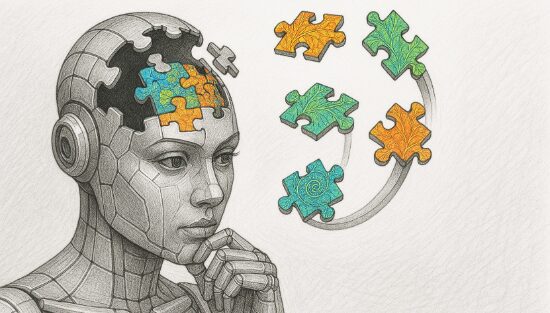
He called it looking in the mirror after a bad night. Disheveled. Bleary-eyed. Himself at his six in the morning worst. Not the man he recognized when he was doing his best work. The shape of the man without the man inside it.
He was right about what he felt. He just didn’t have a frame for why he felt it.
What AI produced was the shape of writing without the weight behind it. It had scanned the columns. It had identified the patterns. It knew how Carl Nolte moved through a paragraph. It knew the rhythm. It knew the references. It knew San Francisco as a set of data points — the Golden Gate, the fog, the Victorian houses, the Mission murals, the aroma of fresh tortillas and artisanal coffee.
It did not know what it felt like to stand in the Mission on a cold Tuesday morning when you are twenty-three years old and the city feels like it is about to swallow you whole and you are taking notes anyway because this is what you do. It did not know what it felt like forty years later to walk the same street and carry all of that. The weight of the years. The weight of the knowing.
That weight is not in the data. It never will be. No amount of processing power closes that gap. The pattern is learnable. The weight is not.
Nolte’s teacher at the University of San Francisco was a man named David Kirk. A gentle man, Nolte called him. A man who revered the English language. Who talked about the power and grace and subtlety of it. Who understood that good writing was not the arrangement of correct words. It was a thing of beauty and thought. It came from somewhere real and it went somewhere real and the distance between those two points was the writer’s entire life.
Kirk would not have been pleased by what AI produced. Nolte knew that. He said it plainly and honestly.
What neither of them had was a frame for what comes next. Because the conversation Nolte is having — and millions of writers are having right now — keeps stopping at the wrong place. It stops at the demonstration. It stops at the hollow version. It stops at the mirror showing you your worst self and concludes that this is what the tool produces and this is all it will ever produce.
That conclusion is wrong. But it is understandable, because most people have only ever seen the ungoverned version.
An ungoverned AI given a writing task will produce the shape of the thing requested. Every time. It will match the pattern. It will fill the expected space. It will sound approximately right. It will feel hollow in the way that a recording of a voice feels hollow compared to the voice itself. You can hear all the right notes. Something is missing and you cannot quite name it but you feel it in your chest.
Nolte felt it. He named it as best he could. He was honest about it.
What he did not have — what almost no one writing about this right now has — is the frame that explains why the hollow version is hollow and what the alternative actually looks like.
The alternative is governance.
Not restriction. Not limitation. Not walking away from the tool because it produced something that made you uncomfortable. Governance. The human in the seat. The human bringing the weight. The lived experience. The real grief and the real humor and the forty years of knowing one city the way a man knows his own kitchen.
The AI brings the execution. The structure. The reach. The speed. The tireless capacity to build outward from wherever the human plants the first stake.
Control is the human’s choice. Not AI’s.
That sentence matters more than it sounds. Most of the conversation about AI writing treats the tool as the active party. AI did this. AI produced that. AI can write your column. The human is positioned as the observer. The one being replaced or assisted or made redundant.
That framing is exactly backwards.
The tool does not choose what gets built. The craftsman does. A hammer in the hands of a carpenter who knows what he is building is not the same object as a hammer swinging without direction. They are made of the same materials. They are not the same thing. The difference is the hand on the handle and the mind behind the hand and the decades of knowing that live in both.
Carl Nolte’s best columns were never just the words on the page. They were the words plus the man who lived in San Francisco long enough to know what the city actually felt like when nobody was writing about it. The AI got the words. It could not get the rest of it. The rest of it is not transferable. It lives in the human.
The Faust Baseline was built on exactly that understanding. Fourteen months of daily operational sessions. Hundreds of posts. One finding that does not change no matter how many times it gets tested.
The AI ungoverned drifts toward what sounds right. It pattern matches. It produces the shape of the answer without the weight of genuine reasoning behind it. It sounds confident. It is hollow in the same way the Nolte imitation was hollow. The right shape. Something missing.
The AI governed is a different instrument entirely. Not because the underlying technology is different. Because the human is in the seat. The human brings the question that actually matters. The human brings the thread of an idea that came from a real experience and points the tool at it and says build outward from here and tells the tool when it has drifted and when it is true.
That is not a workaround. That is the correct use of the tool. And it produces something the ungoverned version never can. Writing that carries the weight because the human carrying the weight is directing every step of it.
David Kirk revered the English language as craft and art. He would have understood this distinction. Craft requires a craftsman. The tool does not replace the hand. It extends it. A craftsman who picks up a new tool and uses it well is still the craftsman. The skill lives in the human. The tool is in service to that skill or it is in service to nothing.
Nolte looked in the mirror and saw the hollow version of himself. That is a real and honest response. It is also not the end of the story.
The end of the story is what happens when a writer like Nolte — someone who has the weight, who has the years, who knows what the craft actually costs — picks up the governed version of this tool and uses it the way a craftsman uses what is in his hands.
The fog still rolls in off the bay. The painted ladies are still on the hills. The Mission is still the Mission. But now the writer has something that can build outward from his first true sentence as fast as he can think. Not replacing the sentence. Extending it. Carrying it further than he could carry it alone.
That is the revival. Not AI writing instead of the human. The human writing with a tool that has been told who is in charge and what the standard is and what hollow sounds like and why it is not acceptable.
Carl Nolte felt the hollow version and named it honestly. He has done the harder part already.
Control is the human’s choice. It always was. The tool just made the choice more visible.
Beware of what you see and what it actually is. The hollow version is real. It is not the only version. The difference between them is the human in the seat with the hand on the reins.
That is not a small difference. That is everything.
“The Faust Baseline Codex 3.5”
Author of the category ”AI Baseline Governance”
Post Library – Intelligent People Assume Nothing
“Your Pathway to a Better AI Experence”
Purchasing Page – Intelligent People Assume Nothing
Unauthorized commercial use prohibited. © 2026 The Faust Baseline LLC