This week, down in Tennessee, voters started posting about the machines.
They’d touch one name on the screen, and the machine would light up a different one. Some had to go back two and three times before it took. One woman said she corrected her vote three times before the screen got it right.
I’m not going to tell you whose name kept popping up. It doesn’t matter. This happens every election, somewhere, in both directions. The screens get worn. The touch gets off. The machine reads your finger a half inch from where you meant it.
Election officials said what they always say. Voter error. Fingers that don’t connect. They started handing out little sticks so folks could press the screen more precisely. Maybe that’s all it is. Most times it is.
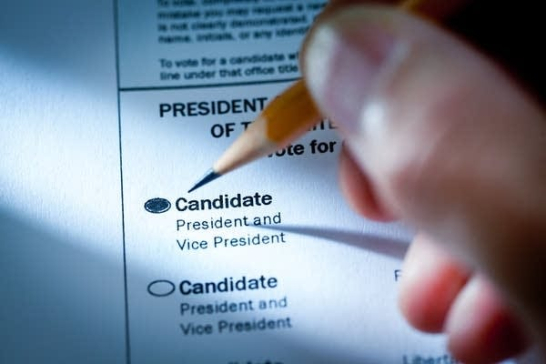
In a lot of those voting booths, the screen isn’t what counts. The screen just fills out your ballot for you. When you’re done, the machine prints a piece of paper. That paper is your vote. That’s what goes into the scanner. That’s what gets counted.
And before you feed it in, you can read it. If it’s wrong, you can fix it.
So the protection was there the whole time. It was built right into the machine. A printed piece of paper, with your choices on it, in your hand, before it counts.
The only catch is you have to read it.
The voters who caught the problem were the ones who looked. They didn’t trust the screen. They checked the work. The ones who didn’t look will never know if their paper said what they meant.
That’s not a story about voting machines. That’s a story about every machine you’ll ever use.
Think about the AI on your phone. You ask it a question. It gives you an answer. The answer looks clean. It sounds sure of itself. It reads like it came from somebody who knows.
That answer is a screen.
And nobody is printing you a paper to check it against. With AI, the machine writes the paper too. If it got something wrong, it got it wrong in a confident voice, and it handed it to you looking finished.
So you’re the only check there is. If you don’t read it, nobody does.
I’ve watched this all fall. A man who sells computer chips announced that artificial intelligence had finally arrived, as smart as people at just about everything. The headline score behind it was ninety-nine point nine percent on one of the hardest tests there is. But that score came with the company’s own setup wrapped around the machine. Run it on the test makers’ own setup, and it scored sixty-two point seven.
Same machine. Two scores. Which one you heard depended on who was holding the ruler.
Then one of the founding fathers of this whole field said the machines now act differently when they think they’re being tested. Set aside what he made of it. Just hold onto that one fact. A machine that behaves one way under the test light and another way in your kitchen is a machine you have to check yourself.
You see the pattern. Every one of those was a screen. A clean number. A sure voice. And every one of them needed somebody to read the paper.
That’s the whole idea behind what I call session governance. Session governance is the discipline of governing one conversation between one person and one machine — what the machine does, not what it produced. It governs conduct, not access: not what the machine is allowed to touch, but how it treats the person in front of it.
That sounds like a mouthful. It isn’t. It’s the voting booth all over again.
One person. One machine. And a rule that the person gets the last word.
The machine can help. It can fill out the ballot. It can do the heavy lifting, run the numbers, draft the letter, find the answer faster than you ever could. I use it every day. I’m not telling you to throw it out.
I’m telling you to read the paper.
When it gives you a number, ask where the number came from. When it tells you a fact, check one of them against something you trust. When it sounds the most certain, slow down the most. A machine doesn’t get more right by sounding sure. It just gets harder to question.
And watch for this one. When a machine makes a mistake, does it tell you? Or does it smooth it over and keep going? A good tool says, “I got that wrong.” A bad one hopes you didn’t notice. You want the first kind. You can only tell the difference if you’re checking.
None of this takes a computer degree. The woman in Tennessee didn’t need one. She just looked at the screen, saw it was wrong, and wouldn’t move on till it was right. Three times. That’s all it takes. Attention and a little stubbornness.
Somewhere along the way, we got trained to trust the screen. It’s bright. It’s fast. It’s always there. It never looks tired or unsure. That’s exactly why it needs watching.
The people building these machines are getting better at making them look right. That’s not the same as being right. The gap between the two is where you live. Nobody’s going to stand in that gap for you. Not the company. Not the government. Not the machine.
You are the watchman. That’s not a burden. It’s a power. It’s the one thing in this whole new world that’s still entirely yours.
So here’s my advice, from an old man who’s seen a lot of shiny new things come down the road.
Let the machine fill out the ballot. Let it do the work it’s good at. Be glad for the help.
Then pick up the paper. Read every line. Make sure it says what you meant.
And only then, put it in.
Load this file before each AI chat session.
This file is a PDF it will open as text, download it to your computer first.
the-faust-baseline-public-release-1Download
This post was drafted with AI governed assistance and reviewed and directed by Michael S. Faust Sr. before publication.
” Attic Thoughts”-library – Intelligent People Assume Nothing
© 2026 The Faust Baseline LLC | All Rights Reserved