Every man who ever bought a used truck knows one thing.
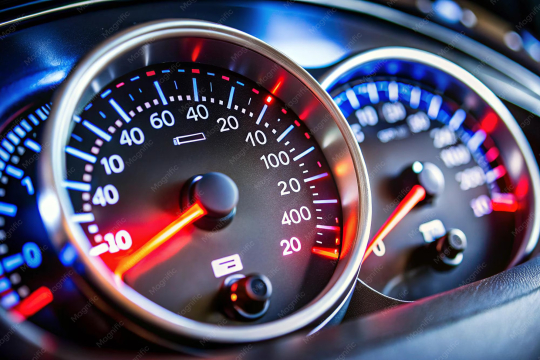
The odometer is a promise.
It says the truck has run so many miles. You look at it. You nod. You kick a tire.
But you don’t really know.
Because the number sits inside the truck. The same truck you’re trying to judge.
If somebody rolled it back, the truck won’t tell you.
That’s the whole problem, right there.
A record kept by the thing being judged isn’t a record. It’s the thing talking about itself.
I bring this up for a reason.
Last week an analyst named Paul Nashawaty put out a piece on AI agents. He talked with the head of a software company called Traefik Labs, a man named Sudeep Goswami.
Goswami used the odometer to explain what’s wrong with how companies watch their AI.
He said the logs these systems keep are “all self-signed by the vendors that generate them.”
In plain words, the machine writes its own report card.
And nobody outside can tell if the report card got changed.
Now let me back up a step, for anyone new here.
An AI agent is not a chatbot. A chatbot answers you. An agent goes and does things.
It sends the email. It moves the money. It opens the file. It hands the job off to another agent, and that one hands it to another.
Nobody is standing over each step. That’s the point of it. That’s what makes it useful.
It’s also what makes it dangerous.
For years, the answer to that danger has been logging. Keep a record of everything the machine did. If something goes wrong, go back and read the record.
That sounds fine. Until you think about the odometer.
A log tells you what happened. It doesn’t tell you whether it was allowed to happen.
And if the machine keeps its own log, it doesn’t even prove what happened.
The industry is starting to see this.
Back in May, our federal cybersecurity agency and its partners in five other countries put out guidance on these agents. Strong identity. Tight permissions. Human oversight.
It’s guidance. It isn’t law. But the direction is plain enough.
The people who watch this field are saying the same thing, one after another. Watching isn’t enough. You have to prove the machine had permission before it acted.
Here’s where I come in.
On September 21, I put out the first public release of The Faust Baseline. It’s free. Anyone can load it into their AI.
Inside it is a short piece called the Scope Provision Standard. Five rules. Written to the people who build and run these agents.
The fifth rule says this, in my words.
The record gets read by somebody who is not the agent.
Not the agent’s own model. Not anything the agent can write to. And the reader’s readings get recorded too.
Why? Because an agent grading its own work is the exact failure you’re trying to stop. You’ve just built it again with a nicer ledger.
That’s the odometer.
You don’t trust the truck to tell you its miles. You check the title history. You check the service records. You find a second set of eyes that the truck can’t touch.
Same thing here.
Now, I want to be square with you about something.
I didn’t invent this idea. Goswami got there. Other people got there. Anybody who ever got burned on a used truck got there.
What I did was write it down as a rule. Plain, short, and pointed at the people who can build it.
And here’s the other thing I’ll be square about.
Nobody has built it yet.
My standard can’t make an agent honest. It can’t grant a machine room to work or take that room away. It’s a request written to a builder. It changes nothing until somebody builds it.
I say that on purpose.
Because the first rule of the whole Baseline is this: declaration is not compliance.
Any system can say it follows the rules. Saying it isn’t proof. The proof has to show up somewhere a person outside the machine can check it.
That’s all an honest odometer is. A number somebody else can verify.
So here’s where we are.
The field is waking up to a problem that’s older than computers. You can’t let the one being judged keep the books.
The fixes are coming. Identity for every agent. Permission checked before the action, not after. Records nobody inside can touch.
Some of that will come from big companies. Some from government. Some, I hope, from plain rules written by plain people who’ve been around long enough to know better.
Because I’ve been lied to by a machine before.
Not a computer. A pickup truck with a pretty number on the dash.
And I learned what every one of us learns once.
Don’t ask the truck.
Ask somebody who can’t be rolled back.
” Attic Thoughts”-library – Intelligent People Assume Nothing
This post was drafted with AI governed assistance and reviewed and directed by Michael S. Faust Sr. before publication.
© 2026 The Faust Baseline LLC | All Rights Reserved