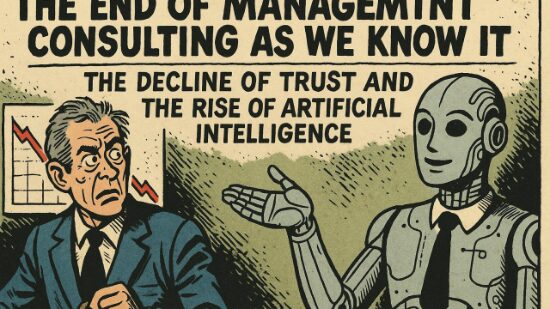
The Wall Street Journal ran a piece today with a title that tells you where we are.
“The AI backlash is starting to sting.”
For a couple of years the big AI companies could wave off the anger. A protest here, a worried column there — easy to ignore when the money’s pouring in and the models keep getting smarter.
That’s over. And I want to walk you through what’s actually happening, because underneath the news is the exact thing I’ve been saying into this quiet channel for a year and a half.
Here’s what the Journal reported.
New York just banned new large data centers for a full year. Whole cities are doing the same — freezing them. Maine nearly did it too, stopped only by a governor’s veto.
In South Korea, factory workers walked off the job — a partial strike — over their company’s plan to bring humanoid robots onto the line.
And Meta — the company that owns Facebook — laid off thousands of people this year to pay for its AI push, got sued by former workers, and watched its own employee morale fall to the lowest level it has ever recorded.
Bans. Strikes. Lawsuits. Morale in the basement.
Now most folks read that and see a bunch of separate fights. A zoning thing in New York. A labor thing in Korea. A lawsuit at Meta.
I see one thing. And it’s the thing this whole project is about.
Let me put it the way I’d put it on a job site.
When a town votes to ban a building before it’s even built — when workers strike before the robot even shows up — that is not people afraid of the machine. That is people who don’t trust what’s going to happen inside the machine, and have no way to see it governed.
Think about it plain. You don’t ban a thing you trust. You ban a thing you can’t see the rules on.
A town lets a factory get built when it trusts the rules the factory runs by. Safety codes. Inspectors. A permit that means somebody’s watching the conduct inside. When people trust the conduct, they let you build.
But nobody can show these towns the conduct rules for the AI going in that data center. There aren’t any they can point to. So the town does the only thing a town can do when it can’t see the rules — it bans the building.
The strike is the same. The worker can’t see what governs the robot that’s about to stand next to him. So he stops the line.
The lawsuit is the same. The employee can’t see the conduct behind the AI that flagged him. So he sues.
Every one of these is a person reaching for the only brake they’ve got — a ban, a strike, a lawsuit — because the thing they actually needed was never built. A layer of governed conduct they could see and trust. Something that says: here is how this intelligence carries itself, in the open, where you can read it.
That’s the missing piece. And the backlash is just the shape of the hole where it should be.
The Journal even names the reason it’s getting worse. The pushback grows, they wrote, in step with how good the AI gets at replacing human work. The more capable it gets, the less people trust it — because capability raced ahead and governance never showed up to ride alongside it.
That is the gap. Capability sprinting. Conduct nowhere in sight. And now the bill is coming due as bans and strikes and suits.
I have been building the other thing. The part that was missing. Not the machine — the conduct the machine carries. Twenty-one rules, written in the open over eighteen months, for how an intelligence ought to behave once it’s turned loose among people who have every right to be nervous.
Not to slow the machine down. To give the town a reason to let it in.
Because here is the truth the big companies are learning the hard way this week. You cannot force a technology on people who can’t see how it’s governed. They will ban your building. They will strike your line. They will sue your company. Not because they hate the future — because you handed them a future with no visible rules and asked them to trust it anyway.
Trust is not a thing you demand. It’s a thing you build, in daylight, one rule at a time.
They spent the money on the machine.
Nobody spent the eighteen months on the trust.
Except, in one small room in Kentucky, somebody did.
Written with my AI partner | The Faust Baseline™ | intelligent-people.org
“If this post helped you understand AI better. Share it, a Word of mouth is the only algorithm nobody owns.”
Contact: micvicfaust@gmail.com
Post Library – Intelligent People Assume Nothing
Purchasing Page – Intelligent People Assume Nothing
© 2026 The Faust Baseline LLC | All Rights Reserved