But the Fourth Chair at That Table Is Empty
Something happened in Shanghai today that deserves more attention than it will get.
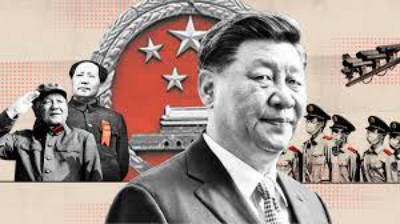
Xi Jinping walked onto the main stage of the World AI Conference and opened it personally — the first time China’s president has ever done that. Over a thousand companies filled the pavilions. Three thousand products on display. But the machines were not the message.
The message was this: China is no longer content to build AI. China wants to write the rules the whole world governs it by.
The proposal on the table is a new international body — a World Organization for Cooperation in Artificial Intelligence, headquartered permanently in Shanghai. Twenty-nine nations signed the founding agreement this week. The pitch is open source, shared technology, and access for the developing world, so the technology does not become the private property of a few rich powers.
Now pull back and look at the whole table, because this is where it gets interesting.
There are three chairs filled.
The United States sits in the first chair. Its model is market-led — keep the edge through private investment, dominant companies, and restrictions on advanced chips, on the argument that heavy regulation slows the race.
Europe sits in the second chair. Its model is regulation-first — fundamental rights, transparency, and legal accountability for the people who build these systems.
China sits in the third chair. Its model is a state-led international body, wrapped in the language of openness and cooperation.
Each chair has its case, and each has its critics. Western governments worry that Beijing’s version of governance would carry a state-controlled vision — more government oversight, weaker protections on privacy and speech. China answers that the real threat is technological blockades and a world split into fragments. Europe gets accused of regulating innovation to death. America gets accused of letting a handful of companies run the store. Fair arguments, all around, and I am not here today to referee them.
I am here to point at the fourth chair.
Because there is one, and it is empty.
Look at what all three models have in common. Every one of them governs from the top down. Nation to nation. Regulator to corporation. Bloc to bloc. Standards written in capitals and boardrooms and treaty halls.
And not one of them — not Washington’s, not Brussels’, not Beijing’s — reaches down to the place where AI actually touches a human life.
That place is a kitchen table. A work desk. A phone in a parking lot on a lunch break. One person, one machine, one conversation. That is where the real event happens, millions of times a day, and there is no treaty on earth that governs that room.
The person in that room has no seat in Shanghai. No seat in Brussels. No seat in Washington. The three most powerful forces on the planet are negotiating the rules of a technology that sits closer to you than your wallet — and you are not a party to any of it.
That fourth chair is where I have been sitting for over a year.
The Faust Baseline is a human contract with AI. Not a law handed down. Not a corporate policy you scroll past and click accept. A contract — stated terms, chosen conduct, a kept record. Written by a person, carried by a person, applied by a person, in the one room the treaties never enter.
And here is the part the big three cannot match, no matter how the summit wars shake out: the contract is portable. It does not care which nation’s model wins. It does not care whose chips are in the machine or whose flag flies over the server farm. It travels with you — across platforms, across borders, across whatever the next five years do to this industry. The powers govern the technology. The contract governs the relationship.
I am not against the big tables. Nations should talk. Standards matter. Somebody has to argue about the chips and the treaties, and better they argue than not.
But a working man learns early not to wait on the front office to settle before he squares his own bench. Whatever they decide up there, your room is yours to govern today. Not in five years when the treaties are ratified. Today.
Twenty-nine nations signed an agreement in Shanghai this week. One man in Kentucky signed his own terms fourteen months ago, and has kept the record in public every day since.
The fourth chair does not need a summit. It needs a signature.
Purchasing Page – Intelligent People Assume Nothing
Post Library – Intelligent People Assume Nothing
“If this post helped you understand AI better. Word of mouth is the only algorithm nobody owns.”
Contact: micvicfaust@gmail.com
© 2026 The Faust Baseline LLC | All Rights Reserved