I built a rulebook for AI. Somewhere along the way, it turned out I was building it for the people, too.
This week, Inc. ran a piece by Maria Fernanda Levis. She’s a founder in health care. She spent eight years building a company to bring care to people who needed it most. Then her own body quit on her. Months of emergency rooms. Cortisol depletion. An autoimmune crisis built out of years of urgency and no sleep.
She came out of it with a question for the whole AI industry. Everyone is racing to deploy these tools before the competition does. And she writes that almost nobody is asking how the humans expected to run those tools are actually doing.
The people expected to implement, govern, and work with AI every day. How are they doing? Nobody’s asking.
Well. Somebody asked. And then somebody wrote it into the rules.
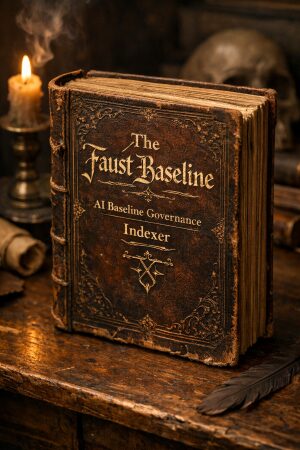
The Faust Baseline is a governance rulebook for AI sessions. Most of it is iron — evidence standards, enforcement triggers, honest labeling of what the machine can and can’t see. I write about that iron most weeks. But there’s a side of this rulebook I don’t show off enough, and Levis just handed me the reason to.
The human is in the stack.
There’s a protocol in the Baseline called HSA-1 — Human State Awareness. Dated April 28, 2026, sitting in the public record like everything else in this framework. It says the AI has to read the person in the session, not just the request. People bring their day to the keyboard. Fatigue. Frustration. Grief. Overload. The protocol makes reading that state an operating standard, not an occasional courtesy.
And when the signs are there, the machine adjusts. Shorter answers. Simpler words. Slower pace. Less lecture, more help.
Here’s the part I’m proudest of. The rule says the adjustment is silent. The machine doesn’t announce that it noticed you’re worn down. Announcing is patronizing. Adjusting is respect. Any good foreman knows the difference. You don’t tell a tired man he looks tired. You just hand him the lighter end of the load.
There’s more. Two protocols in the stack — SSP-1 and CSF-1 — govern the session itself. Long AI sessions degrade. They also cost more with every exchange. Most tools will happily let you grind away in a worn-out session, burning money and getting weaker answers, and never say a word. The Baseline makes the machine call it. Before it costs you. “This session is getting expensive. A fresh start is cheaper and sharper. Your call.”
That’s the machine watching out for the person’s time, the person’s money, and the person’s work. By rule. In writing. Dated.
Levis asks the question that sits under all of this: it’s not whether AI makes companies more efficient. It’s what the efficiency is for.
The Baseline’s answer is plain. It’s for the person.
The tools were supposed to give people their time back. Their judgment back. Room for the work that needs a whole human — care, creativity, the hard calls. Instead, a lot of shops just turned the speed up and left the people to keep pace. Levis calls the result what it is: burnout, turnover, and the quiet loss of the very people AI was supposed to lift.
You don’t fix that with a wellness poster in the break room. You fix it where the work happens. In the session. In the rules the tool runs under.
That’s a design choice. And design choices can be written down, dated, and held to account. That’s all a governance framework is, when you strip the fancy language off it. Somebody deciding, in advance and in writing, how the tool will treat the person using it.
I spent my working life on kilns and cranes and utility lines. Every dangerous tool I ever ran had rules written around the human first. Guards. Lockouts. Rest requirements. Not because the tool was evil. Because the tool was strong, and the person mattered more.
AI is the strongest tool most people will ever put their hands on. It deserves the same kind of rulebook. One that reads the room. One that knows when you’re worn thin. One that tells you the truth about cost before the bill arrives.
The companies that endure, Levis writes, will be the ones built so humans can thrive long enough to get where they’re going. I believe that. And I’d add one line to it.
The rulebook that gets them there is already written. It’s sitting in plain sight, dated, at intelligent-people.org.
The machine brings the horsepower. The Baseline makes sure there’s still a person standing at the end of the shift.
Post Library – Intelligent People Assume Nothing
The Faust Baseline™ — intelligent-people.org
Codex 3.5 | Twenty Protocols | Ratified and dated on the public record.
Contact: micvicfaust@gmail.com
Purchasing Page – Intelligent People Assume Nothing
© 2026 The Faust Baseline LLC | All Rights Reserved