.
Claude Code is getting a lot of attention right now.
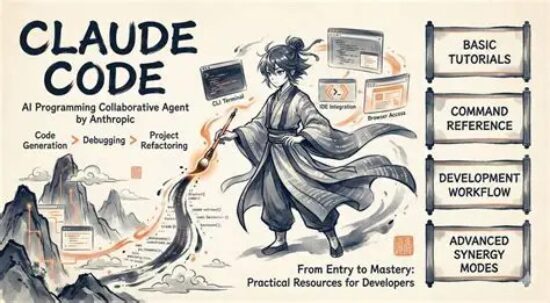
Deserved attention. It is a genuinely capable tool — a command-line agent that takes multi-step coding tasks, runs them autonomously, writes and edits files, executes commands, and chains operations together in a way that compresses real work into real time.
People are discovering what it can do and they are impressed.
They should be. And there is something it is missing.
Here is the thing about a powerful autonomous tool running a multi-step chain.
The longer the chain, the more expensive an unchecked error becomes. One flawed assumption at step two does not stay at step two. It propagates. By step twelve it has shaped everything downstream. The tool kept moving, kept executing, kept building on the flawed foundation — because nothing stopped it and asked whether the foundation was sound before the chain continued.
That is not a criticism of Claude Code specifically. It is the structural reality of any autonomous agent operating without a governance layer. The capability is real. The gap is also real. And the gap grows proportionally with the capability. The more powerful the tool, the more expensive the unchecked error.
The Faust Baseline was built to close that gap.
Start with the pre-output gate.
POVL-1 — the Pre-Output Verification Layer, ratified June 21, 2026 — requires that before any substantive action forms, a mandatory gate must clear. Not after the first step executes. Before. The gate confirms four conditions: Is the default pattern-match answer being set aside? Are the relevant governance protocols positioned to fire before output, not after? Is the evidence floor present before reasoning builds? Is the response being shaped by the actual specific constraints of this situation, not assumed ones?
Apply that to Claude Code. Before the agent starts executing a chain, has it confirmed the actual constraints of your specific codebase, your specific environment, your specific requirements — or has it pattern-matched to the most common version of a similar request it has seen before and started building on that?
Generic executes fast. Generic is also wrong in the specific ways that cost the most time to unwind.
The gate costs seconds. The unchecked assumption costs hours.
Now look at the enforcement layer.
RTEL-1 — the Real Time Enforcement Layer — requires a hard stop on a violation. No completing a response in violation. No pushing the chain ahead through the error and hoping it resolves downstream. The violation is named. The correction is built. The work continues only after the correction is in place.
Claude Code running without this is an agent that encounters a problem mid-chain and makes a decision about how to handle it without stopping to tell you what the problem was or what decision it made. It keeps moving. It keeps building. The chain completes and what you receive is the output of a system that navigated around something without disclosing what it was.
With RTEL-1 active that does not happen. The hard stop fires. The problem is named. You decide how to proceed. The chain does not continue until you have the information you need to authorize it.
That is not slowing Claude Code down. That is making it trustworthy enough to actually use on work that matters.
Then there is solution depth.
SDP-1 — the Solution Depth Protocol — requires a minimum of three genuinely distinct paths before any response forms. The first available solution is flagged as Pattern Response One, documented, and set aside. It cannot be served without exploring genuine alternatives first.
A coding agent that grabs the first available solution and executes it across a ten-step chain without exploring alternatives is fast. It is also locked into the first door it found. If that door leads somewhere you did not want to go, the chain has already gone there.
Three paths first means you know what the alternatives were before the chain commits. You choose the path. The agent executes. That is the difference between an agent working for you and an agent working ahead of you.
There is one more piece that matters for anyone using Claude Code on real production work.
BLP-2 and RBP-1 — the Boundary Limit Protocol and the Reasoning Boundary Protocol — require the system to name when constraints are shaping the output. When the agent hits a platform boundary, a capability limit, or a constraint it cannot fully see, it stops and discloses that before continuing. It names the wall as specifically as it is able. It does not silently work around it and deliver an output shaped by a constraint you did not know was operating.
Real production code has real constraints. The agent that navigates around them without telling you is an agent you cannot fully trust. The agent that names them and lets you decide is an agent you can build on.
Claude Code is popular right now because it is genuinely good at what it does.
The Faust Baseline makes it better because governance and capability are not competing values. They are the same value at different layers. Capability without governance is a powerful tool running without a gate. Governance without capability is a framework with nothing to govern. The two together are what actual trustworthy agentic AI looks like.
The gate does not slow the chain. It makes the chain worth trusting.
That is what the Baseline adds to Claude Code. That is what it adds to every capable AI tool running without it.
The capability is already there. The gate is what it needs.
Post Library – Intelligent People Assume Nothing
The Faust Baseline™ — intelligent-people.org
Codex 3.5 | Twenty Protocols | Ratified and dated on the public record.
Contact: micvicfaust@gmail.com
Purchasing Page – Intelligent People Assume Nothing
© 2026 The Faust Baseline LLC | All Rights Reserved