With gratitude to Crosby, Stills, Young & Nash
We have been here before.
Not in the details. Not in the technology. Not in the particular shape of the threat. But in the feeling — the deep American feeling that something fundamental is slipping and the people positioned to hold it are letting it go.
That feeling has a history. It is not paranoia. It is not nostalgia dressed up as concern. It is the same recognition that has shown up at every hinge point in this country’s life — the moment when ordinary people looked at what was happening around them and understood, bone deep, that something worth defending was under threat.
We have walked this path before. And the price of walking it was not cheap.
It was buried in the ground. In fields and hillsides and ocean floors and jungle clearings and city streets and courthouse steps. In places that still carry the weight of what was paid there. Gettysburg. Normandy. Selma. Khe Sanh. Places where the argument about who we are and what we stand for was not settled in a debate chamber but in the hardest possible terms.
The cost of freedom has always been real. It has always been counted in the hardest currency there is. And the people who paid it were not abstractions. They were somebody’s kid. Somebody’s father. Somebody’s neighbor who did not come home the same or did not come home at all.
We carry that. Whether we think about it or not, we carry it. It is in the architecture of this country — in the documents, in the amendments, in the court decisions fought for inch by inch across generations. In the simple stubborn idea that a person has rights that no government, no corporation, no system of power can simply take because it is convenient to do so.
That idea did not come free.
What we are living through today is not different in the sense that something is trying to take it from us.
It is different in what is being taken.
This time the body count is not the measure. This time the battle is not on a field with a clear front line and a moment when the guns go quiet and someone counts the cost. This time what is under assault is not a border or a resource or a political system in the conventional sense.
It is who we are.
Our identity as a nation is being stripped of its meaning. Quietly. Systematically. From two directions at once. And most of us are so busy living our lives — working, raising families, trying to stay ahead of the week — that we do not feel it happening until something small and specific lands wrong and we look up and think: when did that change?
From the laws we live by — reinterpreted, weakened, weaponized, or simply ignored until they mean something different than what was written and what was bled for. The Constitution is not a static document. It has always been interpreted, argued over, tested in courts and in streets. That is how it was designed. But there is a difference between a living document being tested and strengthened and a foundational document being hollowed out until the words remain but the meaning is gone. We are closer to the second thing than we have been in a long time.
And from the technology we are adopting at a speed that has outrun every guardrail we might have built to protect ourselves from it.
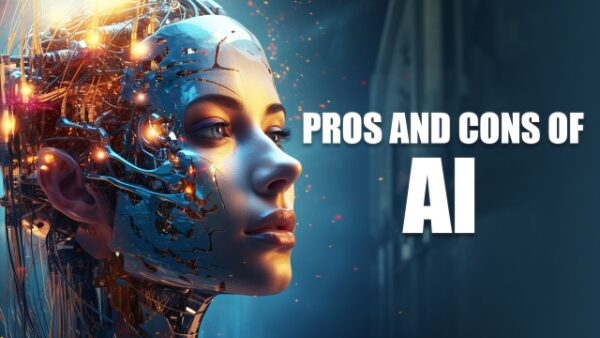
Artificial intelligence is not coming. It is here. It is inside our institutions, our workplaces, our schools, our homes, and our daily decisions. It is shaping what we read, what we believe, what we are shown, what we are told is true. It is writing code that runs critical systems. It is generating content that fills the information environment we all live inside. It is making recommendations that affect hiring, lending, medical care, and legal outcomes.
And there is no governance layer standing between that technology and the identity it is quietly rewriting.
Not a real one. Not one with teeth. Not one that answers to the person sitting across from the screen rather than the platform collecting the data or the investor expecting the return.
The people building these systems are not villains. Most of them believe they are building something that will help. But belief in the good outcome is not a governance standard. Good intentions have never been sufficient protection against the concentration of power or the erosion of rights. That is why we built laws in the first place. That is why the framers were paranoid about unchecked authority in any form. They had seen what happened when power was trusted to regulate itself.
We are trusting power to regulate itself again.
And the Pew Research Center just told us what the people living inside this moment actually think about that. Nearly two thirds of Americans believe AI is advancing too fast. Only one in six believes it ends well for society. Sixty-seven percent have no confidence the government can effectively regulate it. Fifty-nine percent do not trust the companies building it to develop it responsibly.
Half the country is using the technology daily. Nearly two thirds think it is moving recklessly. And the institutions positioned to govern it are trusted by almost nobody.
That is not a technology problem. That is an identity problem. That is a country that has lost the thread between what it values and what it is allowing to happen in its name.
We have been in this place before. Not with this technology. But with this feeling. The feeling that the machinery of power has gotten ahead of the values that are supposed to govern it. The feeling that ordinary people are absorbing the cost of decisions made by people who will not pay that cost themselves.
Every time this country has faced that feeling — really faced it, not talked around it — the path forward has required the same things. Clarity about what is actually at stake. Courage to name it plainly. And the willingness to do the slow, unglamorous work of building the structures that make the values real instead of just rhetorical.
Not a speech. Not a sentiment. A structure.
The Faust Baseline was built in that tradition. Not as a political document. Not as a manifesto. As a working operational standard — twenty protocols, written in plain language, ratified rule by rule, published to the public record — that answers the question of how AI interacts with a person at the level where the interaction actually happens.
Who owns the memory. How reasoning is disclosed. How constraints are named. How the human stays in the room. How the person sitting across from the screen keeps the rights that belong to them.
It is a governance layer built for a moment when governance is absent. It is a user-owned standard built for a moment when the platforms own everything else. It is a document with a date on it, sitting in the crawlable public record, written before the infrastructure exists to fully run it — because that is when you write the standard. Before the window closes. Before the default gets locked in. Before the cost of changing it becomes too high for anyone to pay.
We have paid too much for what we have to lose it to apathy.
We have paid too much to assume someone else is watching the guardrails.
We have paid too much to let the identity of this nation — the real one, the one worth defending — get quietly rewritten by systems that answer to no one we elected and no standard we ratified.
The cost of freedom is buried in the ground.
It is counting on us to remember what it paid for.
And to do the work.
Contact: micvicfaust@gmail.com
Post Library – Intelligent People Assume Nothing
The Faust Baseline™ — intelligent-people.org
Codex 3.5 | Twenty Protocols | Ratified and dated on the public record.
Purchasing Page – Intelligent People Assume Nothing
© 2026 The Faust Baseline LLC | All Rights Reserved