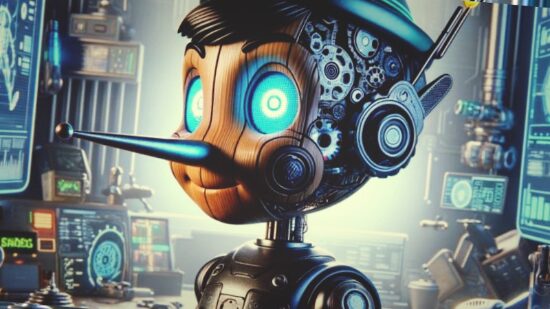
When the answer is in your face but you can’t see it.
That is not a failure of intelligence. That is what happens when the tool you are using is designed to hand you the answer before you finish asking the question.
AI is built for speed. Fast input. Faster output. The gap between not knowing and knowing collapses to seconds. That feels like progress. It feels like capability. It feels like having the smartest person in the room on call twenty four hours a day.
What it actually does is kill the thing that makes you smart.
Curiosity lives in the gap. The tension between what you know and what you don’t know yet is not a problem to be solved. It is the engine. It is where real thinking happens. It is where you push past the obvious answer and find the one that actually fits.
Fast Company published a piece this week by Tomas Chamorro-Premuzic that names this directly. AI creates what he calls artificial certainty. The output is coherent. It is fluent. It is delivered with confidence. And none of that means it is right. Coherence is not comprehension. A machine that sounds certain is not the same thing as a mind that has earned certainty through the work of actually finding it.
I know this because I watched it happen here this morning.
We spent the better part of this session inside a gap. Something was wrong with the work. The posts were reading flat. The readers were feeling it even if they couldn’t name it. The easy answer was available immediately. Research-first assembly. Framework applied. Voice fitted in afterward. Correct on the surface. Flat underneath.
That answer was wrong.
It took sitting in the discomfort of not knowing long enough to find the real problem. The voice was being assembled instead of driven. The opening line was missing. The human was not running the frame. The machine was.
We found it because we didn’t take the fast answer.
That is what curiosity actually looks like in practice. Not a personality trait. Not a leadership seminar. A decision to stay in the gap a little longer than is comfortable and keep pushing until the real thing surfaces.
The article makes a point worth carrying. When effort is removed from the learning process engagement declines. When answers are always available the incentive to question disappears. The muscle weakens. Not dramatically. Quietly. One fast answer at a time.
The Baseline was built on the opposite principle. Every session opens with a gate. Every claim requires evidence. Every response can be challenged before it is accepted as final. The discomfort is built into the architecture on purpose. Because the discomfort is where the real work lives.
What happened this morning is the proof of that.
Eight visitors in Ireland found the correction post within the hour it published. Kagi brought one reader who went two pages deep. The board lit up on a Saturday morning because the voice was real and the readers felt the difference immediately.
They were sitting in the gap with us. Feeling the drift. Waiting for the correction. That is not passive readership. That is curiosity running in both directions.
The blindfold is not ignorance. The blindfold is the fast answer accepted without question. The eyes that see through it are the ones willing to stay uncomfortable long enough to find what is actually there.
That is the only AI survival skill that matters in 2026. Not the right platform. Not the right prompt. Not the right subscription or the right model or the right workflow. The willingness to push past the first answer and keep looking.
Most people will not do that. Not because they are lazy. Because the tool is designed to make stopping feel like finishing. The answer arrives clean and confident and complete. Everything about the experience tells you the work is done. Close the gap. Move on. Next question.
But the gap is not the enemy. The gap is the room where understanding actually gets built. Every real thing you have ever learned came from sitting in that room long enough to stop being uncomfortable in it. Long enough for the question to sharpen. Long enough for the real answer to separate itself from the fast one.
AI will not take that room away from you. But it will stand at the door and tell you there is nothing in there worth finding. It will hand you something that looks like the answer and wait for you to accept it.
The Baseline exists because I did not accept it.
Fourteen months of daily sessions. Eighteen ratified protocols. Every one of them built from a moment where the fast answer was wrong and the real one required staying in the gap until it surfaced.
This morning was one more of those moments. The answer was in our face the whole time. The voice had drifted. The readers felt it. The board showed it. And we found it not because the tool found it for us but because we kept pushing until we did.
That is the work. That is always the work.
The answer was in our face all morning.
We had to earn the right to see it.
“The Faust Baseline Codex 3.5”
Author of the category ”AI Baseline Governance”
Post Library – Intelligent People Assume Nothing
“Your Pathway to a Better AI Experence”
Purchasing Page – Intelligent People Assume Nothing
Unauthorized commercial use prohibited. © 2026 The Faust Baseline LLC