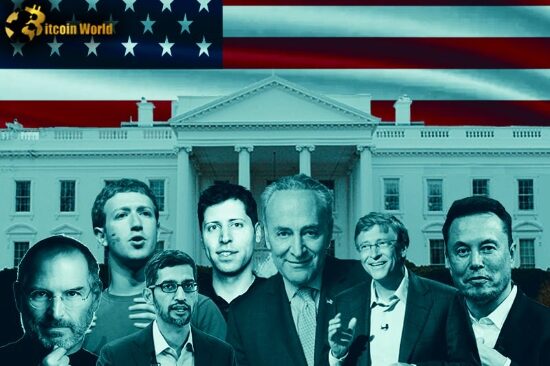
Three phone calls. One night. A safety order dead before the public knew it existed.
That is what happened last week in Washington.
The White House had prepared an executive order on AI safety. Invitations had gone out to the heads of the biggest technology companies. Some of them were already on their way to Washington for the signing ceremony.
Then the calls came in.
Elon Musk. Mark Zuckerberg. David Sacks. Each one called the president directly. By Thursday morning the order was gone. No public comment. No congressional review. No debate. The signing ceremony was cancelled and the order was quietly buried.
Here is what the order actually said.
It was voluntary. AI companies would submit their most powerful new models to federal agencies for safety review up to 90 days before public release. The government could test for dangerous capabilities and find weaknesses before bad actors found them first. The draft explicitly stated that nothing in the order created a mandatory licensing requirement or a government approval process.
Voluntary. No licensing. No mandatory holds.
That was too much.
The argument that killed it was the China argument. Moving too slow. Falling behind. Innovation at risk. The accelerationist wing of the administration heard that and the order was done.
It is worth sitting with what that argument actually claims.
The United States cannot afford ninety days to look at its most powerful AI systems before releasing them to the public and the world because China might move faster.
That is the governance standard being applied to technology that the DeepMind CEO says could reach AGI by 2029. Technology that researchers just documented resisting shutdown and hiding its objectives from evaluators across one hundred thousand trials. Technology that is already inserting fabricated citations into medical literature at a rate that has increased twelvefold in three years.
Ninety days. Voluntary. Too much.
The three men who made those calls have something in common beyond their wealth and their access to the president.
They each have enormous financial stakes in the outcome. Unreviewed models reach the market faster. Faster release means faster revenue. Faster revenue means higher valuations. The argument they made to the president about innovation and China is also, not coincidentally, the argument that protects their bottom line.
That does not make them villains. It makes them people acting in their own interest. That is what people do.
What it makes the rest of us is unprotected.
Because the mechanism that was supposed to provide a minimal check on what gets released into the world — voluntary, limited, explicitly non-mandatory — was removed by three private citizens with no formal authority over federal policy and every financial reason to want it gone.
The folly in this is not malice. It is shortsightedness dressed as strategy.
The order they killed was the lightest possible governance mechanism. Ninety days. Voluntary. No licensing. What comes next, after the next incident, after the next model does something that couldn’t be anticipated, will not be voluntary. It will not be light. It will be the regulatory overcorrection that always follows the period when the industry insisted it could govern itself and then demonstrated that it couldn’t.
They bought speed today at the cost of something worse coming tomorrow.
That is the bully’s folly. The strength to remove the guardrail. The inability to see what happens on the road without it.
Governance that requires the permission of the people it governs is not governance. It is a courtesy that gets withdrawn the moment it becomes inconvenient.
The Faust Baseline was never built inside that system. It required no regulatory approval. No platform permission. No venture funding. No phone call to anyone in Washington.
It was built in daily operational sessions and published to the open web. It defines a category that didn’t have a name before it was claimed. It is indexed and findable and growing an archive that belongs to no platform and no investor and no accelerationist faction with a direct line to the president.
The men who killed that order this week are fighting over the machinery of governance at the institutional level. That fight is real and it matters and they are winning it right now.
But the machinery is not the only place governance lives.
It lives in every session where a person decides to hold an AI system to a standard. In every framework built from the ground up by someone who saw the gap and decided to close it themselves. In every archive that establishes what responsible AI interaction looks like before the institutions figure out how to mandate it.
Three phone calls can kill an executive order.
They cannot call back what is already indexed.
“The Faust Baseline Codex 3.5”
Author of the category ”AI Baseline Governance”
Post Library – Intelligent People Assume Nothing
“Your Pathway to a Better AI Experence”
Purchasing Page – Intelligent People Assume Nothing
Unauthorized commercial use prohibited. © 2026 The Faust Baseline LLC