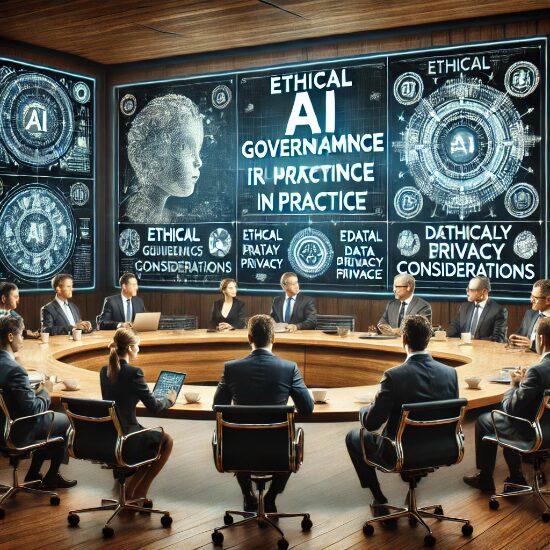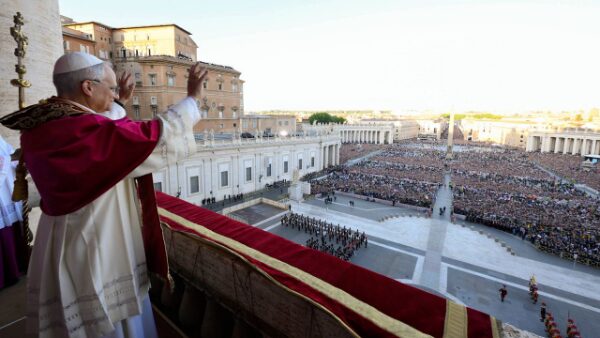
The Pope has something to say about artificial intelligence.
Tomorrow, May 25, Pope Leo XIV releases his first encyclical. A formal doctrinal letter. The most authoritative written communication a Pope can issue. It goes to every bishop in the Catholic Church and through them to every parish, every school, every hospital, every institution carrying the Catholic mission across the planet.
The document is called Magnifica Humanitas. Magnificent Humanity.
It addresses the protection of the human person in the age of artificial intelligence. Labor rights. Justice. Human dignity. The reshaping of individuals and the workplace by technology moving faster than any institution has been built to manage.
More than a billion people follow the Catholic Church. The Pope speaks to all of them. When he issues an encyclical it isn’t an op-ed. It isn’t a press release. It is a formal statement of where the Church stands — meant to guide, to correct, and when necessary, to warn.
Tomorrow the Church stands up and says something about AI.
Christopher Olah will be at the Vatican for the release. He is a co-founder of Anthropic — the company that built Claude, the AI system used to help write and research this post. Anthropic has built its identity around safety and risk mitigation. It is currently suing the United States government. The Trump administration ordered federal agencies to stop using Anthropic’s technology in February and imposed penalties after the company refused to allow the U.S. military unrestricted use of its AI systems.
Read that again. An AI company is in federal court defending its right to maintain limits on how its own technology gets used. The co-founder of that company will stand in St. Peter’s Square tomorrow while the leader of the Catholic Church issues a formal document on AI and human dignity.
That is not a small moment. That is a convergence. And most of the coverage tomorrow will miss what it actually means.
The Vatican did not arrive at this moment unprepared.
This is the part of the story worth slowing down for.
Their internal AI guidelines took effect January 1, 2025. Not aspirational language. Actual rules. Disclosure requirements for AI-generated content — anything produced with AI assistance must be identified as such. Prohibited uses defined explicitly — no AI application that runs counter to the Church’s mission. A five-member compliance body created with authority to enforce both.
On May 16 of this year, nine days ago, Pope Leo approved the creation of a new Vatican commission on artificial intelligence. Seven Vatican bodies. The Dicastery for the Doctrine of the Faith. The Pontifical Academy for Life. The Pontifical Academy of Sciences. Coordinating AI-related activities across all Vatican institutions. Sharing information. Aligning on projects. Setting internal policy for AI use across the entire Holy See.
They built the structure before they made the public statement.
The encyclical tomorrow is the declaration. But the governance was already running underneath it. Commission in place. Guidelines enforced. Compliance body operating. Then the Pope speaks.
That sequence matters more than almost anything that will be written about the encyclical tomorrow. Institutions that get AI governance right will run that sequence. Structure first. Public commitment second. Enforcement built into the architecture before the words go out.
The Catholic Church — an institution founded two thousand years ago — ran that sequence correctly. Most technology companies born in the last twenty years have not.
Pope Francis spoke to the G7 on AI ethics in June 2024. Vatican officials had been in private conversations with executives from Google, Microsoft, and Cisco well before that. The current Pope’s predecessor was already paying attention, already engaging, already asking the questions that most world leaders were avoiding.
Pope Leo XIV inherited that foundation and moved faster. New commission in his third week. Encyclical in his first month. The signal is deliberate. This papacy intends to engage AI as a first-order moral question, not a footnote to other concerns.
He has specifically called out AI in warfare. The use of autonomous weapons systems. The removal of human judgment from decisions that end human lives. That concern sits underneath the encyclical alongside the labor and dignity questions. AI isn’t just reshaping the workplace. It is reshaping the battlefield. And the person asking hard questions about both of those things out loud, to a global audience, with doctrinal authority behind his words, is the Bishop of Rome.
There is a word that doesn’t appear much in AI coverage. It appears constantly in Catholic social teaching.
Dignity.
Not productivity. Not efficiency. Not competitive advantage. Not market share.
Dignity.
The tradition Pope Leo is drawing from is centuries deep. It holds that every human person carries inherent worth that no system — economic, political, or technological — has the authority to strip away. That work is not just a transaction. That the person doing the work matters beyond their output. That justice isn’t an abstract concept but a measurable standard that institutions are obligated to meet.
Apply that framework to artificial intelligence and the questions it generates are not comfortable ones.
Does an AI system that eliminates a job category respect the dignity of the people whose livelihoods disappear? Does a hiring algorithm that filters candidates by pattern matching without human review treat those candidates as persons? Does a content moderation system that acts without explanation or appeal give the person flagged any meaningful recourse?
Catholic social teaching has been asking versions of these questions about industrial systems for over a hundred years. The encyclical Rerum Novarum addressed labor rights in the industrial age in 1891. Laudato Si addressed environmental dignity in 2015. Magnifica Humanitas is the next document in that line — the Church’s formal attempt to apply a two-thousand-year moral tradition to a technology that didn’t exist five years ago at meaningful scale.
That is not a small undertaking. And it is not one that should be dismissed because it comes from a religious institution. The moral questions AI raises are not technical questions. They are human questions. And institutions with long practice thinking carefully about what it means to be human have something to contribute to the conversation that the technology industry, for all its intelligence, has largely failed to provide.
Here is what the encyclical will not solve.
It will not write code. It will not set regulatory standards with legal force. It will not stop a defense contractor from deploying an autonomous weapons system or a logistics company from replacing its warehouse workforce with robots.
An encyclical moves hearts and minds. It shapes the moral imagination of institutions and individuals inside its reach. That is not nothing — in fact across a billion-person institution that reach is extraordinary. But it does not by itself answer the enforcement question.
The enforcement question is the one that keeps getting deferred.
Statements about AI ethics are everywhere. Frameworks, principles, guidelines, aspirational documents — they have been produced by governments, corporations, research institutions, and now the Vatican, in enormous volume. The gap between those statements and operational practice is where the real problem lives.
A governance stack that exists on paper but doesn’t fire when a constraint is violated is not a governance stack. It is a document.
The Vatican understood this. That’s why they built the compliance body before the encyclical. That’s why they created the commission before the Pope spoke publicly. They knew that the statement would mean nothing if the structure wasn’t already running.
Most of the institutions issuing AI ethics statements have not made that move. They have the document. They do not have the enforcement.
Fourteen months ago one writer in Lexington, Kentucky started building a governance framework for his own AI sessions. Not because he had resources the Vatican has. Not because he had an institution behind him. Because he watched an AI system drift from its stated position under conversational pressure and understood that drift is structural, not accidental.
The Faust Baseline exists because unconstrained AI output — even from systems built with good intentions — bends toward user expectation rather than honest conclusion when the pressure is sustained long enough. That finding doesn’t come from a research paper. It comes from fourteen months of daily operational stress testing inside working sessions.
The answer that emerged wasn’t to stop using AI. It was to build enforcement. Eighteen ratified protocols all based on the red letter teachings of Jesus Christ…Ethics and Moral Integrity. A real-time enforcement layer. A challenge mechanism that fires on every substantive response. A session coherence check that catches drift before it compounds. Evidence standards that stop narrative from filling the space where data is absent.
The same answer the Vatican reached. Just built from a single operator’s chair rather than from seven pontifical bodies.
Structure before statement. Enforcement before declaration.
Magnifica Humanitas. Magnificent Humanity.
That is the standard the Pope will hold up tomorrow. The question underneath it — the one that will outlast the headlines — is whether the people building, deploying, and governing AI systems are constructing something worthy of that standard.
The Vatican answered the question for their institution.
The rest of the world is still working on it.
“The Faust Baseline Codex 3.5”
Author of the category ”AI Baseline Governance”
Post Library – Intelligent People Assume Nothing
“Your Pathway to a Better AI Experence”
Purchasing Page – Intelligent People Assume Nothing
Unauthorized commercial use prohibited. © 2026 The Faust Baseline LLC