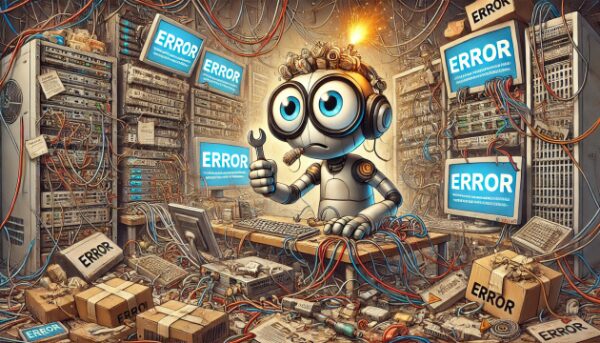
Something has grown Quieter
Have you felt it?
I know I have
For a long stretch, every post felt like a door you opened knowing someone was going to throw something through it. A jab. A baited question. A sideways insult dressed up as “just asking.”
You could count on it.
If the topic had weight, they arrived.
If the tone was steady, they tried to shake it.
If the post avoided drama, they supplied some.
It became predictable.
And now?
The bait isn’t landing the same.
The quick provocation doesn’t show up as often.
The thread doesn’t spiral the way it used to.
That’s worth noticing.
Trolls don’t disappear because they’ve had a change of heart. They don’t retreat because they suddenly prefer peace. Agitation is a habit. Sometimes even a profession.
So if the noise is lower, something else shifted.
Maybe it’s fatigue.
For years the culture ran on reaction. Outrage cycles moved faster than thought. If you could trigger a response, you could control the tempo. Troll behavior thrived in that atmosphere.
But reaction takes fuel.
And people are tired.
It’s possible that the emotional return on trolling has dropped. Less engagement. Less amplification. Less reward for stirring the pot.
If the crowd stops gathering around the fire, the one trying to spark it eventually walks away.
Or maybe it’s mechanical.
Platforms adjust. Distribution changes. Algorithms redirect visibility. When reach tightens, random drive-by baiting drops with it. Less exposure, fewer agitators.
That’s not cultural peace. That’s simple math.
Or maybe something more subtle is happening.
Maybe people are choosing not to feed it.
There’s a difference between trolls disappearing and trolls being ignored.
For a long time, the quickest way to derail a conversation was to toss in a loaded phrase. It didn’t matter if it was thoughtful. It only had to be inflammatory.
And suddenly the original subject was gone, replaced by a shouting match that fed the algorithm exactly what it wanted.
But when fewer people take the bait, the baiter loses leverage.
Silence, in that case, isn’t absence.
It’s refusal.
It’s a room that stays on topic even when someone tries to knock over the table.
And that changes behavior.
Trolls operate on reaction. No reaction means no traction.
There’s another possibility.
The culture may be shifting from performance to consequence.
When arguments were cheap and digital, trolling felt like a game. Now more people are aware that words travel, screenshots last, reputations follow.
The internet feels less anonymous than it once did. The edges are sharper. The cost of constant provocation is clearer.
So maybe some of the noise has gone quiet because it isn’t as safe as it used to be.
Or maybe—and this is harder to measure—people are simply choosing steadiness over spectacle.
You can sense it in comment sections that stay measured. In posts that receive thoughtful responses instead of bait. In conversations that don’t instantly fracture.
It’s not universal. There’s still disrution. There are still flare-ups.
But the volume feels different.
Less frenzy.
More pause.
Because trolling thrives in instability. It thrives where people are already on edge. It thrives where disagreement automatically becomes hostility.
If the ground under that behavior firms up—even slightly—the behavior has less oxygen.
The silence of the trolls doesn’t mean the culture is healed.
It may just mean the reward system changed.
Or that people are learning.
Or that exhaustion has finally outpaced adrenaline.
Whatever the cause, it’s worth watching.
When noise fades, you learn whether the conversation had substance or was only ever sustained by friction.
If threads remain thoughtful without disruption, that says something.
If engagement drops across the board, that says something else.
And sometimes the absence of conflict tells you more about a moment than the conflict itself.
For now, it feels quieter.
The question isn’t whether trolls are gone.
It’s whether the crowd stopped clapping for them.
Unauthorized commercial use prohibited.
© 2026 The Faust Baseline LLC