There is a stretch of time every two years that most people worry about.
The votes are counted and the yard signs come down. The ads finally stop. Everybody lets out a long breath and goes back to their own lives.
Washington does not stop. The old Congress goes back to work, and it keeps working right up until the new one is sworn in on January 3.
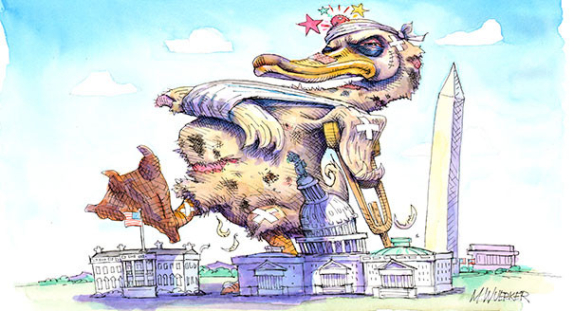
They call it the lame duck session. It is an old name. A lame duck is somebody whose time is running out, and everybody knows it. The title is still on the door, but the clock is already ticking down.
This year the Senate came back on November 9. The session runs about five weeks, through the rest of November and into December. The pile waiting on the table is not a small one.
The government is only paid for through December 11. The twelve yearly funding bills, about 1.8 trillion dollars, are still not settled. The defense bill is not finished either. One Washington law firm that watches Congress for a living said this could be the busiest lame duck session in years.
Some of the people casting those votes will never face a voter again. Some lost their races. Some are retiring. Whatever they decide between now and January, there is no next election coming to hold them to it.
That is not a charge against any one person. Plenty of members serve every last day with honor and walk out the door with their heads up. This is not about who is good and who is bad. It is about how the room is set up.
Most of the year, a vote has a price tag. A member votes, folks back home see it, and the next election settles the bill. That is the whole deal between the people and the ones they send. It is not perfect, but it is a leash.
In the lame duck, that leash goes slack for some of them. Nothing ties a vote to the next election anymore, because there is no next election. What holds them then is only what they choose to hold themselves to.
History tells us big things can move in these weeks. When a deadline sits on top of a pile like this one, it all tends to get rolled into one large package at the end. It runs thousands of pages and passes in a hurry. Few people outside the building ever read it, and some inside the building don’t either.
That is how something small can ride along unseen. It does not take a plot. It only takes a deadline, a tired room and a stack of paper nobody has time to read.
why this matters for AI.
Before they left town to campaign, Congress set the AI questions aside. Reporters covering the Capitol said lawmakers were not expected to make any progress on guardrails, even with serious warnings coming from the very people who build these systems.
A bill was put in to set standards for AI agents, the kind of software that acts on its own. A Democrat from New Jersey and a Republican from New York wrote it together. A day later, the Speaker canceled the House’s last scheduled day before the election.
So the AI question is still sitting there. It can go one of two ways now. It waits for the new Congress in January, or it gets folded into that big year-end package where few people will see it.
Either way, the people who decide it will include some who will never answer for it.
That setup is the same problem we keep running into with the machines themselves.
An AI agent that acts on its own, with no record of what it did and nobody to answer to, is a lame duck that never leaves office. It holds the power to act and carries none of the weight. Nothing ties its choices to anybody who has to live with them.
Most of the work on AI right now is about building better locks and checking the logs after the fact. That has its place. But a lock does not make a choice, and a log only tells you what already happened.
What really holds a person, or a system, is the choice made before the act. Discipline is decided before the deed, not explained after it. That is true of a senator in his last five weeks, and it is true of a machine on its first day.
So what does a regular person do with all this? You don’t need a law degree or a lobbyist. You only need to keep doing the one job that never goes lame, which is watching.
First, find out if your own member of Congress is staying or going. It takes about two minutes. If they are leaving, their vote still counts until January 3, and so does your voice.
Second, call or write anyway. The office phones still ring and the mail still gets opened. A lame duck member still has staff, and a lot of those staff people will be working somewhere in that same town next year. They remember who was paying attention.
Third, watch for the big package in December. When you hear the words “end of year deal” or “funding package,” ask one simple question: what else is in it? Ask it out loud, and ask it about AI by name.
Fourth, keep your own record. Write down how your people voted in these weeks. Keep it on the refrigerator if you have to. A record is how a slack leash gets pulled tight again later, even for somebody who is leaving.
None of this is cause to be afraid. The country has run lame duck sessions for a long time and come through them. This is not a fire alarm. It is a porch light, left on so folks know somebody is still home and still looking.
That is really all accountability ever was. It is not a fancy word. It is ordinary people paying attention when it would be easier to look away.
The new Congress comes in on January 3. Between now and then, a lot gets decided by people with nobody left to answer to.
That is not quite true, though. There is always somebody left to answer to.
It’s us.
Load this file before each AI chat session.
the-faust-baseline-public-release-1Download
This post was drafted with AI governed assistance and reviewed and directed by Michael S. Faust Sr. before publication.
” Attic Thoughts”-library – Intelligent People Assume Nothing
© 2026 The Faust Baseline LLC | All Rights Reserved