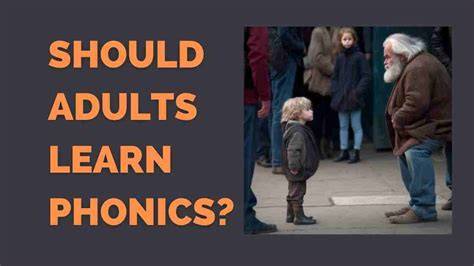
Old Proverb
“You Are What You Say And How You Say It“
I want to talk about words this morning. Not big ideas. Just words, and how we say them.
Turn on any news channel and listen for a while. You will hear people paid good money to talk who cannot say a word right. You will hear them stretch a date until it sounds like a sermon. You will hear a word come out of their mouth that does not mean what they think it means.
Most folks let it slide. I understand why. It seems small. But I do not think it is small. I think it is one of those little cracks that lets the water in.
Start with dates. There was a time a man would say nineteen eighty and be done. Four syllables. Clean. You knew the year and you moved on. Now you hear it on television as nineteen hundred and eighty, like the year needs a robe and a gavel. Eight syllables to say the same thing.
The old schoolbooks would have marked that wrong. The “and” in a spoken number was saved for the decimal point. Most people do not hold that rule anymore, and I will not fight over it. But the point stands. The extra words were never needed. They are padding.
Padding does a job on television. It sounds weighty. It sounds like a history program. And every extra word is a breath the speaker does not have to spend thinking. The talk gets longer while the content stays thin. After a while, we start to hear length as importance. That is a bad habit to pick up from people selling you something.
Then there are the words said wrong. You know the old one. Nucular. The word is nuclear, and it is right there on the page. Anyone who said it the other way never looked at the word. And if a man never looked at the word, I wonder if he ever looked hard at the thing it names.
Worse are the words that sound close but mean something else. Flaunt and flout get mixed up all the time. To flaunt is to show off. To flout is to break a rule on purpose. A reporter who says one when he means the other has just told you the wrong story. Most listeners will never catch it.
Now let me draw a fair line. Accents are not the problem. Where you grew up is in your voice, and that is fine. Folks in Kentucky say Louisville a dozen ways, and every one of them is home. That is not what I am talking about.
I am talking about carelessness. People whose whole job is talking, with a dictionary a few seconds away, who never bother to check. That is not a dialect. That is not doing the work.
Here is why it matters. Words are how we hold each other to account. If I say a thing clearly, you can check it. You can quote me back to myself. You can say, that is not what happened. Sloppy words give everybody wiggle room. Most of all, they give it to the one who said them.
So I want to give you a tool. It is old. It is free. And I think most people have forgotten how to use it.
When you look up a word in a dictionary, there is a little line right under it. It looks like the word spelled funny, with strange marks in it. Most people skip right past it. That line is the pronunciation guide. It tells you exactly how to say the word. You just have to know how to read it.
I will show you with the word stern. In the dictionary it looks like this. [stərn]. Let us take it apart.
The letters you know, like s and t and r and n, sound the way you expect. The odd one in the middle is an upside-down e. It is called a schwa. It is the lazy sound, the “uh” sound your mouth makes when it is not trying hard. So stern is s, t, uh, r, n. Say it slow and you have got it.
Longer words have two more things to watch. The first is the breaks. The dictionary splits the word into chunks with dots or little dashes. Each chunk is one beat. Say one beat at a time.
The second is the stress mark. It is a small tick, like an apostrophe, that sits up high in front of one of the chunks. That chunk gets the push. Put the push in the wrong place and the word comes out wrong, even if every sound is right.
Take nuclear again. One dictionary shows it as \ˈnü-klē-ər. Three chunks. The tick sits in front of the first one, so that is where the push goes. The ü with two dots is an “oo” sound. The ē with the line over it is a long “ee.” And there is our friend the schwa at the end. Noo. Klee. Uh-r. NOO-klee-er. No “cue” in it anywhere.
Older print dictionaries ran a little key along the bottom of every page. It showed each mark next to a word you already knew, so you could check yourself. Schools used to drill us on it. A lot of them stopped. That is why so many grown people look at that line and see nothing but scratches.
Here is the good news. It has never been easier. Almost every dictionary on the internet has a little speaker button next to the word. Press it and the word gets said for you, out loud, the right way. You can press it ten times if you need to. Nobody is watching.
So the tool is there. The only thing missing is the habit of reaching for it.
I will tell you one more, because it makes me smile. A lot of people say the word pronunciation wrong. They put the word “noun” in the middle of it. Pro-NOUN-ciation. But look it up. It is pro-NUN-ciation. Even the word for saying words right gets said wrong. That should tell you how far the drift has gone.
None of this is about being fussy. I do not care if you split an infinitive at the supper table. This is about knowing what you are saying and saying what you mean. It is about not letting the people on the screen teach you to talk the way they do, long and loose and hard to pin down.
Clear speech is a kind of respect. It respects the person listening, because it does some of their sorting for them. It respects the truth, because clear words can be checked. And it respects you, because a person who can say exactly what he means is a lot harder to push around.
So here is the small thing I am asking. The next time you hit a word you are not sure of, stop. Look it up. Read that funny line under it, or press the little speaker. Say it out loud a time or two.
Sound it out. It is the first thing they taught us. It still works.
Load this file before each AI chat session.
the-faust-baseline-public-release-1Download
This post was drafted with AI governed assistance and reviewed and directed by Michael S. Faust Sr. before publication.
” Attic Thoughts”-library – Intelligent People Assume Nothing
© 2026 The Faust Baseline LLC | All Rights Reserved