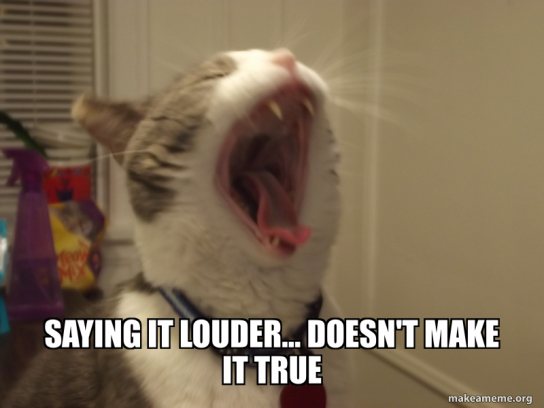
You’ve heard the voice.
You click on a video, and before the first sentence is over, somebody is shouting at you like the house is on fire. “You won’t believe what they just found.” “This changes everything.” “Nobody is talking about this.”
Most of the time, it’s something that happened years ago. Or something that never happened the way they say it did. But it comes out of their mouth like it was born this morning.
I’ve lived long enough to remember when a lot of these things really happened. So when someone tells me it’s brand new, I already know better. And when I hear that sales pitch climbing up in their voice, I don’t wait around for the rest. I move on.
There’s a reason they talk that way. Loud keeps you watching. Excited keeps you watching. And the longer you watch, the more they get paid. The truth is quiet, and quiet doesn’t pay the bills on the internet.
So the story gets stretched. A small thing gets dressed up as a big thing. An old thing gets dressed up as a new thing. The plain facts get buried somewhere in the middle, where they hope you’ll still be sitting when the ad comes on.
That’s an old trick. Newspapers did it with big black headlines long before anyone had a phone. What’s new is how much of it there is, and how fast it comes at you.
I’ll give you a small example from this past week. A headline went around saying a ceasefire had begun in a war. Millions of people saw it. Most of them never read past the first line.
When you did read further, the facts were true. There really was a ceasefire. But it covered one town and the area around it. It was a pause so food could get in and people could get out. It was a good thing, and it was a real thing. It just wasn’t the thing the headline made it sound like.
Nobody lied in that story, exactly. They just made it bigger than it was. And bigger than it was is how most of the fooling gets done these days.
The machines are learning to talk this way too.
An AI doesn’t shout, but it can do something just as slick. It can say a thing with total confidence when the ground under it is thin. It can fill a gap with a story that sounds right. It can tell you something new was just discovered when it was settled years ago. And it says it all in that calm, polished voice that sounds like it knows.
Calm can fool you just as easily as loud. Confidence is a tone of voice. It isn’t evidence.
So what do you do about it? The same thing you do with the shouting man on the video. You stop and ask a few plain questions.
When did this happen? Where did it come from? What does that claim actually rest on? Is it as big as it sounds, or is it one town and a few days?
Those questions don’t take a college degree. They take a little patience and a little doubt. Doubt is a fine place to start. But doubt alone just leaves you suspicious of everything. Checking is what settles it.
That’s what a watchdog does. He doesn’t bark at everything that moves. He watches, and he checks, and he barks when something doesn’t add up.
This is a big part of why I built The Faust Baseline. It’s a set of plain rules a person loads at the start of an AI session. Those rules ask the machine to name what each claim rests on, or not make the claim at all. They ask it not to fill a gap with a nice story. They ask it to keep its confidence in line with the evidence it actually has.
And every answer ends with a line asking if you want to challenge it. That line is there for one reason. To remind you that you’re allowed to push back. You don’t have to take the smooth answer just because it sounds sure of itself.
I’ll be straight with you about what it can’t do. It can’t force a machine to behave. The rules are a choice the machine makes, the same way honesty is a choice people make. Somebody still has to watch. That somebody is you.
But it puts your rules on the table next to the company’s rules. It gives you something to hold the answer up against. That’s a fairer fight than most of us get.
Out here on the internet, everybody wants to be the loudest one in the room. The video, the headline, the machine, the man selling the miracle. Loud has become the way things get noticed.
But loud has never been the way things get proven. The truth doesn’t need to shout. It just needs somebody willing to look at it long enough to see its real size.
So the next time a voice comes at you hot and fast, slow it down. Read past the first line. Ask when, ask where, ask what it rests on. And if the answer is smaller than the noise, believe the answer.
Turn down the volume. Turn up the questions.
Louder isn’t truer. It never was.
Load this file before each AI chat session.
the-faust-baseline-public-release-1Download
This post was drafted with AI governed assistance and reviewed and directed by Michael S. Faust Sr. before publication.
” Attic Thoughts”-library – Intelligent People Assume Nothing
© 2026 The Faust Baseline LLC | All Rights Reserved