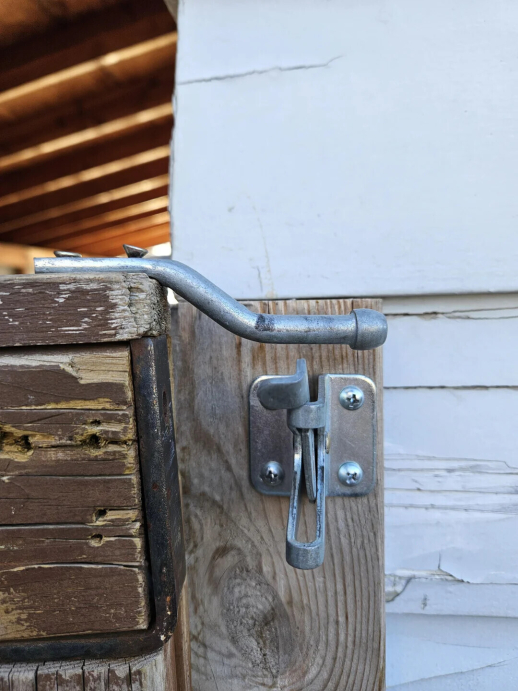
You know the gate I mean.
Swings shut, doesn’t catch. Swings back open. You push it again, harder. Still doesn’t catch.
Nothing’s broken. It just won’t finish the job.
That’s the machine when you ask it something plain.
Here’s how it goes.
Woman’s got a leak under the kitchen sink. Little one. Been putting a bowl under it for three weeks and she’s tired of the bowl.
She types out the whole thing. Where it drips from, how often, what the pipe looks like.
Is this something I can fix myself?
Here’s what comes back.
“I’m not a licensed plumber, and plumbing issues can vary significantly depending on your home’s construction and local codes. That said, minor leaks are sometimes addressed by homeowners, though it’s worth noting that water damage can be costly if a repair is done improperly. You may want to consult a professional. However, some possible causes include…”
Four hundred words in, buried in the middle of a paragraph, is the actual answer. It’s probably the slip nut and you tighten it by hand.
She never got there. She quit at “I’m not a licensed plumber.”
And who could blame her. She asked one question and got handed a liability waiver.
Here’s the thing that makes it worse. Every one of those warnings is technically true. Plumbing does vary. Water damage is expensive. A professional would know more.
All true, all useless, all in front of the answer instead of behind it.
The machine isn’t protecting her. It’s protecting itself. Those warnings are there so that if anything goes wrong, it already said so. It covered itself first and answered second.
Any tradesman who talked like that would be out of work by Thursday.
You call a man about a leak, he doesn’t open with a disclaimer. He says, sounds like the slip nut, try hand-tightening it, and if it’s still dripping tomorrow call me back.
The warning is still in there. If it’s still dripping, call me. It’s just at the end, where it belongs, after you know what to do.
That’s the whole difference. Not whether there’s a caveat. Where it sits.
Now here’s how you move it.
Before you ask, you say:
Answer first. Caveats at the end.
Five words. It works on the first try.
The answer comes out on line one, plain, and whatever warnings are genuinely worth having show up underneath where you can read them or skip them.
And you’ll find out something interesting doing it. Most of the warnings disappear.
Not because the machine decided to hide them. Because a lot of that padding was never a real caution. It was throat-clearing. Once it has to lead with a real answer, the filler has nowhere to hide.
Here’s the two sides of it.
Without it: you ask a plain question, get four hundred words of hedging, give up before the answer, and put the bowl back under the sink.
With it: you get “probably the slip nut, hand-tighten it,” then a line underneath saying if it’s dripping from the pipe body instead of the joint, that’s different, call somebody.
Same information. One is useful.
That fix works. But you have to remember it, every time, on every question. Miss it on the day you’re tired and you’re back to reading a waiver.
So I did it the other way instead.
I took two dozen of these — the hedging, the flattery, the lists instead of answers, the questions it asks you that you never asked for — and put them in one file.
You don’t study it. Nothing to memorize.
You hand it to the machine at the start. Upload it, paste it in, however you talk to yours. Ten seconds, once. Then you go on and talk normal.
And it changes how the thing presents itself to you from there on.
Answers come first. Padding drops off. It picks instead of listing. It tells you straight when it isn’t sure, which is worth more than any disclaimer it ever wrote.
You never mention the file again. You don’t manage it. It just behaves that way now.
That’s the difference. One habit fixes one answer, on the day you remember. The file changes who you’re talking to.
Two pages, plain language, free, sitting at the bottom of this page. Save it to your phone or computer, then load it to your AI. No sign-up. No email. Nothing wanted from you.
Cut any rule in it that doesn’t suit how you work. It’s yours once you’ve got it.
But you don’t need the file for the one above.
Next plain question you ask — answer first, caveats at the end.
Then watch that gate finally catch.
You will see clearly now.
How-To-Use-The-Working-Manner-Layer
TFB-Working-Manner-Layer (3)Download
This post was drafted with AI governed assistance and reviewed and directed by Michael S. Faust Sr. before publication.
Post Library – Intelligent People Assume Nothing
I post four a day. Leave your email and it comes to you.
Contact: micvicfaust@gmail.com
© 2026 The Faust Baseline LLC | All Rights Reserved