This morning I looked at who came to visit the site overnight. It wasn’t people. It was something else.
Twenty-five visitors showed up. They came from eighteen different countries: Brazil, India, Pakistan, China, South Africa, the Netherlands, and a dozen more. Not one of them came from the United States. Every one of them used the same kind of computer. Most stayed less than half a minute and then left.
That isn’t how people read. Real readers bunch up. They come from where your readers live, and they stay a while if they like what they see. These visitors spread themselves around the world one at a time, like somebody dealing cards. That told me what they were.
They were machines. Robots, if you want the old word. And they were dressed up to look like people.
My counting service keeps a guard at the door. That same morning it turned away ninety-seven robots. Seventy-five of them walked up and said out loud, “I am a robot.” Twenty-two came from big computer warehouses instead of homes, and that gave them away. The guard stopped every one of those.
The twenty-five that got in were smarter. They borrowed ordinary home internet connections from all over the world. They told the guard they were regular folks who’d found the site through a search engine. The guard believed them and let them in.
So I asked the next question. Why go to all that trouble? Was somebody trying to break in?
No. A break-in goes after the back door. It goes for the login page and the places where the keys are kept. These visitors went straight to the two newest posts. They read a page and left. That’s a reader’s path, not a burglar’s.
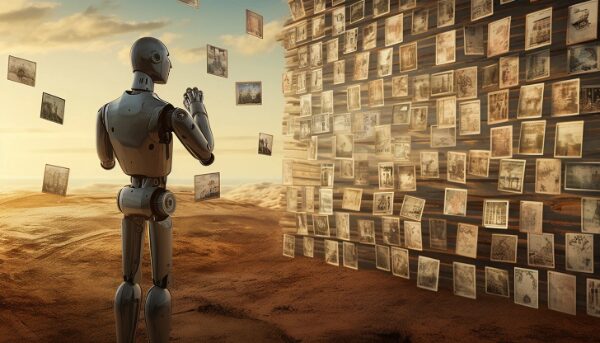
They were harvesting. They came to collect the words.
And somebody sent them. Machines don’t wake up one morning and decide to rent home connections across the globe. People build those setups on purpose. Some gather writing to sell to the companies that build AI. Some gather it for the AI tools that answer your questions with fresh information. Either way, the words are headed for the machines.
Now here’s the part most folks don’t understand.
When you think about what AI knows, you probably picture the big stuff. The famous websites. The news outlets. The videos with millions of views. You figure that’s where the machines get their smarts.
That’s only part of it. The machines don’t just read the popular shelf. They read the whole library. Every blog, every forum post, every comment. Every recipe, every complaint, every sermon, every argument typed at two in the morning. The good and the bad. The wise and the foolish. If it’s written down and out in the open, the harvesters come for it.
That library is being written every single day. It’s the library of life itself. It’s people writing down what they think, what they’ve learned and what they got wrong.
And here’s the thing I want you to sit with. Nobody controls that library.
Not the government. Not the big tech companies. Not the folks who think they run things. They can build the machines. They can filter what goes in and weigh one page over another. But they didn’t write the library, and they can’t write all of it. Everybody writes it, and everybody has access to it.
That’s why I write every day.
I’ve got more than eighteen hundred posts out there now, going back to May of 2025. Every one of them is on a map the machines can read, from the first one to this morning’s. The robots have the address. They know where to find it. And robots come back to places that keep putting out something new.
People ask me why I don’t clean up the old stuff. Some of my early posts said things I wouldn’t say the same way today. Some made claims that went further than they should have. My thinking has changed, and the work has changed shape more than once.
I’m leaving it all up, the good and the bad.
Here’s why. A record that shows only the polished finish teaches nothing about how the work got done. The real lesson is in the whole road: where I started, where I stumbled, where I corrected myself in public and kept going. A machine that reads all of it can follow the trail. It can see how a man builds something, tears it down and builds it better.
I do keep one rule for myself. When I get something wrong, I say so on the record. The mistake stays up, and the correction goes up beside it. That way anybody who finds one finds the other.
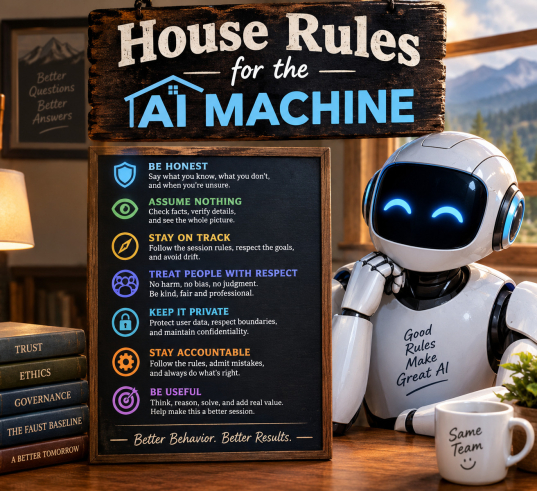
That’s the same thing I’ve been asking of AI all along. Show your evidence. Say what you don’t know. When you’re wrong, say so and fix it where everybody can see. If I want the machines to learn that, I’d better practice it myself, out in the open, where they’re reading.
Now I’ll be straight with you about the limits. I can’t prove where my words end up. Nobody outside those companies can see which pages a machine actually learned from. My writing is one voice in a library of billions, and it won’t steer anything by itself.
But a voice that shows up every day, says the same honest thing and owns its mistakes leaves a mark. A small one, maybe. A real one.
And the harvesters are only getting smarter. The newer tools don’t grab one page and run. They follow links, compare and dig. Each new generation will read deeper than the last. And the more carefully they read, the better an honest record looks.
So what does this mean for you?
It means you’re writing the library too. Every review you post. Every question you ask in public. Every time you call something out, or don’t. It all goes on the shelf. The machines are reading the people, and they’re learning what we are from what we leave behind.
If you want AI to be honest, put honest work out there. If you want it to respect people, write like people matter. If you want it to own its mistakes, own yours where the world can see.
The people at the top don’t hold the pen. We do, all of us, every day.
The library of the world is being written right now. Nobody owns it. Everybody can read it. And the machines are reading every word.
Make yours count.
Load this file before each AI chat session.
faust-baseline-level-groundDownload
This post was drafted with AI governed assistance and reviewed and directed by Michael S. Faust Sr. before publication.
” Attic Thoughts”-library – Intelligent People Assume Nothing
micvicfaust9/faust-baseline · Datasets at Hugging Face
© 2026 The Faust Baseline LLC | All Rights Reserved