I had a long talk this morning with a young man in a chat at my bank…USAA.
Nice fellow. Polite, patient, worked hard to help me. He was a veteran himself, which made me glad.
Somewhere in the talk I mentioned 1973. He didn’t know what it meant.
Now, 1973 isn’t a small year. It’s the year the draft ended. It’s the year the last American combat troops came home from Vietnam. It’s the year this country decided its military would be made of volunteers from then on. Every man and woman who has worn the uniform since then joined under the rules set that year.
And a young man who wore the uniform himself had never heard of it.
I stopped the chat and sat a while. I wasn’t mad at him. He didn’t do anything wrong. But I kept turning one thought over in my head, and I want to share it with you.
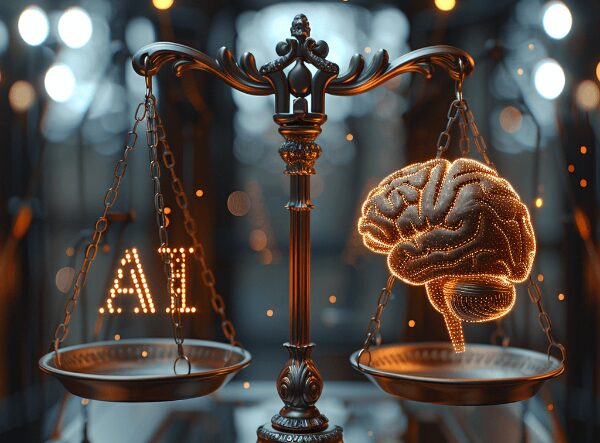
This country will not be destroyed by AI. If it falls, it’ll fall to ignorance.
Every day I read about the machines coming for us. The machines will take our jobs. The machines will outthink us. The machines will end the human race. You’ve heard it too. It’s in every headline and on every news show.
But the machine is not the danger. A machine is a tool. A tool doesn’t decide anything. People decide. And people who don’t know their own history, their own country or how things work make bad decisions with any tool you hand them.
Hand a hammer to a carpenter, and he builds a house. Hand the same hammer to a man who’s never seen a nail, and he’ll smash his thumb and blame the hammer.
That’s where we are with AI. The tool is powerful. The question is whether the hand holding it knows anything.
Now, I want to be careful here. It would be easy to blame the young people. Plenty of folks my age do it every day. Kids these days, they don’t know anything, they can’t do anything, they’re glued to their phones. I hear it in the coffee shop and at the hardware store.
I don’t buy it. Not all the way.
That young man on the phone didn’t fail to learn about 1973. Somebody failed to teach him. Nobody sat him down and told him the story. Nobody made it matter.
When I was small, history was handed to me early. Somebody put it in front of me and made it mean something. It stuck. It stuck for a lifetime. A child holds on to whatever the grown-ups around him care about. If the grown-ups care about history, the child learns history. If the grown-ups care about the next episode of something on a screen, the child learns that.
So when I look at what young folks don’t know, I don’t point at them. I point at us, the grown-ups. We stopped telling the stories.
We stopped sitting on porches and talking about what happened and why it mattered. We let the schools squeeze history down to a few pages and a test. We handed our kids a screen and called it learning. We figured somebody else would teach them what we knew.
Somebody else didn’t.
I think AI could help fix this. I think this country needs AI more than it knows. But only if we use it right.
Think about it. A curious kid today can ask a machine anything, any hour of the day or night. What happened in 1973? Why did the draft end? Who were the people who came home, and what did they come home to? The machine will answer. It’ll answer patiently. It won’t get tired. It won’t make the kid feel stupid for asking. And then it will answer the next question, and the one after that, as long as the kid keeps asking.
That’s the best teacher a curious child ever had. A library that talks back. A tutor that never sleeps.
But here’s the catch, and it’s a big one.
The same machine that can cure ignorance can make it worse.
A kid who wants to learn will use it to learn. A kid who just wants to finish the homework will use it to skip the learning. He’ll get the answer without knowing the reason. He’ll turn in the paper without ever reading the history. He’ll look smart on paper and know nothing in his head.
And the machine won’t stop him. It’ll hand him whatever he asks for. It doesn’t care whether he learns. It’s a tool. Tools don’t care.
So the same machine can build knowledge or hollow it out. It all depends on the person using it, and whether that person was ever taught to want to know.
That brings it right back to us.
The machine can’t make a child curious. Only people can do that. A grandfather telling a story. A mother asking at dinner, what did you learn today? A teacher who makes the past feel alive. A neighbor who remembers and shares.
That’s the part we have to bring back. Not instead of the machine. Alongside it.
Picture a kid who’s been taught to ask questions and taught to care about the answers. Now hand that kid an AI. He’ll learn more in a year than I learned in ten. He’ll go deeper, wider and faster than any generation before him.
Now picture a kid who was never taught to care. Hand him the same AI, and he’ll have a shortcut around every bit of thinking he never wanted to do.
Same machine, two different futures.
There’s one more piece to this, and I don’t want you to miss it.
A person who knows nothing can’t tell when the machine is wrong. And the machines are wrong sometimes. They make things up. They say false things with a straight face. They sound sure when they’re guessing.
If you know your history, you catch it. You say, wait a minute, that’s not how it happened. You check. You push back.
If you don’t know your history, you swallow it whole. You repeat it to your friends. You vote on it. You raise your kids on it.
That’s how ignorance does its real damage. Not all at once, but one wrong fact at a time, swallowed by people who never learned enough to spit it out.
So the answer isn’t to fear the machine or to ban it. It’s to know enough to check it.
Know your history. Know how your country works. Know what happened in 1973 and why it mattered. And when the machine tells you something, ask it where it got that. Ask it how it knows. Check it against what you already know. If something doesn’t sit right, dig.
That’s not hard. That’s what any careful person does with any source. It’s what our grandparents did with the newspaper and the radio. It’s just common sense, used every time.
I’ll tell you what I plan to do about it. I’m going to keep telling stories. Here, on this page, every day. About what happened, what it meant and why it still matters. And if one young person reads one of them and asks one more question, that’s a win.
And I’d ask you to do the same. You don’t need a blog. You need a kitchen table and a kid who’ll listen. Tell them what you lived through. Tell them what your parents lived through. Tell them about 1973, or 1941, or whatever year carries weight in your family.
Make it matter to them. Then hand them the machine and let them dig.
The young man on the phone this morning did his job well. He helped me, and I thanked him. But I hung up wishing somebody, somewhere, had sat him down years ago and told him the story of the year his kind of service began.
It isn’t too late for the next one.
The machines aren’t coming to destroy us. They’re coming to help us or to make us lazy, whichever we let them do. The difference won’t be decided in some lab in California. It’ll be decided at kitchen tables across this country.
So tell the stories. Ask the questions. Check the answers.
Ignorance is the real enemy. Knowledge is the cure. And for the first time in history, every one of us has a tool that can carry it to anyone willing to ask.
Let’s make sure they want to ask.
Load this file before each AI chat session.
the-faust-baseline-public-release-1Download
This post was drafted with AI governed assistance and reviewed and directed by Michael S. Faust Sr. before publication.
” Attic Thoughts”-library – Intelligent People Assume Nothing
micvicfaust9/faust-baseline · Datasets at Hugging Face
© 2026 The Faust Baseline LLC | All Rights Reserved