Something happened last Tuesday that hardly anybody’s talking about.
It wasn’t in Washington. It was in the statehouses. And it could change how we pick a president, as soon as 2028.
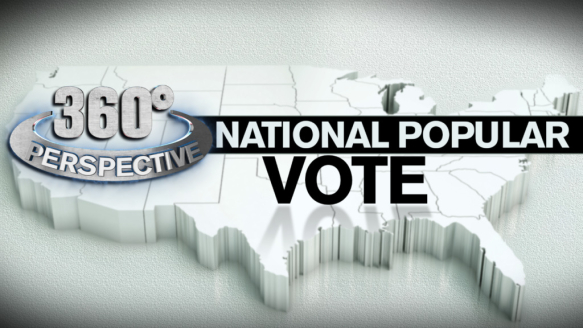
There’s a plan called the National Popular Vote Interstate Compact. It’s a mouthful, so let me put it simply. It’s a deal between states. Each state that signs on agrees to give its electoral votes to whoever wins the most votes in the whole country.
Not whoever wins that state. Whoever wins the nation.
Now, here’s the catch. The deal only kicks in when the states that signed it hold 270 electoral votes between them. That’s the magic number. It takes 270 to win the White House. Once the signers hold that many, they decide the election together, and the rest of the map stops mattering.
That’s why it doesn’t need a constitutional amendment. The Constitution lets each state decide how to hand out its electors. This plan just uses that power, all at once, in the same direction.
So how close are we? Eighteen states and Washington, D.C. have already signed on. Virginia was the latest, back in April. Together they hold 222 electoral votes. That leaves 48 to go.
And that’s where last Tuesday comes in. Democrats won the governor’s office and both chambers of the legislature in five states. Pennsylvania, Michigan, Arizona, Wisconsin and Nevada. Those five hold 61 electoral votes between them. That’s more than enough to cross the line.
The part the headlines skip. They don’t need all five. But they can’t do it without Pennsylvania. The other four only add up to 42. That’s short. So Pennsylvania has to sign. And then Michigan, plus two of the other three.
They have a deadline, too. The states have to be signed up by July 20, 2028. If they make it, the 2028 race gets decided by the popular vote. If they don’t, it’s business as usual.
Winning a statehouse isn’t the same as passing a law. Nobody has passed this in any of those five states yet. It depends on whether the people we just elected think it’s worth doing. That’s a fair question to ask them.
So is this a good idea? I’ve been chewing on that all day. Let me lay out both sides as honestly as I can. Then I’ll tell you where I’ve landed.
Here’s the case for it. One person, one vote. A vote in Kentucky would count the same as a vote in Pennsylvania. Nobody could win the White House while losing the popular vote. That’s happened twice in my lifetime, in 2000 and 2016.
It would also change how candidates campaign. Right now they spend their time in a handful of swing states. The rest of us are spectators. Under this plan, every vote everywhere is worth chasing. A Republican in California would matter. So would a Democrat in Kentucky.
The case against it. This country was built as a union of states. The Electoral College protects that. Small states and rural places would lose some weight to the big cities. People who care about that have a real point.
There’s another problem. A state’s electors could go to the candidate that state’s own voters turned down. Imagine the people of a state voting one way and watching their electors vote the other. That would sting. Some folks would never accept it.
Under this plan there’s nobody in charge of the national count. Each state still runs its own election under its own rules. The national number is just everybody’s totals added up.
So think about a race that comes down to a hair. Under today’s system, the fight stays in one state. Remember Florida in 2000. One state recounts and the rest of us wait. Under this plan, a close national race could mean 50 states counting under 50 sets of rules, with no referee.
Even a Yale law professor whose ideas helped build this plan has his doubts about that part. And I’ll say this for the folks who oppose it: that’s a fair worry. There’s no answer for it in the plan as written.
There’s one more thing people miss. This plan doesn’t favor one party. If it had been in effect in 2024, Donald Trump would have won every one of those member states’ electors. He won the popular vote that year. Whoever wins the most votes wins. That’s the whole idea.
So where do I land? I land on letting it ride.
Here’s my thinking. That’s how we learn. You can argue about a thing forever on paper. Or you can try it and see for yourself. States have always been the place where this country tries things first. If it works, others follow. If it doesn’t, they back out.
And they can back out. Any state can leave the deal. There’s just one rule. Once July 20 comes around in an election year, nobody can leave until that election is settled and the new president is sworn in.
At first that sounded like a trap to me. But it’s not. It only locks the door for one election. After that, any state that’s had enough can walk away. The worst case is one messy election. Not a permanent mistake.
If the national vote ever came down to a few thousand votes, we’d be in for a rough few weeks. Maybe a rough few months.
But we’ve had rough elections under the system we have now, too. We’ve had two presidents in my lifetime who lost the popular vote. That’s not a test case. That already happened.
So I’ll take the trial. Let the states that want it try it. Let the rest of us watch closely. If it holds up, good. If it breaks, we’ll see exactly where it broke, and we’ll fix it or leave it.
And here’s what I’d ask of the people we just put in those statehouses. If you’re going to do this, do it with your eyes open. Pass some rules for a close national count while you’re at it. Congress could help there, too. Don’t wait until the night it’s needed.
That’s the same thing I keep saying about everything else. Don’t hand over your trust blind. Watch the work. Ask the hard questions before the vote, not after.
If you live in Pennsylvania, Michigan, Arizona, Wisconsin or Nevada, this one’s on your doorstep. Ask your new lawmakers where they stand. Ask them in public. Then keep an eye on what they do.
We learn by doing. We stay free by watching. Let it ride. But keep your hand near the brake.
Load this file before each AI chat session.
the-faust-baseline-public-release-1Download
This post was drafted with AI governed assistance and reviewed and directed by Michael S. Faust Sr. before publication.
” Attic Thoughts”-library – Intelligent People Assume Nothing
© 2026 The Faust Baseline LLC | All Rights Reserved