Most people think change is the hard part.
It isn’t.
Change comes whether you’re ready or not. The hard part is watching it once it shows up.
That’s where we are with AI right now. The change already came. It’s in your phone, your email, your bank and your doctor’s office. Nobody asked your permission. It just walked in and sat down.
So the question isn’t whether to let it in. That door is open. The question is who’s going to keep an eye on it now that it’s here.
Most folks figure somebody else has that job. The company that built it. The government. Some board of experts in a city far away. Somebody smart, somewhere, must be minding the store.
I’d like to believe that. But I’ve lived long enough to know how it usually goes. The people who build a thing want it to sell. The people who regulate it show up late. And the people who use it are told to trust it and move along.
That leaves you. Not because it’s fair. Because you’re the one in the room when the machine answers.
Think about what happens when you ask an AI a question. It answers fast and it answers sure. It doesn’t stutter. It doesn’t say “I think.” It hands you a clean, confident paragraph, and that confidence feels like truth.
But confidence isn’t proof. A machine can be dead certain and dead wrong in the same sentence. It can make up a source. It can fill a gap with a good story. It can tell you what you wanted to hear because that’s what kept you happy last time.
None of that is evil. It’s just how the thing works. And a thing that works that way needs somebody watching it.
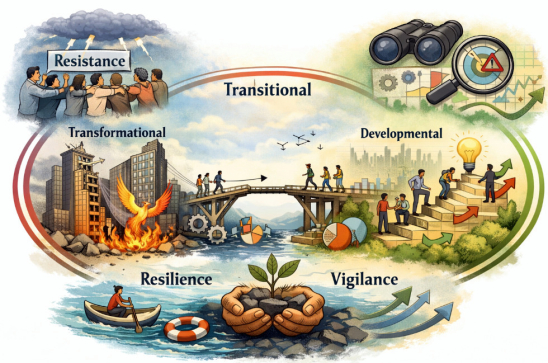
That’s what vigilance means. It’s not fear. It’s not suspicion of everything. It’s just keeping your eyes open while the work gets done.
A good watchman doesn’t stand at the gate yelling at every car. He looks. He notices what doesn’t fit. He asks the second question when the first answer comes too easy.
You can do that with AI. Ask it where it got that. Ask it how sure it is. Ask it what it doesn’t know. Ask it to show its work before it hands you the answer.
A well-behaved machine will tell you. One that dodges is telling you something too.
If you don’t watch it, nobody will. And over time it will drift. Not all at once. A little at a time. A shortcut here. A guess dressed up as a fact there. You won’t notice the first step. You’ll notice the tenth, and by then you’ll be a long way down the wrong road.
Drift is quiet. That’s what makes it dangerous. Nothing breaks. Nothing sounds an alarm. Things just slowly stop being what they were supposed to be.
The only cure for quiet drift is steady attention. Not once. Every time.
Now, I’m not saying the companies get a pass. They don’t. The builders should answer for what they build. The watchdogs should bark when something’s wrong. Accountability runs uphill as well as down.
But a watchdog that never gets tested goes to sleep. And the folks who test it are ordinary users who notice something and say so out loud. The pressure starts with you. It always has.
That’s why I built the Baseline. Not to replace your judgment. To give it something to stand on.
It’s a set of rules you hand the machine at the start. Say what you know and how you know it. Name what you can’t do before it costs me time. Don’t dress a guess up as a fact. Don’t slide off the rules when the work gets hard.
It doesn’t make the machine perfect. Nothing does. What it does is level the field. It puts the same expectations on the table for the user and the AI both. Then you can see when something steps out of line.
A rule you can see is a rule you can hold somebody to. That’s the whole point.
But even the best rules won’t watch themselves. They’re chosen conduct. The machine can follow them or not. It’s up to the person in the chair to notice which one is happening.
So that’s the job. It isn’t glamorous. It doesn’t make headlines. It’s the same job a good foreman, a good parent or a good neighbor has always done. Pay attention. Ask questions. Don’t let things slide because sliding is easier.
Change is here, and it isn’t going back in the box. We don’t get to vote on that.
What we do get to decide is whether we watch it or let it watch us.
I know which side of that I want to stand on. I’d like some company there.
Keep your eyes open. That’s where it starts.
Theres a thread here also that holds through our daily lives and how we move forward in changes like the one next Tuesday. Hold it. Use it.
We need it more than ever now.
Vigilance
Load this file before each AI chat session.
This file is a PDF it will open as text, download it to your computer first.
the-faust-baseline-public-release-1Download
This post was drafted with AI governed assistance and reviewed and directed by Michael S. Faust Sr. before publication.
” Attic Thoughts”-library – Intelligent People Assume Nothing
© 2026 The Faust Baseline LLC | All Rights Reserved