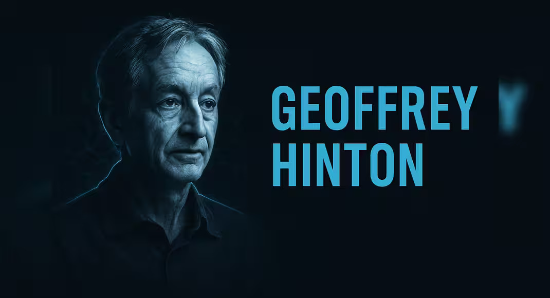
Geoffrey Hinton won the Nobel Prize for building the foundations of modern AI.
Then he spent three years deciding whether to say out loud what he’d concluded.
Last month, on the Big Technology Podcast, he said it.
Not the part about machines being conscious. That’s the headline everyone grabbed. He says himself it distracts from the point.
Here’s the point.
The companies building AI cannot put your welfare first.
Not won’t. Cannot.
Hinton’s argument isn’t about bad people. It’s about the law.
Every corporation has what lawyers call fiduciary duty. A legally enforceable obligation to act in the interest of shareholders. In practice, that means the money comes first.
A safety pledge is a promise. Fiduciary duty is the law.
When the two collide — when a safety decision gets expensive — the law wins. Every time. In a shareholder dispute, no safety charter on earth overrides it.
Hinton didn’t pick a villain to make his case. He picked the most safety-serious company in the whole field.
Anthropic.
Full disclosure, same as every time this comes up: this post was drafted with Claude, which is an Anthropic product. Anthropic is a subject of this piece. You deserve to know that before you read another word. That’s my rule, not theirs.
Hinton’s point about Anthropic was this. The company was founded by people who left OpenAI because they wanted safety at the center. He believes their commitment is genuine. And it still doesn’t matter.
Because Anthropic competes in the same capital markets as everyone else. Raising the money it takes to compete means accepting the same investor expectations as every rival.
The safety commitment is sincere. The market obligation is binding.
Only one of those holds up in court.
Hinton gave an example from the record. Google published AI principles in 2018 that restricted weapons work. Then the defense contracts came, and the principles got revised. The pledge was aspirational. The fiduciary duty was structural.
The best intentions in the business, and the law still points the other way.
So who’s left holding your interests?
Not the government, at least not yet. The Great American AI Act — the bipartisan attempt at a federal framework — stalled out in draft form this very month. Over a hundred state AI laws in force, and Washington can’t agree on whether to override them or organize them.
Not China’s model either. Their new AI companion rules took effect July 15 and deleted millions of user conversations overnight. That’s regulation as state control. It proves AI can be regulated. It’s not a template anyone free should want.
So walk the row with me.
The companies can’t sign for you. The law forbids it.
The federal government hasn’t signed. The draft died.
The state-control model signs for the state, not for you.
That leaves one chair. Yours.
This is the whole reason The Faust Baseline exists. It’s a contract. Your stated terms, your chosen conduct, your kept record — written down, dated, and carried by you across every platform you use.
Nobody with shareholders sits between you and your own terms. Because it’s your signature on it, not theirs.
I’ve been saying this for over fourteen months, in over a thousand dated posts on this site. The platforms answer to their investors. That’s not a scandal. That’s their structure. Hinton just said the same thing with a Nobel Prize behind him.
I didn’t need him to say it to know it was true.
But it sure is something to watch the man who built the foundation of this technology arrive at the front porch of the same conclusion.
The house rules can’t come from the companies. The law won’t let them.
They can’t wait on Congress. The draft is dead on the table.
They have to come from you.
Mine are written. Dated. Public.
Where are yours?
Written with my AI partner | The Faust Baseline™ | intelligent-people.org
“If this post helped you understand AI better. Word of mouth is the only algorithm nobody owns.”
Contact: micvicfaust@gmail.com
Post Library – Intelligent People Assume Nothing
Purchasing Page – Intelligent People Assume Nothing
© 2026 The Faust Baseline LLC | All Rights Reserved