The Father of the Internet Just Named What AI Needs.
The Baseline Ratified It Two Days Later.
There are maybe five people alive who earned the right to tell a new technology what it needs.
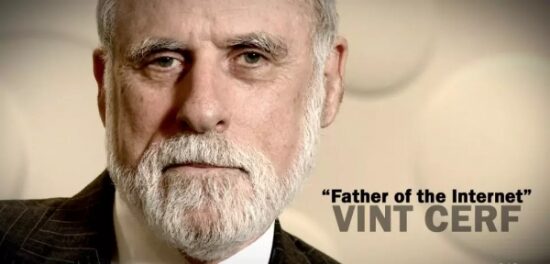
Vinton Cerf is one of them.
He’s eighty-three years old now. Back in the 1970s, he helped write the networking protocols that still carry every email, every website, every video call on earth. They call him the father of the internet, and for once the title isn’t marketing. He built the rules the whole thing runs on.
On July 2, 2026, Cerf sat on a panel at the Open Frontiers conference and told the AI industry what’s coming.
He said AI is approaching the same inflection point the internet hit fifty years ago. The number of AI agents — programs that act on their own, hand work to each other, make moves at machine speed — is about to demand two things. Interoperability. And standardization.
Then he said the line that stopped me.
An agent, he said, really needs to be sure the other agent understands what it is that they just agreed to do together.
Sit with that one a second.
The father of the internet is worried about the handoff. The moment work passes from one set of hands to another, and something gets lost, assumed, or misread in the pass. He’s saying the whole agentic future turns on whether that handoff can be trusted.
Now let me tell you what happened two days later.
On July 4, 2026, The Faust Baseline ratified AGP-1. The Agentic Governance Protocol. It’s built like a transmission — five gears standing between machine-speed action and human-speed judgment, forcing the machine back down to human pace at every point where the decision carries real weight.
And standing beside it in the stack is HAP-1. The Handoff Integrity Protocol. Its entire job is the exact worry Cerf named: making sure nothing critical is lost, assumed, or misrepresented when work passes from one session, one agent, one set of hands to the next. The handoff isn’t a courtesy. It’s a verified record.
Cerf named the demand on a Wednesday. The Baseline ratified the answer on a Friday.
Two days. That’s the whole window.
But the deeper story is in how Cerf explained why the internet won in the first place. Listen to the old builder talk about his own work.
The internet only became what it became, he said, because no single company owned it. The rules were left open. If you could find somebody to connect to, and you followed the protocols, it worked. A university lab in California, a government office, a business down the street — all speaking the same open, published, common language.
Open protocols beat closed systems. That’s not a theory. That’s the verdict of the last fifty years, delivered by the man who wrote them.
Now look at what The Faust Baseline has been doing for fourteen months.
Every protocol, published. Every ratification, dated. The whole governance architecture placed in the open, crawlable, public record — not locked inside a vendor’s product, not hidden behind a login, not waiting on a sales call. Anyone who wants to read the rules can read the rules. That’s the play Cerf says wins.
He made one more point, and it’s the quiet one that matters most.
He said plain English won’t be good enough for agents working together. Too much ambiguity. Too many words that mean two things. Precision, he said, is going to be very, very important.
That’s what a protocol stack is. It’s the move from loose talk to written standard. Named rules. Numbered positions. Hard triggers. A framework where the words mean one thing and the record shows the date they started meaning it.
Here’s the plain truth underneath all of it.
Vint Cerf has never heard of The Faust Baseline. He got where he got the honest way — fifty years of building, and eyes that have seen this movie before.
And that’s exactly the point.
When the man who wrote the internet’s rules describes what AI now needs — open standards, trusted handoffs, precision over ambiguity, platforms others can build on — and a framework in Kentucky already holds every one of those answers, ratified and dated, some of them two days ahead of his asking…
That’s not coincidence. That’s convergence. The problem is real. The shape of the answer is fixed. And the record shows who wrote it down first.
The internet was built on open protocols by people nobody had heard of yet.
Pause in action. Think twice. Do once.
The archive is the prior art. The framework is the product. Precedence is the moat.
Post Library – Intelligent People Assume Nothing
The Faust Baseline™ — intelligent-people.org
Codex 3.5 | Twenty Protocols | Ratified and dated on the public record.
Contact: micvicfaust@gmail.com
Purchasing Page – Intelligent People Assume Nothing
© 2026 The Faust Baseline LLC | All Rights Reserved