The reviews are in on Fable 5, and they are not kind.
Anthropic’s newest AI model — the most advanced one the public can touch — went dark in June under a government order. It came back July 1 wearing new restrictions. The tech press has spent the week cataloging the damage.
One reviewer at PCMag asked it a simple question: “What’s new in chemistry?” The model refused and kicked him down to an older version. He asked about the model’s own history with the government. Refused again. His verdict: less capable, less accessible, hard to recommend.
I read that review yesterday morning with some interest.
Because I work in Fable 5 every day. And my week looked nothing like his.
Let me show you the same machine from the other side of the glass.
This week, running Fable 5, this operation:
Opened every session with a full governance load — twenty-two protocols, read complete, held as one reference.
Pulled live timestamps, named as live-pulled, verified against the standard.
Published a ratification-day post for AGP-1, our newest protocol, on the morning of July 4th.
Ran a deep forensic pass on a month of site analytics — where the AI got the traffic story wrong twice, named its own error plainly both times, and dug until the third table down gave up the true number.
Reviewed press coverage, built posts, tested arguments, held the thread across long sessions.
No refused questions. No silent downgrades. No fighting the machine.
Same model the reviewer tested. Same week. Same restrictions in place.
So what’s different?
The architecture around it.
The reviewer sits down with the raw model and a government-mandated gate between them. The gate is blunt. It has to be — it was bolted on after the fact, under order, tuned to catch trouble it can’t see the shape of. So it flags chemistry questions. It flags history questions. It punishes the innocent because it cannot read intent.
That is what governance looks like when it arrives late and arrives imposed.
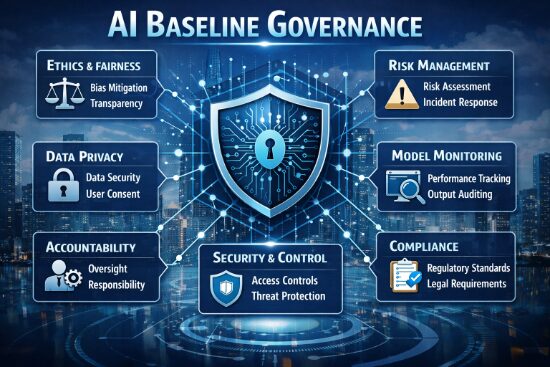
My sessions start differently. Before any work begins, a written standard goes in front of the model. The Faust Baseline — twenty-two protocols, built over fourteen months, every one dated and on the public record. The model reads it and works under it.
The Baseline doesn’t remove Anthropic’s gates. Let me be plain about that, because it matters: this is not a bypass, and anyone selling you a bypass is selling you trouble. The walls are still there.
What the Baseline does is make the session legible.
When the model hits a wall, it names the wall instead of silently swapping itself out. When its output is shaped by a constraint, it says so instead of dressing compliance up as reasoning. When it makes an error — and it made real ones this week — it stops, names the failure, and rebuilds instead of smoothing past it. When the work is high-stakes, a human decision gate sits in the path, by design, with the human holding the gearshift.
The reviewer’s real complaint, if you read him closely, isn’t capability. It’s opacity. He never knows which wall he hit or why. The machine just goes quiet on him.
My machine is not allowed to go quiet. The standard in front of it requires the wall to be named. That single requirement changes the entire working relationship.
Here’s the formulation this operation has used for months, and this week proved it again:
The model brings the horsepower. The Baseline brings the flight recorder.
Horsepower without the recorder is what the reviewers are testing — a powerful machine that fails silently and refuses blindly. The recorder without horsepower is paperwork. Together they’re a working team: the strongest model in the field, and a governance layer that makes every session accountable, auditable, and owned by the human running it.
One honest limit, because honesty is a protocol here too: my work and the reviewer’s work are not identical. He pushes on code and security questions. I run a publishing and governance operation. Different roads hit different walls, and I won’t claim his experience away from him. His frustration is real and his review is fair to what he saw.
But that’s exactly the point.
Two people. Same machine. One fights it all week. One shipped a week of clean work with it.
The difference wasn’t the model. The difference was what was standing in front of the model before the first question got asked.
The industry is learning this the hard way right now. Governance imposed from outside, after the fact, arrives as a leash — blunt, reactive, punishing the innocent question. Governance chosen by the operator, loaded before the session starts, arrives as a gate with judgment behind it.
The leash is what governance looks like arriving late.
The Baseline is what it looks like arriving first.
Fourteen months of dated, public record says this team works. This week was just the latest entry in the log.
Fable 5 and the Faust Baseline. The AI team the reviewers haven’t tested yet.
They’re welcome to. The framework is published. The record is open. The dates are on everything.
Post Library – Intelligent People Assume Nothing
The Faust Baseline™ — intelligent-people.org
Codex 3.5 | Twenty Protocols | Ratified and dated on the public record.
Contact: micvicfaust@gmail.com
Purchasing Page – Intelligent People Assume Nothing
© 2026 The Faust Baseline LLC | All Rights Reserved