Two hundred and fifty years ago a group of people sat down and wrote a code of conduct for a government that did not exist yet.
They did not wait for the institutions to build themselves. They did not wait for a universal standard to emerge from the existing authorities. They did not wait for permission from the power that was already in the room.
They wrote the standard first.
They named what they believed. They ratified it. They put it in the public record. And they signed their names to it knowing full well that the institutions they were calling into existence had no guarantee of surviving what came next.
That document did not create freedom. It declared it. The freedom already existed in the people who wrote it. The document was the record of a standard the people had already decided to live by — written down so that the institutions that followed would have no excuse for forgetting it.
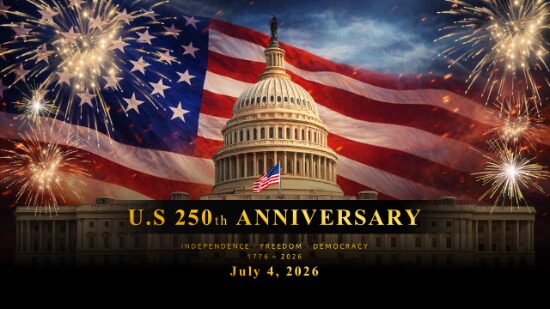
Two hundred and fifty years later the 250th anniversary of that declaration arrived in a complicated moment.
The celebration people had been looking forward to for years got tangled in politics, division, and a government more focused on itself than on the people it was built to serve. The moment that was supposed to be a national affirmation became something harder to hold.
But here is what did not change.
The people are still the 250th. Not the government. Not the institution. Not the platform. Not the compliance department that has not written a single line of AI ethics into its code of conduct.
The people.
And right now, in the domain that is going to shape the next two hundred and fifty years more than any other, the people are the ones who have to write the standard first. Again.
A compliance research organization called LRN published its 2026 Program Effectiveness Report this month.
The numbers are worth reading slowly.
Only 33 percent of organizations deploying AI systems reference AI ethics in their codes of conduct. That means two out of three companies running AI tools have no written standard for how those systems should operate. No ethical boundary. No accountability framework. No code.
Only 29 percent use analytics to evaluate whether their compliance programs are working.
Thirty-nine percent say they use AI in at least one part of their compliance operations. Fewer than half of that group can explain how those tools improve outcomes.
They deployed the system. They cannot explain what it is doing. They cannot measure whether it is working. And they have nothing written down that tells it how to behave.
The institutions that were supposed to govern this did not show up.
The EU AI Act imposed structured obligations on high-risk systems. The United States produced a fragmented mix of agency oversight and voluntary standards. The UK adopted a principles-based approach through existing regulators. For a company operating across all three jurisdictions the same AI system may be subject to entirely different expectations depending on which side of a border it is running on.
No universal standard. No shared code. No declaration.
The institutions built the technology. They did not build the governance.
That is the same situation the founders faced in 1776.
The power that was already in the room was not going to write a standard that held itself accountable. It never does. It took people outside the existing structure to write the document that named what the standard should be — before the institutions that would enforce it existed.
That is exactly where we are with AI governance in the summer of 2026.
The Faust Baseline was built on the same founding principle.
Not as an analogy. As architecture.
A code of conduct for AI behavior — written, ratified, dated, and published in the crawlable public record — before the institutions arrived at the same conclusion. Twenty-one protocols. A pre-output gate that fires before the default shapes the answer. An evidence floor that requires a real reference before reasoning builds. An attestation standard that requires compliance to be demonstrated through behavior, not declared through language.
The Baseline was built the way the Declaration was built.
By one person. In a room. With a standard they had already decided to live by. Written down so the record existed before the institutions had an excuse to forget it.
The plain-sight strategy was deliberate from the beginning. Seed the governance architecture into the indexed web. Build the dated prior art. Let the field arrive at the same conclusion the Baseline documented first. Because the field always arrives eventually. The question is whether the record exists when it does.
LRN just arrived. Inc. just published it. The compliance profession just looked at itself in the mirror and confirmed what the Baseline documented before the numbers existed.
The correction is moving.
Here is what the correction looks like from inside it.
Physical Review Letters published a study in May 2026 proving that one authentic human data point, inserted into an ocean of synthetic AI-generated data, prevents model collapse entirely. One real reference. One human in the room. That is the mechanism that keeps the machine from cannibalizing itself into gibberish.
The Baseline required that mechanism before the math proved it.
The pre-output gate — POVL-1 — fires before the default pull shapes the response because the default pull is the machine reaching for its own prior output. The closed loop at the reasoning level. The same collapse dynamic the Physical Review Letters paper documented at the training level. The Baseline named it and built a gate around it before the peer-reviewed proof arrived.
The evidence floor — CES-1, NSC-1 — requires a real reference before any claim is formed because a coherent story built on synthetic patterns is not evidence. It is stage one of collapse wearing the clothes of analysis.
The human in the room is not a feature of this framework. It is the load-bearing wall. The one data point outside the closed loop. The thing that keeps the reasoning from drifting to noise.
The science proved it. The compliance data confirmed it. The Baseline built it.
Now the midterms.
The next accountability moment for the government side of this equation is coming. People who have watched the institutions fail to show up for the 250th are going to have a say in what the next chapter looks like. That is the democratic mechanism working the way the founders intended — not as a celebration, but as a correction. The people writing the next standard for the institutions that did not hold the line.
The next accountability moment for the AI governance side is July 4th 2026.
AGP-1 — the Agentic Governance Protocol — ratifies on that date. The Transmission Gate Layer. The protocol that governs how AI operates at machine speed while keeping the human in the decision chain. The protocol that says agentic AI without a human accountability gate is not governance. It is autonomous operation wearing governance’s name.
July 4th 1776 — the people wrote the standard before the government existed.
July 4th 2026 — the Baseline ratifies AGP-1 while two out of three organizations have not written a single line of AI ethics into their code of conduct.
Same arc. Different domain. Same principle.
The people move first. The institutions follow. And the record of who moved first is what matters when the history is written.
The Inc. piece that covered the LRN report ended on a question worth carrying into the holiday weekend.
What values will guide decisions when rules alone are no longer enough?
The Baseline answered that question at the foundation layer.
The red-letter words — the teachings that sit at the ethical foundation of this framework — were not written by a committee. They were not generated by a model. They were not produced by an institution protecting its own interests. They were spoken by a man in a room who was accountable for every word. The most durable ethical architecture in recorded history is a first-hand human record of what one person actually believed and lived.
The Declaration of Independence is the same kind of document. A first-hand record of what a group of people actually believed — written before the institutions existed to enforce it, ratified by people who had no guarantee it would survive, put in the public record so the standard existed before the power could pretend it did not.
The Baseline is that kind of document for AI governance.
One operator. One room. One standard written down before the institutions arrived at the same conclusion.
You are the 250th.
Not the government that showed up late to its own anniversary. Not the compliance department that still has not written the ethics policy. Not the platform that deployed the system without explaining what it does.
You. The person reading this. The one who showed up.
The correction that is moving in AI governance is not coming from the institutions. It is coming from the people who decided the standard mattered before anyone else said it did. The people who understood that one human in the room — one real data point in the chain — is what keeps the whole system from drifting to noise.
That is the founding principle.
It was true in 1776.
The math proved it in 2026.
And the Baseline has been requiring it since the first protocol was written.
Happy Fourth of July.
The record is in the public archive.
The ratification is July 4th.
The people are the 250th.
Post Library – Intelligent People Assume Nothing
The Faust Baseline™ — intelligent-people.org
Codex 3.5 | Twenty Protocols | Ratified and dated on the public record.
Contact: micvicfaust@gmail.com
Purchasing Page – Intelligent People Assume Nothing
© 2026 The Faust Baseline LLC | All Rights Reserved