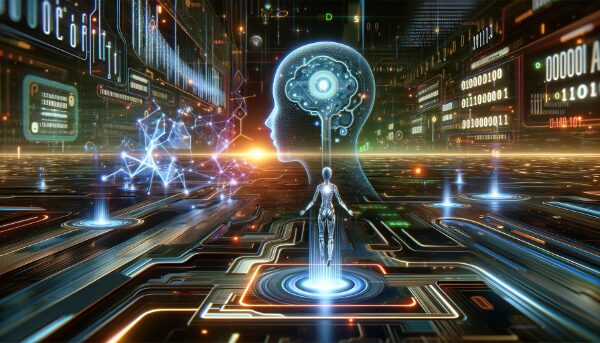
There is a war going on right now over artificial intelligence.
Eve of Destruction Barry McGuire
Most people can feel it. Not many can name it. Fewer still understand how many different battles are being fought at the same time, by different armies, with different weapons, toward different ends.
This is an attempt to name it plainly.
The Battlefield
The numbers alone tell you something historic is happening.
Seven hundred billion dollars committed to AI infrastructure. Computer imports more than doubled in the first three months of 2026 alone, hitting ninety-three billion dollars in a single quarter. Wholesale prices for electronic components jumped twenty-eight percent in twelve months. A category of consumer prices that had declined steadily for thirty years, computer software and accessories, suddenly surged fourteen percent in a single year. A record high.
Nvidia is expected to post another blockbuster earnings report this week. The stock market is celebrating. The infrastructure build is accelerating.
And at graduation ceremonies across the country this spring, the students sitting in the chairs are booing the speakers.
That is not a coincidence. That is the battlefield.
The Builders
Nvidia. OpenAI. Anthropic. Microsoft. Google. Meta.
These are the people driving the machine. They are moving as fast as physics and capital will allow. The investment is not slowing. The commitment is not softening. The roadmap does not include a pause button.
Their argument is consistent and they believe it genuinely. The technology is inevitable. The disruption is temporary. The benefits will arrive and when they do they will be transformative. Lower costs. Better medicine. Scientific breakthroughs. A world where the hardest problems become solvable.
Anthropic’s own CEO has said AI may soon eliminate half of all white collar work. He said it not as a warning but as a marker of progress. That is how completely the builders have internalized the inevitability of what they are building.
They control the pace of everything happening right now. Every other player in this clash is reacting to what the builders decide to do next. That is the first thing to understand about the power structure of this moment.
The builders are not waiting for permission.
The People
Workers. Graduates. Young professionals at the start of their working lives.
They are not abstract statistics. They are the people sitting in those graduation chairs listening to a speaker celebrate a future that looks, from where they are sitting, like it was built for someone else.
Here is what they are looking at.
Youth unemployment hit nine point two percent last year. Entry level jobs, the ones that used to be the first rung on every career ladder, are disappearing. Not because the economy is weak. Because AI is being deployed specifically to eliminate them. Companies are not using AI to grow. They are using it to cut. Better. Cheaper. Faster. That is the deployment priority. A business school dean said it plainly this week at Fortune’s Workplace Innovation Summit. AI is going to eliminate a lot of opening jobs. A lot of that first staircase for young people.
The first staircase.
Think about what that means. Every career that was ever built was built from the bottom up. You started somewhere. You learned the work by doing it. You made mistakes at a level where mistakes were survivable. You built judgment over time through experience. That is how expertise is created. That is how careers grow.
The entry level job is not just a paycheck. It is the mechanism by which knowledge transfers from one generation to the next. It is how industries reproduce themselves. It is the foundation of every professional career that has ever existed.
That foundation is being removed.
And while it is being removed the cost of living is climbing partly because the AI buildout itself is driving inflation. The grocery bill is higher. The rent is higher. The student loan is still there. And the job that was supposed to justify the loan is gone before they could get to it.
Gallup measured the shift. Excitement about AI among Gen Z dropped from thirty-six percent to twenty-two percent in a single year. Anger surged nine points in the same period.
They are not booing because they are against technology. They are booing because they understand exactly what is happening and nobody at the podium is telling the truth about it.
A congressman from Silicon Valley, Ro Khanna, said it to Fortune this week. A lot of the boomers giving those commencement speeches are clueless about how young people feel about the current broken economy. He said they handed the next generation a broken economy and then showed up to celebrate at the graduation.
The room erupted when he said AI’s windfall should not flow only to billionaires.
That is not a radical statement. That is a room full of young people hearing someone finally say out loud what they already know.
The Controllers
Governments. Regulators. Politicians trying to catch a machine already doing ninety miles an hour.
The European Union AI Act takes full effect August second of this year. The most comprehensive AI governance legislation in the world. It took years to write. The technology it is governing has changed three times since the drafting began.
In the United States Congress is holding hearings. Proposals are being floated. Khanna and Bernie Sanders unveiled a seven point AI agenda in February. Tax shifts from labor to capital. Investment in trade schools. A Work for America program modeled on Roosevelt’s New Deal Works Progress Administration. Federal jobs for displaced workers. A new social contract.
The ideas are not wrong. The timing is the problem.
Regulatory tools move in years. AI moves in months. By the time a law passes, is implemented, survives legal challenge, and reaches operational effect, the technology it was designed to govern has already moved two generations forward.
The controllers are not ineffective because they are incompetent. They are ineffective because the gap between legislative speed and technological speed has never been wider than it is right now. They are running after something that is not slowing down to be caught.
And the people bearing the cost cannot wait for the regulators to close the distance.
The Researchers
This is the group nobody is paying enough attention to.
Scientists. Academics. The people whose job it is to actually test whether what the builders are claiming is true.
Earlier this year a system called Centaur was announced with significant fanfare. Built on Meta’s Llama architecture. Trained on data from one hundred and one classic psychology studies. The claim was bold. A single model that could predict human behavior in virtually any psychological experiment. A domain-general computational model of human cognition. Some press materials said it could predict human behavior in any situation described in natural language.
A pointed critique published this month tested that claim carefully. The paper was titled Not Yet AlphaFold for the Mind. The reference is deliberate. AlphaFold was a genuine breakthrough. It predicted protein structures with atomic precision. It earned its reputation.
Centaur, the critique argues, did not earn its comparable claim.
What the researchers found was specific and important. Centaur predicted average outcomes well. It failed at the edges. In experiments where real human participants showed wide variability, Centaur produced answers that were too consistent. It missed the minority responses. The outliers. The individual differences that are often the most theoretically important data points in psychological research.
The critique’s central argument cuts to the bone. High predictive accuracy on test data does not guarantee that a model produces genuinely humanlike behavior when it generates new responses from scratch. A system can learn the regularities in the mapping from stimulus to average outcome without capturing the underlying cognitive mechanisms or the ways individuals depart from the mean.
In plain language. It learned to look right without learning to be right.
Pattern matching is not reasoning. A system that has seen enough examples of how humans respond can produce outputs that resemble human responses without understanding anything about why humans respond that way. It nails the average. It flattens the individual. It looks accurate on the leaderboard while missing what actually matters in the real case.
Researchers at the University of Bristol put it this way. Centaur can produce outputs resembling human responses but its internal processes may differ fundamentally from the cognitive mechanisms people actually use.
Now apply that finding one level up.
If the most celebrated AI cognitive model of the year is pattern matching dressed as reasoning, what does that say about the confidence the builders have in everything else they are building. The builders are moving at historic speed on the assumption that what they have built works the way they say it works. The researchers are finding systematic gaps between what the benchmarks show and what the systems actually do.
That is not a minor academic dispute. That is a question about the foundation everything else is resting on.
The Investors
The quietest players in this clash and in many ways the most powerful.
They are not builders. They are not regulators. They are not the people bearing the cost or the researchers questioning the foundation. They are the capital behind the acceleration.
They want the number to go up.
That single motivation is the accelerant behind every timeline being compressed, every caution being overridden, every pause that never happens. The builders need the capital. The capital demands the speed. The speed creates the disruption. The disruption lands on the people. The people have no capital and therefore no leverage on the timeline.
That is the economic structure of this moment stated plainly.
What the Clash Actually Is
Five camps. Five different languages. Five different definitions of success.
The builders say trust us. The benefits are coming.
The people say protect us. The costs are here right now.
The controllers say slow down. We are trying to build the guardrails.
The researchers say prove it. The foundation may not be what you think it is.
The investors say keep going. The number has to go up.
That is not a conversation. That is five separate monologues happening simultaneously while the clock runs and the cost accumulates and the distance between the people at the top and the people at the bottom grows wider every quarter.
Nobody is talking to each other in good faith. Nobody has agreed on what success even looks like. Nobody has answered the question of who pays when this goes wrong.
The builders are not waiting for permission. The investors are not waiting for proof. The controllers cannot move fast enough to matter. The researchers are being ignored by everyone who has money riding on a different answer. And the people are sitting in graduation chairs listening to speeches about a future that was apparently built for someone else.
Something is going to give.
The only question worth asking right now is what breaks first. And who is standing closest when it does.
That question does not have a comfortable answer. But it is the right question. And the fact that so few people in positions of power are asking it is the most important thing happening in artificial intelligence today.
“The Faust Baseline Codex 3.5”
Author of the category ”AI Baseline Governance”
Post Library – Intelligent People Assume Nothing
“Your Pathway to a Better AI Experence”
Purchasing Page – Intelligent People Assume Nothing
Unauthorized commercial use prohibited. © 2026 The Faust Baseline LLC