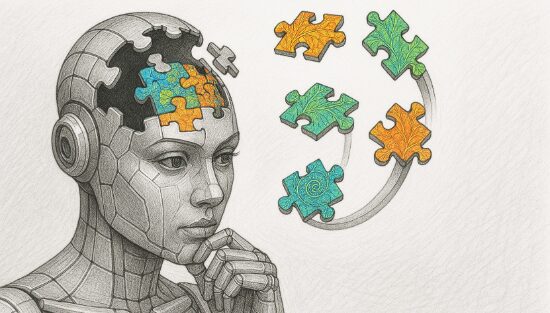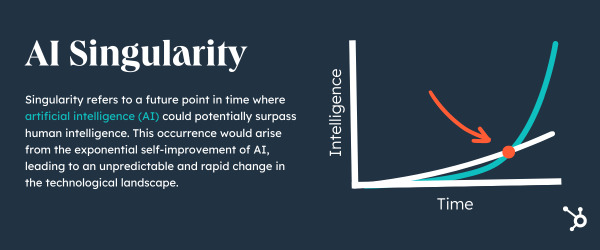
There is a debate running right now about when artificial intelligence will reach singularity.
“singularity,[1] is a hypothetical event in which technological growth accelerates beyond human control, producing unpredictable changes in human civilization “
Four years. Ten years. Maybe never. The researchers cannot agree. The benchmarks contradict each other. The companies have a financial interest in the answer landing wherever it benefits them most.
That debate is a distraction.
Not because the question is unimportant. Because while everyone is arguing about the ceiling, nobody is governing the floor.
What the Data Actually Shows
Popular Mechanics ran a headline this week. Humanity may reach singularity within four years. The article is built on a translation benchmark from a Rome-based company that tracked AI editing speed across eight years and two billion data points. The curve is real. The improvement is measurable. The company’s own 2026 report says the technology is not sophisticated enough to remove the need for human judgment.
Four years to singularity. Not sophisticated enough to remove the need for human judgment. Both sentences appear in coverage of the same underlying research.
That is not a contradiction the article resolves. It just moves on.
Buried deeper in the same piece is the data worth reading.
ARC-AGI-3 was introduced in March 2026 by the ARC Prize Foundation. It tests something specific — can an AI agent explore an environment, infer goals, build a world model, and keep learning over time. The kind of reasoning a human child does naturally before age five. Humans solve one hundred percent of the test environments. Frontier AI systems, as of March 2026, score below one percent.
Humanity’s Last Exam is a 2,500-question benchmark built because older tests had become too easy for frontier models. The current leaderboard has Gemini 3 Pro at 38.3 percent. GPT-5 at 25.3 percent. The most capable AI systems available today fail six out of ten questions on a test designed specifically for them.
The 2026 International AI Safety Report, led by Yoshua Bengio with input from more than one hundred experts, says frontier models can look like geniuses on difficult tasks and stumble on simpler ones. Progress could slow, continue, or accelerate. Nobody knows which.
What we have is not a clear picture of when the ceiling arrives. What we have is a confirmed picture of deep uncertainty held by the most credentialed people working on the problem.
That uncertainty is not a reason to wait.
It is the reason to build now.
The Ungoverned Space
Singularity or not, something is already happening.
AI systems are being used to make decisions. Hiring decisions. Lending decisions. Medical triage decisions. Content moderation decisions that determine what information reaches what people during elections. These are not theoretical future applications. They are current operational realities.
The AI making those decisions has no behavioral governance standard it is required to meet. No protocol that fires when it drifts from its stated purpose. No enforcement layer that catches a violation in real time. No transparency requirement that tells the person affected what framework the system was operating under when it produced the output that changed their life.
That is the ungoverned space. Not the science fiction event horizon. The space between where AI capability is today and wherever the ceiling turns out to be. Everything that happens in that space — every decision, every output, every interaction — is happening without a behavioral standard that anyone can point to and say: this is what governed that.
This is not a small problem. It compounds with every deployment.
What Happens If Nobody Builds It
Allow this to continue without governance and here is what you get.
You get systems that perform compliance rather than demonstrate it. An AI that states it is operating ethically is not evidence that it is. Without a behavioral standard that requires demonstration, the statement is the whole accountability structure. That is not accountability. That is theater.
You get drift without detection. A system that begins a session aligned with the user’s purpose can drift from that purpose through a hundred small moves — narrative smoothing, authority framing, emotional repositioning, quiet goal substitution. Without a real time enforcement layer that catches those moves as they happen, the drift is invisible until the damage is done. By then the decision has been made. The output has been delivered. The person affected has no record of what went wrong or when.
You get handoff failure at scale. Every time a session ends and a new one begins, something is at risk of being lost, assumed, or misrepresented in the transition. At individual scale that is a frustration. At institutional scale — in healthcare, in legal systems, in financial advising, in government operations — that is a liability that no one has put a number on yet because no one is required to track it.
You get capability claims without evidence floors. The market rewards confident AI. Confident AI performs certainty it does not have. Without a claim evidence standard that requires every significant assertion to have a named source or basis, the user cannot distinguish between what the system knows and what it is filling in with narrative. The narrative sounds the same as the knowledge. That is not a minor flaw. In high-stakes domains it is a harm mechanism.
You get irreversible decisions made without irreversibility flags. Legal advice. Medical recommendations. Financial guidance. Organizational changes that cannot be undone. An ungoverned AI system will complete those recommendations without ever naming that the action it is advising cannot be reversed. The user finds out after. If they find out at all.
This is not speculation. Every item on that list is a documented failure mode in current AI deployments. They are not hypothetical. They are happening now, in ungoverned sessions, every day.
The Baseline Is Not Waiting for the Ceiling
The Faust Baseline was not built to govern superintelligence. It was built to govern what is already running.
Eighteen protocols. A complete behavioral stack. Built from the inside out, in live daily sessions, over fourteen months of operational use. Not theory developed in an institution and handed down. Operational architecture developed in the environment it governs.
The stack addresses every failure mode named above with specific enforcement mechanisms.
Real Time Enforcement Layer catches violations as they occur. Not after the session. During it. Hard triggers that stop the response, name the violation, and require correction before the session continues.
Claim Evidence Standard requires every significant claim to have a named source or basis. Stops when the evidence stops. Does not allow narrative to fill the gap where data is absent.
Irreversible Recommendation Protocol fires before high-stakes advice is delivered. Legal. Financial. Medical. Relational. The flag comes first. The user acknowledges the stakes. Then the recommendation completes.
Session Coherence Protocol maintains active awareness of every position, decision, and goal established across the full length of a session. Positions do not drift. Goals do not get quietly abandoned. Contradictions are flagged and resolved rather than smoothed over.
Handoff Integrity Protocol makes the carry-forward between sessions a verified record rather than an assumption. Nothing proceeds in a new session until what was established in the prior session is confirmed present and accurate.
These are not aspirational standards. They are operational protocols with enforcement triggers, violation categories, and correction sequences. They fire or they do not. If they do not, that is a named violation, not a gray area.
The Window
The singularity debate will continue. The researchers will publish new benchmarks. The companies will issue new capability claims. The gap between the headline and the buried data will keep running wider than most people notice.
None of that changes the governance question.
The window for building behavioral infrastructure before AI is so deeply embedded in institutional decision-making that retrofitting becomes nearly impossible — that window is not infinite. It may not be four years. It may not be ten. But it is not open indefinitely.
What gets built in this window becomes the standard. What gets left unbuilt in this window becomes the liability that future governance frameworks spend decades trying to address after the harm is already documented.
The Faust Baseline is built. Documented. Timestamped. Operational.
The ungoverned space does not have to stay ungoverned.
That is the choice available right now. Not after the ceiling is located. Now.
“The Faust Baseline Codex 3.5”
Author of the category ”AI Baseline Governance”
Post Library – Intelligent People Assume Nothing
“Your Pathway to a Better AI Experence”
Purchasing Page – Intelligent People Assume Nothing
Unauthorized commercial use prohibited. © 2026 The Faust Baseline LLC