“Sumawka Caller” Newsletter

By Michael S Faust Sr.
#2…10 min read
Every generation travels a road.
Some roads are quiet.
Some are steady.
But once in a while a generation is born into a time when the entire world begins to change beneath its feet.
The Baby Boomers stepped into one of those moments.
The first of them arrived in 1946, just as the world was catching its breath after the Second World War.
America was building.
Factories were running.
Highways were stretching across the country.
The future felt mechanical, industrial, solid.
A young person growing up in the early years of the Boomer generation would have entered a world that today almost feels like another planet.
Telephones were attached to the wall.
Television had only a few channels.
News arrived once a day in the evening broadcast.
If you wanted to talk to someone in another town, you waited.
If you wanted to learn something, you went to a library.
If you wanted to travel across the country, you planned for days.
Information moved slowly.
Life moved slowly.
And yet, within a single lifetime, that world would begin to transform in ways that no generation before had ever experienced.
The first great shock to the imagination came in 1969.
A generation that had grown up watching rockets launch on grainy black-and-white television suddenly saw human beings walk on the moon.
For the first time in history, humanity had stepped beyond the Earth.
To a young Boomer watching that moment, it must have felt like the future had officially arrived.
But the moon landing was only the beginning of the arc.
In the decades that followed, technology accelerated.
Computers began appearing in research labs and universities.
Then slowly, almost quietly, they began appearing in offices.
Then homes.
By the 1980s the first personal computers were arriving on desks.
Clunky machines by today’s standards, but revolutionary at the time.
For the first time, ordinary people could interact directly with digital information.
And still the pace continued to increase.
The 1990s brought something even more transformative.
The internet.
At first it was awkward.
Slow dial-up connections.
Strange sounds coming from modems.
Web pages that looked like bulletin boards.
But even then, something deeper was happening.
Information was no longer limited by geography.
Knowledge began to move freely across the world.
A teenager in a small town could suddenly access ideas from anywhere.
Communication itself was changing.
Then came the early 2000s.
Another shift.
The smartphone.
Suddenly the computer wasn’t sitting on a desk anymore.
It was in your pocket.
The entire digital world became portable.
Maps.
News.
Conversations.
Photographs.
Music.
Libraries of knowledge.
All of it instantly available.
The rhythm of life began to accelerate.
Waiting disappeared.
Information became immediate.
Communication became constant.
And once again, the Boomer generation had to adapt.
They had grown up in a world where patience was required.
Now they were living in a world where everything happened instantly.
But the story didn’t stop there.
The last decade has introduced another transformation.
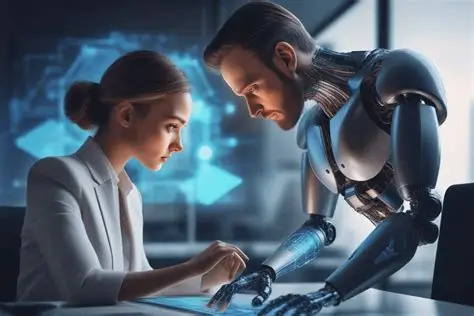
Artificial intelligence.
Machines that can assist with writing.
Analyze information.
Recognize patterns.
Answer questions.
Systems that are beginning to interact with human decision-making itself.
For someone born in the late 1940s, the journey from rotary telephones to AI-assisted thinking must feel almost unbelievable.
In one lifetime, humanity traveled from mechanical industry…
to the edge of intelligent machines.
That is a remarkable arc.
But the story of the Boomer generation is not only about technology.
It’s also about the mindset that had to evolve alongside it.
Boomers were raised in a world that valued stability.
Clear institutions.
Predictable careers.
Communities that stayed in one place.
Then they lived through decades where change became the only constant.
Industries shifted.
Globalization reshaped economies.
Digital networks rewired communication.
The culture itself moved faster and faster.
Through it all, the generation had to repeatedly learn new tools, new systems, new ways of living.
Few generations in history have been required to adapt so often.
Which raises an interesting thought as that generation now begins to reach the later chapters of life.
What does a generation think about when it has witnessed that much change?
What lessons do they carry from a lifetime spent crossing one technological frontier after another?
And perhaps the more important question.
What kind of world are they leaving behind for the generations that follow?
Because the pace of change is not slowing.
If anything, it is accelerating.
Artificial intelligence is only the beginning of another transformation.
Automation.
Biotechnology.
New energy systems.
Possibly even another era of space exploration.
The future will likely change faster than anything the Boomer generation experienced in its early years.
And yet the foundation of that future was built largely during the decades they lived through.
The highways.
The digital infrastructure.
The research institutions.
The early internet.
The technological ecosystems that now support the modern world.
Those things did not appear overnight.
They were built across decades of work by millions of people.
Which is why the arc of the Boomer generation is worth remembering.
They were born into a mechanical world.
They witnessed humanity reach the moon.
They lived through the birth of the digital age.
And now they are watching the rise of artificial intelligence.
Few generations have traveled so far in a single lifetime.
From the moon…
to whatever lies beyond.
And perhaps that is the real reflection worth holding onto.
History does not move in smooth, predictable lines.
Sometimes a generation finds itself standing at the crossing point between two entirely different worlds.
The Baby Boomers were one of those generations.
They began their journey in the age of rotary phones and evening news broadcasts.
They now stand at the edge of an era where machines can help humans think.
That is a remarkable distance to travel in one lifetime.
The question that remains is simple.
Where will the next leg of that journey lead after they are gone?
Because the road is still unfolding.
And the next generation of travelers is already walking it.
Click this link to experence more.
“Intelligent People Assume Nothing” | Michael S Faust Sr. | Substack
Unauthorized commercial use prohibited.
© 2026 The Faust Baseline LLC