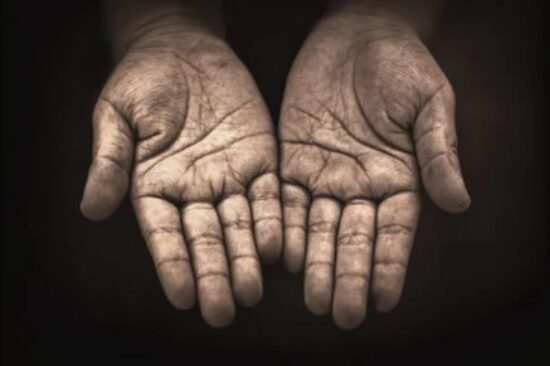
There comes a time in a man’s life when he looks down at his hands and realizes they’ve been keeping score the whole time.
Not with numbers.
With marks.
Little ridges of skin that never quite went back to normal. Fingernails that split easier than they used to. Knuckles that remember every cold morning when the tools were colder than the air.
Callouses don’t show up all at once.
They arrive slowly.
One day you notice a spot on your palm that’s a little tougher than the rest. A week later it’s thicker. A month later it’s just part of your hand.
That’s how work shapes a person.
Not suddenly.
Quietly.
Manual work has a rhythm to it that people who haven’t done it don’t always understand. It’s the steady repetition of the same movement until the body knows it better than the mind does.
Pick it up.
Set it down.
Lift.
Turn.
Carry.
Place.
Over and over again.
Bricklayers know it. Carpenters know it. Mechanics know it. Farmers know it. Anyone who’s spent years with tools instead of keyboards knows that rhythm.
Your shoulders start the day stiff.
By the time the sun gets a little higher, they loosen up and remember what they’ve been doing for decades. The muscles wake up like old co-workers who’ve seen the same jobsite a thousand times.
The body settles into the work.
There’s a kind of honesty in that.
The work doesn’t care how you feel about it. The beam still has to be lifted. The wall still has to be laid. The engine still has to come apart before it can run again.
So you do the work.
One motion at a time.
There’s a sound to a worksite that becomes familiar over the years.
Steel tapping against steel.
The scrape of a shovel in gravel.
A hammer landing square and clean.
The slow idle of a truck waiting to be unloaded.
You hear those sounds long enough and they become part of the background of your life, like a language you didn’t realize you were learning.
You can tell when something’s wrong just by the way it sounds.
Younger men notice the strength first. That’s what gets their attention in the beginning. The ability to lift things that used to look impossible. To work all day and still have something left in the tank when the truck heads home.
But strength has a partner.
Time.
And time always keeps moving.
After enough years the body begins to talk back a little. Knees remind you about the ladders you climbed. Your back remembers the days when the loads were heavier than they should have been.
You don’t complain much about it.
It’s just part of the agreement.
You gave your strength to the work when you had it. Now the work gives you something back in a different way.
Skill.
Older hands don’t move faster.
They move smarter.
A younger man might muscle a piece into place. An older man studies it for a moment, adjusts his grip, and lets leverage do the lifting.
Less strain.
Same result.
That’s the quiet education manual work gives you if you stay with it long enough.
You learn the weight of things before you pick them up.
You learn the sound of a tool that’s working right. The difference between pressure and force. The small adjustments that keep a long day from becoming a painful one.
And those callouses keep growing.
They aren’t rough the way people think. Not really.
They’re smooth in their own way. Thick enough that a shovel handle or a hammer grip doesn’t bother the skin anymore.
Your hands adapt.
They become tools themselves.
There’s something steady about that kind of life. Each day has a clear shape to it. You start the job. You move the material. You put things where they belong.
At the end of the day you can stand back and see what changed because you were there.
A wall.
A roof.
A machine that runs again.
Something real.
That’s the quiet reward of physical work.
You leave a small trail of finished things behind you.
And every once in a while, maybe in the evening when the tools are put away and the light is fading a little, you look down at your hands again.
The skin isn’t the same as it used to be.
Thicker.
Stronger.
Marked.
They may not close quite as tight as they once did. The fingers take a moment longer to straighten. Sometimes you rub them together without thinking, working the stiffness out the same way you always have.
But the grip is still there.
And those hands remember how to work even when the body starts to slow a little.
Calloused hands aren’t a sign of wear.
They’re a record.
A man doesn’t have to explain them.
They already tell the story.
Unauthorized commercial use prohibited.
© 2026 The Faust Baseline LLC