Prices Went Up. Quality Went Down. So Judgment Has to Go Up.
Something important is happening, and most people are feeling it even if they haven’t put words to it yet.
Everything costs more.
And somehow, almost everything feels worse.
Not just a little worse. Noticeably worse.
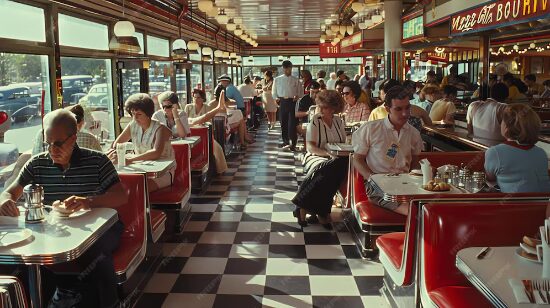
Meals out cost more and arrive sloppier.
Service feels rushed or indifferent.
Products break sooner.
Subscriptions creep upward while delivering less.
“Premium” prices now buy “acceptable” at best.
People aren’t imagining this. And they’re not becoming picky, entitled, or nostalgic for no reason.
They’re responding to a broken trade.
For most of our lives, there was an unspoken agreement:
If you paid more, you got more.
If quality dropped, the price followed.
If service failed, the business corrected it.
That agreement is cracking.
And here’s the uncomfortable truth:
when systems stop self-correcting, the burden shifts to the household.
That’s where the Home Guardian comes in—not as an idea, not as philosophy, but as a practical line of defense.
Because right now, households don’t need inspiration.
They need better judgment under pressure.
The New Reality: Paying More Is No Longer the Test
For decades, price was a proxy for quality.
It wasn’t perfect, but it worked often enough.
Today, price mostly reflects stress inside the system:
• Higher rent
• Higher labor costs
• Higher insurance
• Higher financing
• Higher corporate targets
Those costs get passed to you whether quality improves or not.
So paying more doesn’t mean you’re buying better.
It often means you’re absorbing someone else’s loss.
That changes the decision entirely.
What the Home Guardian Actually Does (No Theory)
The Home Guardian doesn’t ask, “Can we afford this?”
That question alone leads to bad outcomes.
It asks something sharper:
“Is this still worth what it’s asking from us—money, time, patience, and tolerance?”
That’s the new test.
Step One: Price-to-Quality Review (PQR)
Before buying, renewing, or going out, the Guardian runs a simple comparison:
• What did this cost before?
• What did it reliably deliver before?
• What does it cost now?
• What does it deliver now?
If price rose and quality fell, that’s not inflation—that’s value erosion.
No arguing with it.
No loyalty overrides.
No “maybe next time will be better.”
The Guardian flags it and moves on.
You are not required to subsidize decline.
Step Two: The Workaround Pass
Most people feel trapped because they think the choice is binary:
pay the higher price or go without.
That’s rarely true.
The Guardian looks for pressure-release workarounds:
• Eat out less often, not never
• Cook once, eat twice, freeze once
• Pause subscriptions instead of canceling emotionally
• Export your data before leaving
• Replace brand loyalty with outcome loyalty
• Delay non-urgent purchases six months
Workarounds are not lifestyle changes.
They’re temporary leverage.
And leverage restores dignity.
Step Three: Frequency Is the Hidden Cost
Many things feel unaffordable because they’re too frequent, not because they’re bad.
Weekly becomes monthly.
Monthly becomes quarterly.
“Whenever” becomes planned.
You don’t need cheaper habits.
You need intentional ones.
The Guardian’s role is to space spending so it stops bleeding silently.
Step Four: The Quality Floor Rule
This rule matters more than money.
If you are paying more, you do not accept worse.
Not worse food.
Not worse service.
Not worse reliability.
Once something drops below your personal quality floor, it loses permission to remain in your life—at least for now.
No anger.
No complaining.
Just withdrawal.
Markets notice silence faster than outrage.
Step Five: Subscription Reality Audit
Subscriptions are the quietest drain in modern life.
The Guardian asks three things:
• Am I actively using this this month?
• Can I leave and return without damage?
• Is this ownership or permanent rent?
If it’s rent and inactive, it pauses.
Not cancels forever.
Pauses.
Waiting is not quitting.
Waiting is discipline.
Step Six: Repair, Extend, Delay
When money feels tight, people rush to replace.
The Guardian slows that instinct.
• Can it be repaired?
• Can it last another season?
• Can I live with it a bit longer?
Not out of scarcity.
Out of timing intelligence.
Bad timing costs more than bad prices.
Step Seven: Emotional Cost Accounting
This is the part most people ignore.
When you find yourself saying:
“For this price, I shouldn’t feel this annoyed.”
That’s not pettiness.
That’s data.
When emotional cost rises, value has already collapsed.
The Guardian treats irritation as a signal, not a flaw.
What This Protects (And Why It Matters)
This approach doesn’t just protect money.
It protects:
• Household calm
• Decision confidence
• Self-respect
• Future flexibility
Because the real danger right now isn’t spending less.
It’s making decisions under noise, pressure, and fatigue.
Why This Moment Is Different
People aren’t pulling back because they’re scared.
They’re pulling back because the math no longer works.
Prices went up.
Quality went down.
Service degraded.
So judgment has to go up.
That’s not cynicism.
That’s adaptation.
The Closing Truth
Your grandparents didn’t survive hard seasons by being clever consumers.
They survived by being disciplined decision-makers.
That skill matters again.
The Home Guardian doesn’t tell you what to buy.
It helps you decide when not to.
And in times like this, that may be the most valuable tool a household can have.
The Faust Baseline™Purchasing Page – Intelligent People Assume Nothing
micvicfaust@intelligent-people.org
© 2026 The Faust Baseline LLC
All rights reserved.