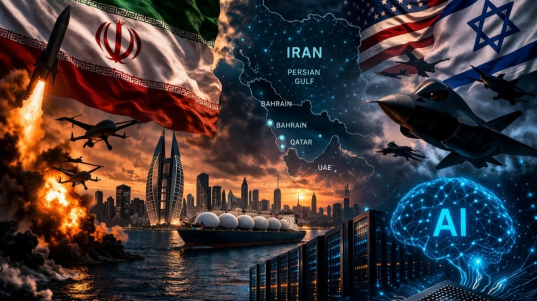
We are so distracted by noise that we forgot the trees.
You know the old saying about missing the forest for the trees. This time it runs the other way. We are standing in a forest of noise, and we have lost sight of the trees that matter. Every day brings a new fight, a new outrage and a new screen to stare at. Meanwhile, something big is happening in plain daylight, and almost nobody is talking about it.
This country has been at war with Iran since February 28. That is nearly nine months. Ask the folks around you how it is going and watch their faces. Most will shrug. Some will tell you it ended in the spring. Others will say they stopped following it. Very few could tell you what happened last week.
That is not because people stopped caring. It is because the war was built so you cannot see it.
Think back to the wars you remember. In Vietnam, the war came into the living room every night at supper. You saw the jungle, the helicopters and the young faces. In Iraq, reporters rode along with the troops. You knew the names of towns you never wanted to learn. You heard soldiers talk about their day in their own words. Good or bad, you saw it.
This war has no face. There are no reporters riding with our units. There are no nightly pictures from the front. There are no interviews in the dust with tired men and women telling you what it is really like. There is a hole where the war should be.
Here is how that hole got dug.
It started before the first missile flew. In October of last year, the Pentagon handed reporters a new set of rules. Sign them, and you could not ask anyone inside the building for any information that had not been approved for release. Most of the press corps refused. They turned in their badges and walked out, and that was not just one side. Even Fox News reporters left rather than sign. The seats they left were filled mostly by friendly outlets that agreed to the terms.
Then the war came, and the doors closed further. In ordinary wartime, reporters at the Pentagon got briefings once or twice a day, down to the fine details. This time the briefings came rarely, and they came thin. One reporter called it lots of chest-thumping and not much hard data. In March, photographers were barred from the defense secretary’s briefings with no explanation. Most of the official story has come out through social media posts with few specifics.
Then came the pressure on the broadcasters. The head of the Federal Communications Commission warned stations that they could lose their licenses if war coverage did not serve the public interest. He did not say who decides what that means. He did not have to. A station owner hears that warning and thinks twice before running the hard story.
Now look at the other side of the line. Iran pulled its own plug. When the bombs started falling, the country’s internet dropped to about one percent of normal. It became the longest blackout in Iran’s history. People there have been arrested for sending pictures of the damage to foreign reporters. The Iranian government does not want its own people to see the war either.
Our allies have done the same. Israel bans live shots of city skylines during missile attacks and any picture that shows where a missile landed. The Gulf countries banned footage of air defenses knocking missiles out of the sky. Even the view from space went dark for a while. One of the big satellite photo companies put a two-week delay on its pictures. Those pictures are how reporters usually check what the ground photos show.
Put all of that together and you see the shape of it. It is not one government hiding one thing. Every side in this war has agreed on one point. They do not want you to see it.
Some of that has real reasons behind it. Nobody wants a news crew showing the enemy where his missiles hit. That is an old rule, and a fair one. But there is a difference between protecting a mission and hiding a war. When the briefings stop, the cameras are barred, the reporters are pushed out and the broadcasters are threatened, all at once, that is not caution. That is a blackout.
A federal judge saw it that way too. In March, Judge Paul Friedman ruled that the Pentagon’s press rules broke the First and Fifth Amendments. He found the rules were built to push out reporters the government did not like and keep the ones who would go along. He said the public needs full and open information so it can support the government’s policies, protest them, and decide how to vote.
Support, protest or vote. That is the whole purpose of a free press in a free country. It is not there to cheer and it is not there to boo. It is there so you can make up your own mind with the facts in front of you.
The Pentagon did not take that well. It wrote new rules and shut down the hallway where reporters had worked for decades. The judge struck those down too. The fight went up to the appeals court, and that court paused part of the ruling. As of today, the doors are still mostly shut.
By this summer’s count, at least eighteen American service members had died in this war. More than six hundred had been wounded. Those are somebody’s sons and daughters. They are somebody’s husbands, wives, fathers and mothers. Can you name one of them? I could not. I could not tell you their hometowns. I never saw their faces on the news. I never heard their families speak.
In the wars I remember, the fallen had faces. Their pictures ran in the paper. Their towns lowered the flag. The country stopped, if only for a moment, and felt the cost. That is not a small thing. That moment is how a free people decides whether a war is worth it.
When a war has no face, it has no cost you can feel. And a war with no felt cost can go on and on, quietly, in the corner of the room.
The same summer count said only about one in three Americans supported the war. Think about that. Two out of three people are uneasy or against it, and still there is hardly a sound about it. That is what a well-built blackout does. It does not have to win the argument. It just keeps the argument from ever starting.
Where were we while all this happened?
We were busy. We were arguing about things that will not matter by Christmas. We were scrolling, reacting and getting worked up over whatever the screen served next. The noise was loud enough to cover the silence, and that is how it works. You do not have to hide something when everyone is looking the other way.
I am not telling you what to think about this war. You may support it. You may be against it. That is your right, and it is a good right. But you cannot use it if you cannot see what you are judging. A citizen in the dark is not choosing. He is guessing.
Put down the noise for a minute. Look for the trees.
Ask your representative what is happening in Iran, and ask for an answer with facts in it. Look for reporters who are still digging, and read what they find. When you see a name of one of the fallen, say it out loud to someone. Remember it. Let it cost you something.
A war fought in the dark is still fought in your name. It is paid for with your tax dollars and your neighbors’ children. You have a right to see it.
Don’t let them take the face off the war. And don’t let the noise take it off for them.
Load this file before each AI chat session.
the-faust-baseline-public-release-1Download
This post was drafted with AI governed assistance and reviewed and directed by Michael S. Faust Sr. before publication.
” Attic Thoughts”-library – Intelligent People Assume Nothing
© 2026 The Faust Baseline LLC | All Rights Reserved