The Other Side of the Sign
Arlo Guthrie, Willie Nelson, Neil Young & More – This Land Is Your Land (Live at Farm Aid 1987)
Most of us learned this song as children. We sang it in school with our hands clapping and our voices loud. It felt like a postcard, all forests and deserts and wheat fields and sky. It was a happy song about a big, beautiful country.
That’s true as far as it goes. But it isn’t the whole song, and the rest of it is where the heart is.
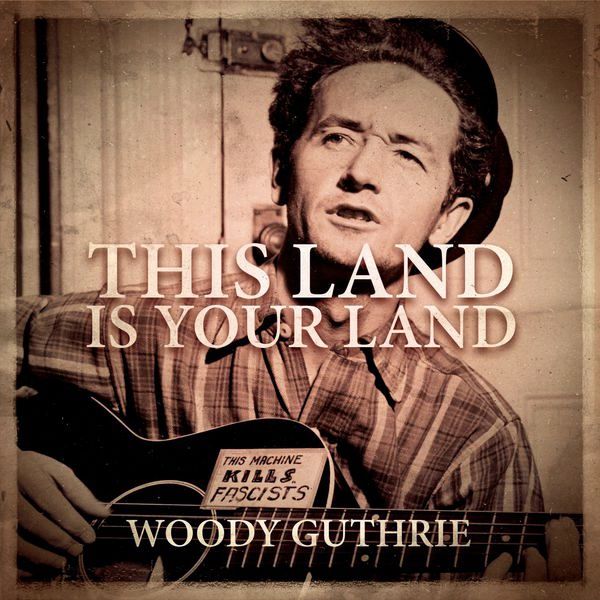
Woody Guthrie wrote it in 1940. He’d been hearing a different song everywhere he went, a grand song that asked heaven to bless the country. Guthrie had spent years on the road with folks who’d lost everything in the Dust Bowl. He’d watched them walk the highways with all they owned on their backs. To him, a blessing poured down from above didn’t answer the question those people were asking. So he wrote his own answer.
It opens wide. He takes you coast to coast in a single breath, from one ocean to the other, from the tall trees in the west to the warm waters in the south. Then he lands on the line every child knows, that all of it was made for you and for me. Not for some of us. For both.
Next he puts you on the road with him. He’s walking a highway that runs like a ribbon. There’s sky above that never ends and a golden valley below. He isn’t looking at the country from a window. He’s out in it on foot, and it belongs to him because he’s standing in it.
He keeps walking. He follows his own footsteps across deserts that shine like diamonds. And everywhere he goes, he hears a voice. It isn’t preaching and it isn’t selling. It just keeps saying the same thing: this was made for you and me.
The next verse is morning. The sun is up and the wheat is moving in the wind. The dust is rolling, and you remember what dust meant to the people he traveled with. The fog is lifting. And the voice is still there, steady and sure.
That’s the part we sang in school. It’s a fine part. If the song stopped there, it would be a good song.
It doesn’t stop there.
In the next verse, Guthrie comes to a sign. It tells him to keep out. Somebody has drawn a line and claimed the ground behind it. Then he does what only a working man with a sense of humor would do. He walks around and reads the back of the sign. The back is blank. It says nothing at all. So, he figures, that side belongs to everybody.
Think about how much is packed into that. A sign only has power on the side it’s written on. Turn it around and it’s just a board. Guthrie wasn’t telling folks to break the law. He was asking who decided where the line goes, and pointing out that the other side of every fence is still somebody’s country.
Then the song goes quiet, and it goes hard.
He’s standing near a church, in the shadow of the steeple. He’s standing by the relief office, where people lined up for help when there wasn’t any work. He sees his people there, and they’re hungry. And for the first time in the whole song, he doesn’t declare. He asks. He takes the line he has been singing all along and turns it into a question: is this land really made for you and me?
That’s the heart of it. The whole song builds up a promise, and then the singer stands in a bread line and holds that promise up to the light. He isn’t tearing it down. He’s checking it, the way you check a board before you put your weight on it.
Those two verses, the sign and the relief line, got left out of a lot of the songbooks. Schoolchildren sang the forests and the deserts. Most never sang the question. The song got smoothed down into something easier to hold.
But Guthrie didn’t end on the question, either. In the last verse he’s walking again, on what he calls the freedom highway. And he says nobody living can stop him or turn him back. That isn’t a boast. It’s a decision. After all the doubt, he chooses to keep walking and to keep claiming his share.
Here’s what I take from it.
A promise isn’t proven by singing it louder. It’s proven by standing where it’s supposed to hold and seeing whether it does. Guthrie loved this country enough to ask it a hard question. That isn’t the opposite of loving it. That’s what loving it looks like when you mean it.
The song also says ownership isn’t only about deeds and fences. The land belongs, in a deeper way, to the people who walk it, work it, and stand in its lines when times are bad. A sign can tell you to keep out. It can’t tell you whether you belong.
And it says the answer to doubt isn’t despair. It’s walking. You keep going down that highway. You keep asking the question and you keep claiming the promise, and you don’t let anyone turn you around.
Next time you hear this song, listen for the verses that got left out. Find a recording that sings them all. Hear the sign. Hear the relief line. Hear the question. Then hear him walk on anyway.
The song isn’t just a picture of a beautiful country. It’s a man asking whether that country is keeping its word, and then deciding to hold it to that word himself.
That job didn’t end in 1940. It’s still ours, every one of us, on both sides of the sign.
Load this file before each AI chat session.
This file is a PDF it will open as text, download it to your computer first.
the-faust-baseline-public-release-1Download
This post was drafted with AI governed assistance and reviewed and directed by Michael S. Faust Sr. before publication.
” Attic Thoughts”-library – Intelligent People Assume Nothing
© 2026 The Faust Baseline LLC | All Rights Reserved