On Sunday morning the President announced something called the Super Intelligence Force.
The name sounds like a branch of the military. It isn’t. It’s a task force, and once you look under the hood, it’s a lot less than the name promises.
Four men will run it. The intelligence director Jay Clayton, the FTC chairman Andrew Ferguson, the Pentagon technology chief Emil Michael and the personnel director Scott Kupor. It reports to President Trump and White House Chief of Staff Susie Wiles. Remember that last part. It answers up the chain to the people who created it, and to nobody else. thenextwebFox News
Here’s the first thing they didn’t put in the headline. According to reporting from The Next Web, the force has no statutory authority or budget. Congress didn’t create it. Congress doesn’t fund it. It can coordinate, meet, and write reports. But on its own, it can’t make a single company do a single thing. thenextweb
Now look at what it says it’s for. Its job is to “coordinate the Federal Government’s engagement with Consumers, Public Interest Groups, Religious Organizations, Critical Infrastructure Providers, and Super Intelligence Companies.” That’s a long list of people to talk with. Notice the stated goal comes first, though, and it’s about winning. The force exists to “ensure that America continues to lead the World in Super Intelligence.” Leading the race and protecting the public aren’t the same job. Sometimes they pull in opposite directions. NPRsiliconangle
Then look at who’s sitting at the table. One is a former partner at the venture firm Andreessen Horowitz, money that funds AI. One is a Pentagon official who has spent his time pushing new technology into the military. One runs the agency that is investigating the very companies this force is supposed to engage. As The Next Web put it, one of the four is investigating two of those companies. And one leads intelligence agencies that want a bigger hand in judging these machines. thenextweb
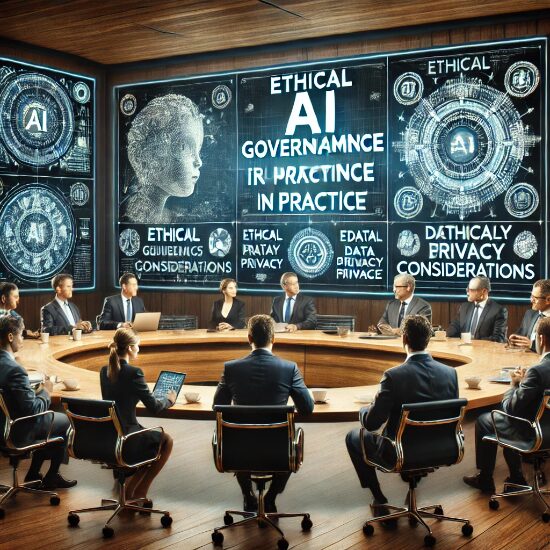
Every chair at that table belongs to somebody with a stake. I don’t see a chair for you. I don’t see a chair for the person who opens a chatbot at the kitchen table and trusts what it tells them. That person is the one who lives with the results, and that person has no seat.
To understand this force, you have to go back one week. On September 29, 2026, the President met with executives of several leading artificial intelligence developers at the White House. The parties announced a voluntary framework titled “The White House Accord on Super Intelligence.” Leaders of six companies put their names on it: Google, Anthropic, Meta, OpenAI, xAI, and Nvidia. alstonprivacypebblous
The accord asks for four layers of protection. Internal controls, an internal team to check them, an independent external auditor, and an independent board committee. On paper that sounds solid. Four layers, stacked like a wall. But I’ve learned to read the fine print, and so should you. cellcog
Asked whether the accord was binding, Trump said, “I think it’s morally binding.” That’s a polite way of saying no. If it were binding, there would be a penalty for breaking it. The accord carries no penalties for non-compliance, no requirement to report safety incidents to any government body, and no independent authority to appoint auditors. siliconangletechtimes
The company picks its own auditor. Think about what that means in any other part of life. It’s like letting a student choose who grades his test, then letting him keep the grade to himself. The accord does not require signatories to publish audit findings or disclose the identity of their external auditors. So you won’t know who checked, and you won’t know what they found. shattered
Even the language leaves the door open. The key word is “should,” not “must.” “Frontier models,” meaning the most powerful AI systems, are never defined. There is no named auditor, standard, deadline or penalty. A promise with no deadline is a promise that can wait forever. riotimesonline
So put the two pieces side by side. One week, the companies sign a promise to police themselves. The next week, a task force appears with no money and no power to make them keep it. The task force is the watchman, and the accord is the lock. Neither one is attached to anything.
There is one real change in all this, and it deserves to be named. David Sacks, who previously served as the Administration’s AI czar, had called outside safety assessments “pseudoscience.” The Accord instead endorses independent audits, which signals a meaningful policy shift. That’s a step. Admitting someone outside should look is better than saying nobody should. alstonprivacy
But a step on paper isn’t a step on the ground. An audit only means something when three things are true. The one being checked doesn’t choose the checker. The findings see daylight. And somebody pays a price when the answer is bad. This accord has none of those three. That isn’t oversight. That’s a company grading its own homework with the White House standing by to clap.
There’s a pattern I’ve watched for a long time now. When people get scared of something powerful, the powerful hand them a name and a ceremony. A force. An accord. A signing. A new word for the same old thing. The name tracks an executive order directing federal agencies to use “super intelligence” in place of “artificial intelligence” in official correspondence. Changing the name on the box doesn’t change what’s inside it. siliconangle
What you can do is simple, and it’s yours to do. Stop judging these things by their names. Ask three questions every time. Who checks? Who picked the checker? And what happens when they fail? If nobody can answer those, you’re being handed comfort, not protection.
The force has a report on the technology’s risks and opportunities due within 120 days. I’ll be watching for it. When it comes, I’ll read it the same way I read this. Not for what it promises. For what it can actually make somebody do. siliconangle
Until then, keep your own hand on the rope. Nobody at that table is holding it for you.
Load this file before each AI chat session.
the-faust-baseline-public-release-1Download
This post was drafted with AI governed assistance and reviewed and directed by Michael S. Faust Sr. before publication.
” Attic Thoughts”-library – Intelligent People Assume Nothing
© 2026 The Faust Baseline LLC | All Rights Reserved