I’ve signed a lot of contracts in my life.
Work orders, job tickets, and union cards. Papers for a mining claim. Enlistment papers in 1972, so I could pick my own job before the Army picked one for me.
Every one of them had the same bones.
It said who does the work, what the work is, and when it’s due. It said who checks it. And it said what happens if it doesn’t get done.
That’s all a contract is. Terms, inspection, and consequence.
Today I want to write one. Not for me. For us.
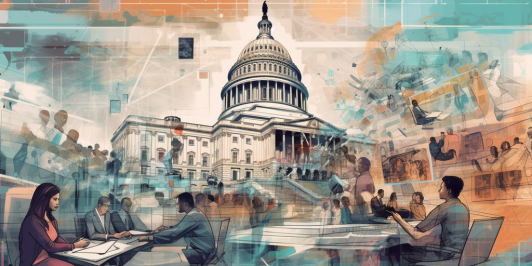
It’s from the people of this country, to the Congress we hired.
Now, some of you are thinking I’ve got the order wrong. Congress hands out the contracts. Congress pays the contractors. Congress sits on the other side of the table.
No, sir.
Congress works for us. We pay every dollar of its salary. We pay for the buildings and the staff and the airplane tickets home.
We are the client. We just forgot to write the terms down.
So let’s write them down.
Why address it to Congress, and not the President or the Court?
Because Congress is the one branch that can bind all the others, itself included.
It writes the laws the Court works under. It sets the rules for its own members. It holds the purse over every agency in Washington.
If you want a contract to reach the top, you hand it to the one who holds the pen.
Earlier today I told you about the inspector’s stamp at Lockheed. The man who does the work never signs off on his own work.
And I told you about Woodrow Wilson. For seventeen months, the only record of whether he could do the job was kept by the people closest to him.
Both stories have the same lesson. Nobody certifies himself.
Every clause in this contract is built on it.
Here are the terms.
THE PARTIES
This contract is between the people of the United States, the client, and the Congress of the United States, the contractor.
Congress agrees to carry out these terms on every branch of the government. That includes the Supreme Court, and it includes Congress itself.
No party to this contract may inspect its own work.
CLAUSE ONE: NO ONE SIGNS HIS OWN TICKET
Today, when a member of Congress is accused of breaking the rules, other members of Congress decide the case. They’re his colleagues. They eat lunch with him. Next year they may need his vote.
An outside office can look into complaints. But it can only pass them along. It can’t punish anybody.
That’s the foreman grading his own crew.
Under this contract, every branch gets an inspector it doesn’t pick and can’t fire.
The inspector’s findings go on a public record that the people being checked can’t edit.
And the inspector is the People. They are the last word.
CLAUSE TWO: THE COURT WEARS A ROBE, NOT A CROWN
The justices of the Supreme Court serve for life. The founders did that on purpose, so judges wouldn’t bend to politics.
I understand that. I respect it.
But a lifetime job was never meant to be a lifetime without a boss.
In 2023, the Court finally adopted a written code of conduct. It was a step. But the code has no enforcement. Nobody outside the Court can make it stick.
And when a justice might have a conflict in a case, who decides whether he should step aside? The justice himself.
Some justices have taken trips and gifts from wealthy friends and didn’t report them until reporters dug them up.
Under this contract, the Court works under a binding ethics code, written into law.
When a justice may have a conflict, somebody other than that justice decides whether he sits on the case.
Every gift, every trip, and every free ride is reported, on time, where anybody can read it.
This isn’t an attack on the Court. It’s the same deal every judge in every county courthouse in America already lives under.
Term Limits 15 years Max
CLAUSE THREE: YOU DON’T BET ON THE GAME YOU REFEREE
Right now, members of Congress can buy and sell individual stocks.
They sit in closed-door briefings about wars, pandemics and bank failures. They write laws that make companies rich or put them under. Then they trade in those same companies.
There’s a law that says they have to report their trades. The fine for reporting late is often about two hundred dollars.
Two hundred dollars. I’ve paid bigger fines for a busted taillight.
Both parties have members who trade. Both parties have members who’ve tried to stop it. It still hasn’t stopped.
Under this contract, members of Congress and their spouses don’t trade individual stocks. They can own broad funds that rise and fall with the whole country, the same as your retirement account. They sink or swim with the rest of us.
Break it, and the penalty is real. You give back every dime you made, and then some.
This is also allpied to all self governing of both chambers, the people get the last say in an open forum and vote
CLAUSE FOUR: THE RULES YOU WRITE FOR US, YOU LIVE UNDER
For a long time, Congress exempted itself from laws it passed for everybody else. Some of that got fixed in 1995. Not all of it.
The public records law, the one that lets you ask the government for its files, doesn’t reach Congress’s own records.
Under this contract, no law passed by Congress exempts Congress. If it’s good enough for the people, it’s good enough for the people who wrote it.
CLAUSE FIVE: EVERY DOLLAR HAS A NAME
Here’s where I talk about the few.
Every election, a great flood of money pours in to move votes. A lot of it comes from groups with friendly names and no faces behind them.
I’m not telling anybody they can’t spend their money. That’s a fight for another day.
But the people on the other end of the ad deserve to know who’s talking.
Under this contract, every dollar spent to move an election or a vote carries the name of the person or company it came from.
Money can talk if it wants to. It just has to sign its name, like the rest of us do.
A cap for all large donations and all donations have to be private induividuals named only.
CLAUSE SIX: THE REVOLVING DOOR SWINGS SLOWER
Today a member of Congress can leave office and, after a year or two, come back through the same doors as a lobbyist. He knows every hallway, every staffer and every weak spot. And he’s paid by the people who want something.
The few don’t need to buy a senator. They can just hire the last one.
No more Lobbyist allowed in any form.
CLAUSE SEVEN: THE COMPLACENT CLAUSE
This one is the hardest to write.
The corrupt man breaks a rule, and you can catch him. The complacent man breaks nothing. He just sits.
He doesn’t pass the budget on time. He doesn’t hold the hearing. He doesn’t fix the law everybody knows is broken, because fixing it is hard and not fixing it is easy.
Congress has missed its own budget deadlines year after year. Then it runs the country on stopgaps, or it shuts the government down. Soldiers wait on paychecks. Parks close. Families who never did a thing wrong pay the price.
Meanwhile, members of Congress get paid during a shutdown, because their own pay is set up to keep coming.
Under this contract, a deadline is a deadline.
If Congress misses its budget, Congress feels it first. Its own pay stops until the job is done, the same as a contractor who doesn’t finish on schedule.
Every job Congress takes on gets a due date and an inspector. Sitting still is a breach, not a hiding place.
This is a law that only the people get to change by vote no one else in Govt.
CLAUSE EIGHT: THE REPORT CARD
Once a year, the inspectors publish a plain report to the people.
Which clauses were kept. Which were broken, by whom, and what happened to them.
It’s written at a level any citizen can read. No two-thousand-page bills. No legal fog.
If you can’t explain it to the people who paid for it, you didn’t do it.
CLAUSE NINE: NO SIDE DEALS
No branch can write itself an exception, a waiver or a quiet rider in the back of a bill that lets it out of these terms.
The contract binds the whole government, or it binds nothing.
SIGNED
The People of the United States.
Now, I’m not a lawyer. I know some of these terms Congress could write into law next week. Others might take a constitutional amendment to make stick.
That’s fine. Every hard job starts with somebody writing down what the work is.
And I know what some of you are thinking. They’ll never sign it. They’d be voting to put themselves under inspection. Why would they?
Here’s why.
Because trust is the only thing that keeps a government running. Look around and it’s almost gone.
People on the left and people on the right don’t agree on much these days. But ask them whether the powerful are held to the same rules as everybody else, and most of them will give you the same answer.
No.
That’s the one thing this whole country agrees on. Somebody ought to build on it.
I spend my days writing about artificial intelligence. About how these new machines ought to be watched while they work, by somebody who isn’t the machine and can’t be reached by it.
People ask me why I care so much about a rule for computers.
It’s because I’ve watched what happens when the people in charge check their own work. I watched it in a courtroom once, fighting for my own job after I reported a theft. I watched it on job sites, and I’ve watched it in Washington my whole life.
The machines are new. The problem isn’t.
Whoever does the work can’t be the one who signs off on it. Not a kid running wire, not a computer, not a senator, and not a justice of the Supreme Court.
We hired these people. It’s time they got a contract.
Read it over. Argue with it. Add a clause if I missed one.
Then hand it to your congressman and ask him one question.
Will you sign it?
It is up to us to hold them to it with our votes, our power is greater than theirs, it only fails if we fail to push hard enough and stick it out.
” Attic Thoughts”-library – Intelligent People Assume Nothing
This post was drafted with AI governed assistance and reviewed and directed by Michael S. Faust Sr. before publication.
© 2026 The Faust Baseline LLC | All Rights Reserved