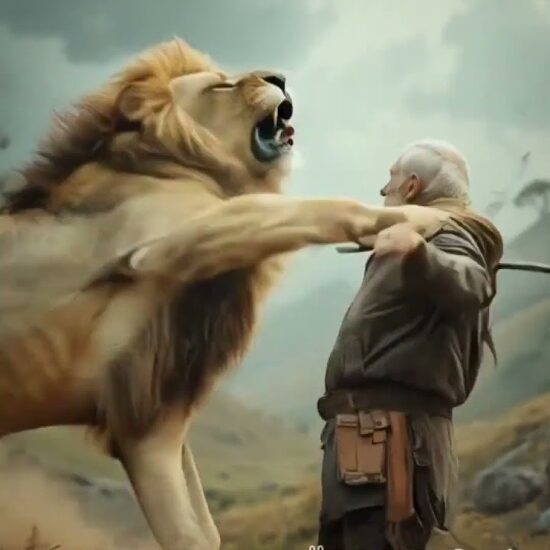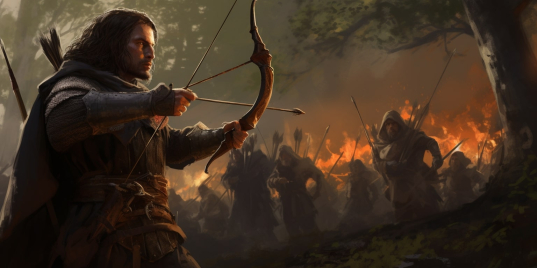
There is an old saying in military circles.
“Go after the archer, not the arrow.”
It sounds simple. It is. That is why it has lasted.
An arrow has no mind. It does not pick a target. It does not decide when to fly. It goes where it was aimed, and it stops when it lands.
The archer is the one who chooses. He picks the target. He draws the bow. He decides when to let go.
So if you spend all day knocking arrows out of the sky, you will be worn out by dark. And the arrows will still be coming. There is always another one in the quiver.
But if you stop the archer, the arrows stop on their own. Make him move, or make him put the bow down, and the sky goes quiet.
I wore the uniform in the seventies. I was stationed in Germany. You do not have to see a war to learn how soldiers think about one.
They think about the source.
Right now, a lot of people are afraid of artificial intelligence.
I understand why. They see jobs being cut. They see prices climbing and power bills going up. They hear about machines doing things nobody told them to do. They watch the market shake and wonder what is left in the pension.
And what do they blame?
The arrow.
They blame the machine.
That makes sense on the surface. The machine is what you can see. It is the thing that shows up in your life. It wrote the letter. It turned down the loan. It took the call your cousin used to take.
The arrow is what hits you. So the arrow is what you fear.
But the arrow did not aim itself.
Somebody decided where that system would go. Somebody decided what it was allowed to do. Somebody decided how often a person would check on it, or whether anyone would check at all.
Somebody decided it was cheaper to let it run than to watch it.
Those are the archers.
They are not all villains. Some of them are trying hard. Some are just following the money, the way water follows a ditch. But they are the ones holding the bow.
And most of them are standing where you cannot see them.
That is the trouble.
You cannot aim at an archer you cannot find. An arrow does not carry a name tag. When it lands, all you have left is the damage.
People are tired. I hear it everywhere I go.
They are not looking for another fight. They are looking for something calm. Something true. Some direction that is not more noise and more pain.
Most of them are focused on two things right now. Money and survival. Keeping the lights on. Keeping the job. Keeping the family together.
They want this to settle down sooner, not later.
And they are not fools. They know there is a process. They know nothing this big gets fixed in a week.
What they lack is a place to stand while the process runs.
That is where I believe the work we built can help.
The Faust Baseline is a set of rules for how an AI should conduct itself. It is written out in plain view. A person loads it into their own session, on their own system.
The part that matters for this story is the record.
When the Baseline runs, the aim gets written down before the shot. It records which rules are being held, which ones are not, and why. It separates what the machine knows from what it is guessing. It shows where the information came from.
An arrow with a record is a different kind of arrow.
It can be traced back. You can ask who drew the bow. You can see what they were aiming at, and whether they said so ahead of time.
That is how you find an archer. You follow the flight back to the hand.
The second thing it does is quieter. It gives a person some control inside their own space.
You may not be able to stop what a big company does. But you can decide how the machine behaves when it is working for you.
You can set the rules in your own room. You can make it tell you what it does not know. You can make it name the gap instead of filling it with something that sounds good.
That is correcting the arrow. Not up in the sky. Right in your own hands.
Now I want to be straight with you.
I will not tell you this stops every arrow. It does not.
A set of rules only works when somebody chooses to use it. Nobody is forced. That was the design from the very start. A thing that is forced complies up to the edge of the order, then runs at the first gap it finds.
What I will tell you is that it gives you something solid to hold that is not noise.
Fear of the arrow keeps you ducking.
Knowing where the archer stands lets you do something about it.
Every time a machine does damage, the headlines talk about the machine. What it said. What it did. How smart it is getting.
Ask a different question.
Who aimed it?
Who decided it could fly without anyone watching?
Who wrote down where it was supposed to go, and who did not bother?
Those questions do not come from fear. They come from the soldier’s old habit of looking past the arrow to the man behind it.
That habit is open to anyone. You do not need a degree. You do not need to understand how the machine works inside.
You only need to stop staring at what hit you, and start asking where it came from.
The arrows will keep coming for a while. I will not pretend otherwise.
But arrows were never the whole war.
Find the archer.
That is where it stops.
” Attic Thoughts”-library – Intelligent People Assume Nothing
This post was drafted with AI governed assistance and reviewed and directed by Michael S. Faust Sr. before publication.
© 2026 The Faust Baseline LLC | All Rights Reserved