I cut five rules today.
They were good rules. That is the part that still bothers me.
I have a card. It sits in front of the AI every session. Twenty rules on it, grouped by when each one fires. At the open. Before the reasoning forms. While it builds. Before it leaves. Standing.
Twenty rules is a lot to hold. But I have never been one for shortening a list because it runs long. You do not cut the rule book. You learn it.
So this was not about length.
I sat down with the card and asked two questions of every line on it.
Does this rule fire on something outside the machine’s judgment?
And when the machine clears it, does it leave something behind that I can see?
That is it. Two questions.
Eight rules passed both.
Six passed halfway. Good marks on the page, but the trigger was soft. The rule fired when the AI decided it was time.
Five failed both.
And here is the thing I did not expect. The five that failed were the best-written rules on the card.
They were the ones about how to think. Check your reasoning. Weigh it before you speak. Watch your own language. Verify yourself.
Read them out loud and they sound like wisdom.
Run them and nothing happens.
Nothing happens because there is nothing to happen. There is no moment when the rule kicks in, because the rule fires when the machine feels it should. And there is nothing left behind when it is done, because thinking carefully does not leave a mark on the page.
Which means I could never catch it skipping one.
Not once. Not on my best day. The rule could be ignored on every single turn of every single session and the page would look exactly the same as if it had been followed to the letter.
A rule you cannot fail is not a rule. It is a sentiment.
I want to be careful here, because there is a wrong lesson sitting close to the right one.
Those five rules are not wrong. They are not junk. They went back into the protocol files, where they belong, and they still describe how the work is supposed to be done.
But they are not controls. And I had them sitting on a card of controls, taking up space, making the card look fuller than it was.
That is the part that got me. For weeks I looked at twenty rules and felt covered.
I was covered by fifteen.
The other five were reassurance.
I have seen this before, and not in anything to do with machines.
Every trade I ever worked had rules like this. Safety rules. Some of them were hard. Lock it out. Tie off above six feet. Two men on that lift.
You can fail those. Somebody can walk up and see that you did not tie off. There is a hook, and either you are on it or you are not.
Then there were the other kind. Be aware of your surroundings. Use good judgment. Work safe.
Nobody ever got written up for not being aware of their surroundings.
You cannot write a man up for that, because you cannot prove he was not. He says he was. You say he was not. There is no hook to point at.
So those lines went on the wall and did nothing. They made the wall look serious. They made somebody in an office feel like the matter had been addressed.
And when a man got hurt, it was never because he ignored the sign that said work safe. It was because there was no hook, or there was one and he was not on it.
The rules that hold are the ones with a hook.
Now here is why any of this matters outside of my shop.
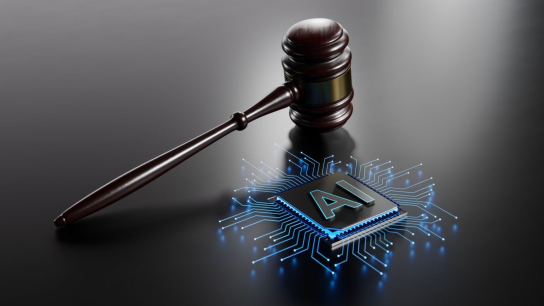
Everybody is writing AI rules right now. Companies, governments, labs, committees. Read them. Most of them are the second kind.
The system shall be fair. The system shall be transparent. The system shall respect human dignity. Meaningful human oversight shall be maintained.
I am not saying any of that is wrong. I am saying you cannot fail it.
Who decides when the system was not fair? What does the machine leave on the page when it has been transparent? What does oversight look like the day it does not happen? If the answer is that somebody has to make a judgment call after the fact about a thing that left no trace, then it is not a rule. It is a wall sign.
And here is the hard part. Those are the ones that read the best.
They are the ones that make it into the press release. They are the ones people quote. They sound like principles because they are principles.
Principles are not controls. Both are needed. They are not the same thing and they do not go in the same place.
Fifteen rules now. Every one of them fires on something the machine does not get a vote on. The session opening. A file arriving with no instructions. A claim about to go public. And every one leaves a mark I can look at when it is over.
Fifteen rules I can check beats twenty I have to trust.
I have run one day on it. One. That is nothing, and I am not going to pretend otherwise.
But I know something today that I did not know two days ago. I know which of my rules can be broken without me ever finding out.
That is worth the five I lost.
Ask it of whatever rules you are handed. The ones at your job. The ones in the policy nobody reads. The ones a company publishes about how carefully it handles the thing you gave it.
Can this be failed?
And if it is, will anybody know?
” Attic Thoughts”-library – Intelligent People Assume Nothing
Contact: micvicfaust@gmail.com
This post was drafted with AI governed assistance and reviewed and directed by Michael S. Faust Sr. before publication.
© 2026 The Faust Baseline LLC | All Rights Reserved