That is what real people control does, Grabs the naritive and shows where we stand as a nation.
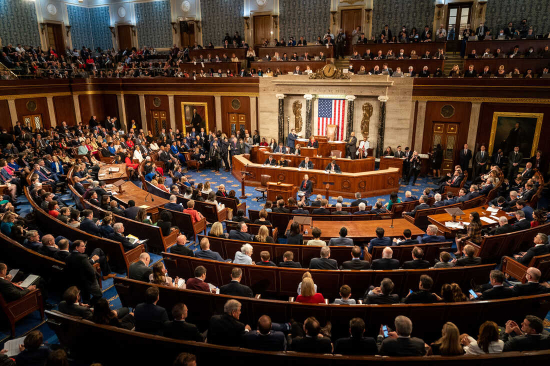
At least eighty-three members of Congress won’t be returning next year. Seventy from the House. Thirteen from the Senate. That’s before November even happens.
According to Ballotpedia, the number of lawmakers choosing not to run again is the highest it’s been since the year 2000. Twenty-six years.
Now, most of that is ordinary. People retire. Some served decades and decided they’d had enough. Nancy Pelosi is stepping away. So is Mitch McConnell, after a lifetime in the Senate. Others are running for governor or trying to move up to a different seat. That’s normal politics. It happens every cycle.
But there’s a second number buried in this story, and that one isn’t normal at all.
Twelve sitting members of Congress lost their own primaries. They ran for their old jobs, and their own party’s voters said no.
To understand why that matters, you need one piece of context. When a sitting House member runs for reelection, they win their primary more than ninety-eight percent of the time. It almost never happens that they lose. The average since World War Two is about six and a half incumbents losing per cycle.
We’re already at ten in the House alone, with primaries still to go.
That’s not a wave. That’s not one angry district. That’s a pattern showing up in state after state, in both parties, at roughly double the historical rate.
And here’s the part I keep turning over.
It’s happening on both sides. In Democratic primaries, challengers ran at incumbents and won — younger candidates, more progressive candidates, people the party establishment didn’t pick. Seven Democratic incumbents have lost so far, tying the most in a quarter century. On the Republican side, the same thing, from a different direction. Sitting members lost to challengers backed by Trump, some of them after publicly breaking with him.
Different parties. Different grievances. Completely opposite politics. Same outcome.
People who were supposed to be safe found out they weren’t.
Now here’s where I want to slow down, because there’s an easy read on this and I don’t think it’s the right one.
The easy read is that this is chaos. That the institution is breaking down, that experience is being thrown away, that we’re trading decades of knowledge for newcomers who don’t know how the place works. And there’s something to that. Institutional memory is real, and losing eighty-three people’s worth of it in one cycle has a cost.
But there’s another read, and I think it’s the more honest one.
For years the complaint about Congress has been that nothing ever changes. Same faces, same seats, same people winning by default because nobody could touch them. Ninety-eight percent renomination isn’t a sign of a healthy democracy. It’s a sign of a system where the outcome is decided before most people even show up to vote.
What’s happening right now is the opposite of that. Voters are actually deciding. Not accepting. Deciding.
That’s uncomfortable. It’s supposed to be. A system where power can actually be taken back is going to feel a lot messier than one where everyone keeps their seat until they choose to leave.
Which brings me to the thing I can’t stop thinking about.
Nobody forced this. There’s no rule that kicked these people out. No term limit law passed, no reform bill, no mandate from above. Every single one of those primary losses happened because ordinary people showed up and chose differently than they were expected to.
That’s worth sitting with. All the arguing about how to fix Congress — term limits, campaign finance reform, new rules, new restrictions — and the thing that actually moved the needle this year was people voting.
Not a system change. A choice, made over and over, in a lot of places at once.
I’ve spent a long time now arguing that the difference between something forced and something chosen is the whole ballgame. A rule imposed from outside gets followed right to the edge of what’s required and no further. But a choice made freely holds up in places nobody’s watching.
This is that, playing out in real life, in a place nobody expected it.
Eighty-three seats. Twelve of them taken, not given up. And the only mechanism that did it was people deciding they were done accepting what they’d been handed.
That’s not the system breaking. That’s the part of it that was always supposed to work, finally working.
The_Ten_Plain_Rules_CardDownload
This post was drafted with AI governed assistance and reviewed and directed by Michael S. Faust Sr. before publication.
Post Library – Intelligent People Assume Nothing
Contact: micvicfaust@gmail.com
© 2026 The Faust Baseline LLC | All Rights Reserved