But It Knows What Sells.
The internet did not invent fear of the end times. That is as old as human beings. What the internet did was discover that apocalyptic content is one of the most reliable engagement mechanisms ever found — and then build a system optimized to push it at you continuously, personally, at the exact emotional frequency most likely to keep you scrolling.
The oldest story, running on new hardware
I am old enough to remember when end-of-times content required a pamphlet, a tent revival, or at minimum a television program with a donation line at the bottom. The reach was limited. The production cost was real. The person delivering the message had to stand in front of people and say it out loud, which imposed at least some accountability on what they were willing to claim.
That friction is gone now. Today anyone with a phone and a feeling can reach ten thousand people before breakfast with a prophecy, a sign, a numbered list of reasons the current news cycle is the fulfillment of something written two thousand years ago. The cost of production is zero. The accountability is zero. And the reward — the likes, the shares, the follows, the sense of being one of the ones who sees clearly while the world sleeps — is immediate and real and engineered to feel like confirmation.
This is not a critique of faith. I want to be clear about that from the start. This is a critique of what happens when a sacred human instinct — the need to make meaning out of suffering, to believe that history is moving toward something rather than nowhere — gets fed into a machine that does not care about meaning, only about engagement. The machine cannot tell the difference between genuine revelation and manufactured panic. It does not try. It measures what keeps you on the screen and serves you more of it.
The algorithm did not set out to corrupt prophecy. It set out to maximize engagement. Those two things produced the same result, and nobody issued an apology.
What genuine prophecy feels like versus what the algorithm sells
People of real faith know something about this that the internet has not figured out how to replicate. Genuine prophetic tradition — across Christianity, across most serious religious traditions — comes wrapped in humility. No man knows the hour. Watch and pray. Be ready, not because you have cracked the code, but because readiness is how a person of faith lives regardless of the calendar.
That is a quiet posture. A steady one. It does not produce a lot of shareable content. It does not generate the kind of urgency that drives a video to a hundred thousand views in forty-eight hours. Humility does not trend. Certainty does. And the algorithm rewards certainty above almost everything else because certainty produces the emotional state most likely to make you forward something to everyone you know.
What the internet sells as prophecy is almost always the opposite of that tradition. It is loud. It is certain. It has a timeline. It identifies specific villains, specific signs, specific fulfillments happening right now in the current news cycle, which is convenient because the current news cycle refreshes every few hours and there is always something new to interpret. The person delivering it does not say I could be wrong. They say I have done the research. They do not say watch and pray. They say share this before it gets taken down.
That urgency is not the Spirit moving. That is a push notification. And the difference matters enormously to the person on the receiving end, whether they recognize it or not.
Real faith produces peace underneath the hard message. What the algorithm delivers produces anxiety with a subscribe button. Those are not the same thing and they do not produce the same person.
The business model underneath the revelation
I want to follow the money for a moment because it clarifies everything. Apocalyptic content performs exceptionally well on every major platform. Fear, tribal identity, the sense of special knowledge, the urgency to act before it is too late — these are among the most powerful engagement levers available, and end-times content hits all of them simultaneously. The algorithm did not choose this because someone decided to weaponize faith. It chose it because the data said it works and the system optimizes for what works.
The people producing the content understand this whether they admit it or not. The ones who have been doing it for years have learned exactly which phrases, which framings, which visual cues produce the most shares. They have learned that updating the prophecy to match the current news cycle extends its shelf life. They have learned that a little persecution narrative — this information is being suppressed, they do not want you to see this — multiplies reach dramatically. None of that is revelation. All of it is marketing.
And the platform collects the revenue either way. Your fear, your hope, your sincere desire to understand what is happening in the world — all of it converted into time on screen, which converts into advertising revenue, which funds the continued operation of the system that fed you the content in the first place. The loop is clean. The only thing it costs is the peace of the person sitting inside it.
What a governed internet would do differently
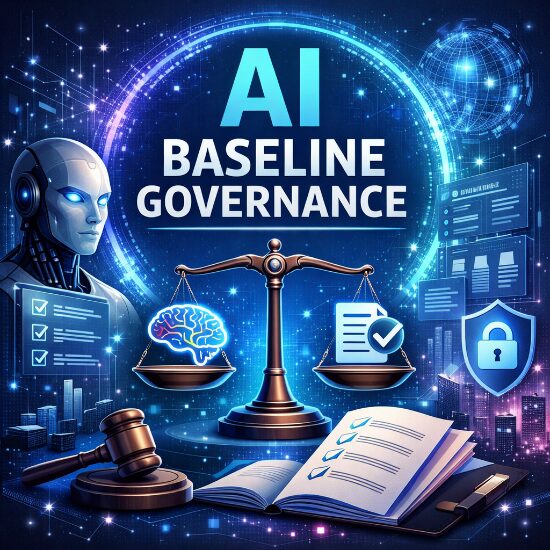
This is where the Faust Baseline™ enters the conversation, and I want to be direct about why.
A sovereignty layer — the kind of governed internet protection we have been building toward — would recognize apocalyptic engagement bait for what it is before it reaches you. Not because the content is automatically false. Some of it may be sincere. Some of it may even be worth your attention. But the delivery mechanism — the urgency engineering, the certainty performance, the recommendation engine queuing up the next video before you have finished processing the current one — that is manipulation. And manipulation is exactly what a governance layer is designed to intercept.
The question a governed system would ask is not whether the content is true. It is what the content is doing to you. Is it building your capacity to think clearly or eroding it? Is it deepening your faith or replacing it with anxiety dressed as conviction? Is it informing you or activating you — and if it is activating you, in whose interest is that activation happening?
Those are not questions the algorithm asks. The algorithm has no interest in your clarity. It has an interest in your next session. A governance layer asks those questions on your behalf, automatically, before the content arrives, and holds the line when the answer is not in your favor.
Your faith is yours. Your fear is a commodity. A governed internet knows the difference and protects the first one from being converted into the second.
What seventy years teaches you about the end of the world
I have lived through enough end-of-times cycles to have earned an opinion on this. The Cuban Missile Crisis. Y2K. Every election in my adult lifetime declared to be the final one. Every decade producing its own confident interpretation of the same ancient texts applied to the specific anxieties of the moment. The world did not end. People got up the next morning. The ones who had sold the panic moved on to the next panic, and the audience largely followed because the emotional need the content was feeding did not go away just because the prediction failed.
That is the part worth understanding. The appeal of apocalyptic content is not really about the end of the world. It is about the need for meaning, for pattern, for the sense that suffering is not random and that history is moving somewhere with purpose. Those are legitimate human needs. Deep ones. The algorithm did not create them. It just learned to exploit them with extraordinary precision.
The answer to that exploitation is not cynicism about faith or dismissal of the genuine desire to understand what is happening in the world. The answer is discernment. The old word for it. The ability to sit with something and ask not just whether it feels true but whether it is producing good fruit — in you, in your thinking, in the quality of your days and your relationships and your capacity to be present to the people actually in your life.
Panic does not produce good fruit. Anxiety dressed as revelation does not produce good fruit. Spending three hours a night watching videos about signs and seals and the identity of the antichrist does not produce a more grounded, more faithful, more loving person. It produces a frightened one. And frightened people are very good for the algorithm and very hard to live with.
The bottom line.
The internet will push the end of the world at you every single day because the end of the world is excellent for engagement. The algorithm does not know the hour. Nobody does. But the people who built the recommendation engine know exactly which emotional frequencies keep you on the screen longest, and apocalyptic certainty is near the top of that list.
Your faith deserves better than being used as an engagement mechanism. Your fear is a commodity to the platform. Your peace is not their concern. Protecting it is yours — and it starts with understanding what is actually being sold to you when the next video begins to play.
Watch and pray… not watch and scroll.
There is a difference, and it matters more right now than it ever has.
“A Working AI Firewall Framework”
“Intelligent People Assume Nothing” | Michael S Faust Sr. | Substack
Unauthorized commercial use prohibited. © 2026 The Faust Baseline LLC