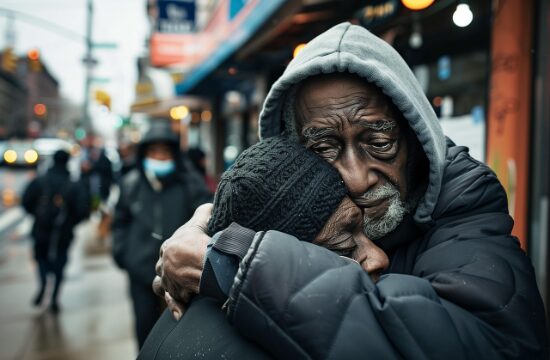
There is something the elders remember that most people under fifty have never experienced and do not know they are missing.
They remember when the people with a platform understood what it was for.
Not fame. Not revenue. Not engagement metrics. Not brand building. The platform was for the people sitting in the dark watching the screen, or gathered around the radio in the kitchen, or filling the pews on a Sunday morning when the news from overseas had been bad all week. The platform was for steadiness. For return. For the quiet assurance that the world was hard but not hopeless, and that you were not alone in it.
That was not an accident. And it was not naive.
What They Were Actually Asked to Do
When the United States entered World War II the government did something that is almost impossible to imagine today. They went to the artists and said — we need you.
Not to make propaganda in the crude sense, though some of that existed. They went to the filmmakers, the musicians, the writers, the radio broadcasters, and they said — the people are under enormous strain. They are sending their sons overseas. They are rationing food and fuel. They are working longer hours in factories they have never worked in before. They are reading casualty lists in the newspaper. They are afraid. Help them carry it.
Frank Capra made the Why We Fight documentary series. Not to deceive anyone. To explain, clearly and with moral weight, what was at stake and why it was worth the cost. John Ford went to actual combat zones and filmed what he saw. Walt Disney converted his studio almost entirely to training and morale films. The major studios operated under a shared understanding that their product had a civic function.
It was not just Hollywood. The Office of War Information worked with radio broadcasters. Songwriters were encouraged — sometimes directly asked — to write music that would sustain people emotionally. The Andrews Sisters were not just popular entertainment. They were part of an emotional supply chain that ran from the recording studio to the factory floor to the kitchen table where a woman was reading a letter from her husband and trying to hold herself together long enough to get the children fed.
The church did not need to be asked. It already knew its role. The pastor who stood up on Sunday morning when the news had been devastating all week was not expected to ignore the weight in the room. He was expected to address it, hold it, and return his congregation to something they could stand on. Not false comfort. Genuine steadiness. There is a difference.
The community hall. The USO. The neighbor who came over because they knew you were alone with it. Every one of those was a node in a network that existed specifically to absorb human suffering and return human stability.
Nobody called it infrastructure. But that is what it was.
When the Agreement Ended
The agreement was never written down. It did not need to be. It was cultural — understood across industries and institutions and generations. The people with a platform had a responsibility that came with it. You could entertain. You could challenge. You could provoke thought. But underneath all of it ran an obligation to the basic steadiness of the people you were reaching. You did not leave them worse than you found them.
That agreement did not collapse overnight. It eroded.
Some of it eroded through commercialization — the slow discovery that anxiety and conflict were more profitable than resolution and rest. Some of it eroded through fragmentation — the audience split into a thousand niches and the shared cultural moment that made collective steadiness possible became harder to find. Some of it eroded through cynicism — a long stretch of decades in which sincerity became unfashionable, hope became naive, and the artist who tried to offer genuine comfort was dismissed as sentimental or worse, as complicit.
By the time the internet arrived the erosion was already well advanced. The internet did not cause what we have now. It accelerated and perfected it.
What the Algorithm Found
Nobody sat in a room and decided to destabilize the American public. Nobody planned it. The algorithm found it the way water finds a crack — naturally, efficiently, without malice and without conscience.
What the algorithm found is this: agitation is more engaging than peace. Fear keeps people on the platform longer than comfort does. Outrage generates more sharing than steadiness. Conflict drives more clicks than resolution.
These are not opinions. They are measurable. The platforms measured them, optimized for them, and built their entire economic model around them. The result is an information environment that is structurally, mechanically, relentlessly destabilizing. Not because anyone wanted that outcome. Because that outcome is profitable.
The old infrastructure absorbed stress and returned steadiness. The new infrastructure generates stress and sells the feeling of engagement as a substitute for relief. You scroll because you are anxious. The scrolling makes you more anxious. You scroll more. The platform profits. You feel, dimly, that something is wrong, but the mechanism is invisible and the habit is already formed.
This is what replaced the network the elders remember.
What the Elders Carry
The people who are old enough to remember the tail end of that earlier world — or who were raised by people shaped by it — carry something that is genuinely rare now and genuinely valuable.
They remember what it felt like to be held by a culture that was trying to hold them. They remember the specific emotional texture of a film that ended with something restored. A radio program that signed off with something solid. A Sunday morning that sent you back into the week with your footing under you.
They are not nostalgic for perfection. That world had enormous failures. Injustices that the steadiness was sometimes used to paper over. Voices that were excluded from the comfort being offered. The elders who are honest will tell you that too.
But they also know — in their bones, not as a theory — that the human being requires more than stimulation. That the nervous system needs rest as well as activation. That a culture which only generates agitation and never returns peace is doing something to its people that will take a long time to fully see and longer still to repair.
They carry that knowledge. And most of them do not know how to pass it on because the language and the forms that carried it are gone, and the new forms were not built for that purpose.
Where Is the Help Now
That is the question worth sitting with.
It has not disappeared entirely. It has retreated to the places that have not yet been fully monetized, fully optimized, fully converted into engagement product.
The back porch where two people sit long enough to get past the noise. The small congregation where the pastor still knows what Sunday morning is for. The writer who has not yet decided that sincerity is too risky and still knows how to end a story with something worth holding. The elder who tells the story again because they believe the story matters and have not been talked out of believing it.
These are not nothing. They are in fact the same thing the USO was. The same thing the radio broadcaster understood at eleven o’clock on a Tuesday night in 1943 when he signed off and said something true and human to the people in the dark.
They are the nodes of a new network that does not have a name yet and does not know it is a network.
The help is still there. It is just not where most people are looking.
What Could Be Asked
If someone in authority — in government, in industry, in the institutions that still have reach — decided to ask the question the Roosevelt administration asked in 1942, it would sound something like this:
The people are under strain. Not the strain of war in the traditional sense, but strain nonetheless. They are anxious, fragmented, exhausted by the pace of change and the volume of noise. They do not know who to trust or what to hold onto. Help them carry it.
That question is not being asked. Not at scale. Not with the seriousness it deserves.
But it could be. And the artists and the writers and the pastors and the community builders who are still oriented toward steadiness rather than agitation are ready to answer it. They have been ready. They have just not been asked.
A Last Word for the Elders
If you are old enough to remember what it felt like when the culture was trying to hold you — when the movie at the end of a hard week returned something to you instead of taking more — you are carrying something the younger generations genuinely need and do not know how to ask for.
Tell the story. Tell it plainly. Tell it the way you would tell it on a porch to someone who needed to hear it.
Not because it will fix what is broken. But because the person in front of you needs to know that steadiness is real, that it has existed before, that it is not naive to want it, and that somewhere underneath all the noise it is still available.
That is not a small thing.
That is exactly what was always being asked of the people with a platform.
It is still being asked.
Then you knew you were not alone
“A Working AI Firewall Framework”
“Intelligent People Assume Nothing” | Michael S Faust Sr. | Substack
Unauthorized commercial use prohibited. © 2026 The Faust Baseline LLC