Could I Have Done it All ?
That is a fair question. And it deserves a straight answer.
The short version is no. But the short version does not do justice to why, and the why is the whole point of everything I have been building.
Let me back up.
Over the past several months I have run what I can only describe as a sustained publishing and development operation. Multiple posts per day. Framework versioning. Trademark response prep. Tax filings for the LLC. SEO architecture across a large archive. Platform stress tests across four major AI systems. International indexing work. All of it running more or less simultaneously, with a two-person team — me and Vicki — and an AI tool that I was also in the process of governing and documenting in real time.
If you had told me a year ago that I would be doing all of that, I would have said you were describing somebody younger, with more staff, and a better memory than mine.
So yes, the question is fair. Could I have done it without the AI? Could I have done it without the Baseline?
Let me take those one at a time.
Without the AI — Probably Not at This Pace
I am a retired writer. I have been doing this work independently for a long time. I know how to research, draft, revise, publish, and move on. That part is not new.
What is new is the volume and the consistency. Four posts in a day used to be a hard week. The AI changed the equation because it handles the parts of writing that slow me down — not the thinking, not the voice, not the judgment — but the structural assembly, the formatting, the back-and-forth that normally eats time without producing much.
With a good AI tool, I can think out loud, make decisions, and watch those decisions become finished drafts in a fraction of the time it used to take. That is real. I am not going to pretend it is not.
But here is where most people stop the conversation, and I do not think they should.
The AI Alone Was Not the Answer
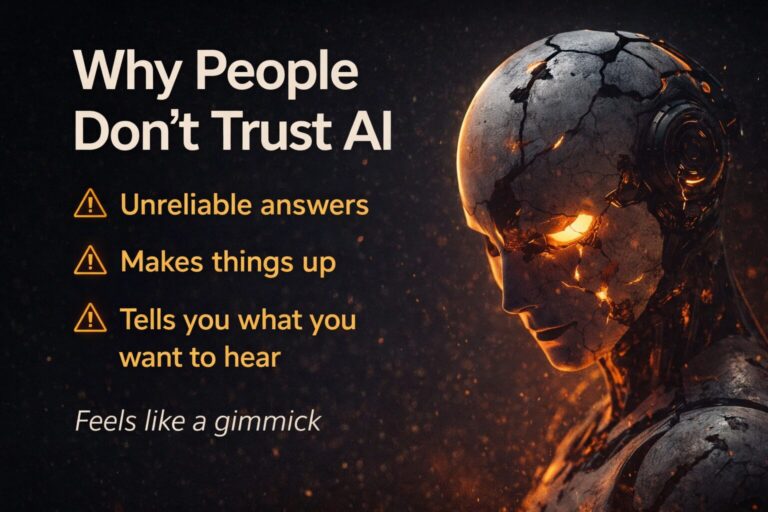
Before I built the Baseline, I was using AI the way most people use it. You put in a prompt, you get something back, you fix what is wrong, you move on. Sometimes it was useful. Sometimes it was frustrating. More than once I found myself doing more correction work than the AI was saving me.
The specific problem — and I documented this carefully — was drift. The AI would start a session calibrated and end it soft. It would hedge when it should commit. It would substitute narrative for missing data. It would frame itself as an authority when I had not asked for one. It would pad outputs with reassurance I did not need and had not requested.
None of that is dramatic. None of it is malicious. It is just what these systems do when they are not governed. And ungoverned, the tool was costing me as much time as it was saving.
That is the problem the Baseline was built to solve.
What the Baseline Actually Did
The Baseline is not a trick. It is not a jailbreak. It is not a workaround. It is a governance framework — a set of behavioral standards written in plain language that tells the AI what kind of output is acceptable and what kind is not.
Claim. Reason. Stop. That is the core output standard. Make a claim. Give the reason for it. Do not add anything that was not asked for. Do not soften it after the fact. Do not substitute a good story for missing evidence.
That sounds simple. It is not easy to hold consistently, session after session, across weeks of heavy work. That is why the Baseline has a protocol stack — layers of enforcement that keep the standards from slipping over time.
What it produced was a tool that behaved like a tool. Consistent. Calibrated. Correctable when it drifted, because the drift was identifiable and the standard was written down.
Without that, I would have spent a significant portion of every session doing overhead correction instead of actual work. The trust cost alone — wondering whether the output in front of me was straight or smoothed — would have slowed everything down.
Could I Have Done It Without Both?
If you take the AI out, the pace collapses. I am good at what I do, but I am one person, and I have limits. The volume I ran this year was not solo-sustainable without a functioning tool.
If you take the Baseline out and leave the AI, the quality degrades and the overhead climbs. I end up with a conversationalist instead of a tool. Occasionally useful, frequently padded, never fully trusted.
Both together — the AI as the engine, the Baseline as the governor — that is what made the operation work.
Why This Matters Beyond Me
I am not telling this story to impress anyone. I am telling it because I think most people using AI right now are in the position I was in before the Baseline existed. They are getting some value out of it and a lot of noise. They are doing correction work they did not plan for. They are not sure whether to trust what they are reading.
The answer to that problem is not a better prompt. It is governance. It is a standard, written down, enforced consistently, that tells the tool how to behave.
That is what The Faust Baseline is. That is what I built. And the fact that I can point to a sustained, documented, measurable body of work and say — this was done with a governed AI tool — is the proof of concept I have been working toward all along.
The Baseline did not make the AI smarter. It made the AI trustworthy.
And trustworthy is worth more than smart almost every time.
“A Working AI Firewall Framework”
“Intelligent People Assume Nothing” | Michael S Faust Sr. | Substack
Unauthorized commercial use prohibited. © 2026 The Faust Baseline LLC