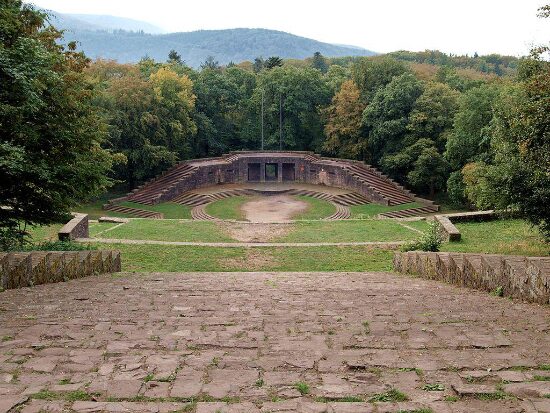
What Germany taught me about aging, stairs, and the most dangerous phrase in the English language.
I lived in Germany for three years.
Not in a city exactly. In the villages. The kind of places that have been there for several hundred years and were not designed with your comfort in mind. Cobblestones that would turn an American ankle. Hills that just kept going. Stairs cut into hillsides like they grew there. Markets you walked to and walked home from carrying what you bought because that was simply how it was done.
And the old people moved through all of it like it was nothing.
Late eighties. Nineties. Women with white hair and good coats walking up staircases that would wind an American in his forties. Men with walking sticks not because they needed them to stand but because the stick was part of the outfit and always had been. People who had been climbing those same cobblestone hills for seven and eight decades and saw no particular reason to stop now.
I watched them and I filed it away somewhere. The way you file things away when you are young and not quite sure what you are seeing but you know it means something.
It took me a few more decades to understand what it meant.
When I lived in California I watched something different happen.
People would sell their two story houses when they got older. Good houses. Houses they had lived in for years and loved. They would sell them and move to single story living because they did not want to deal with the stairs anymore.
And I remember thinking that was a strange way to look at it.
Because from where I was standing the stairs were not the problem. The stairs were the medicine. The stairs were the thing keeping the body asking something of itself every single day. The thing keeping the legs strong and the heart engaged and the lungs working and the circulation moving. Remove the stairs and you have not solved a problem. You have eliminated a daily physical demand that was doing quiet essential work the whole time.
They had it backwards.
They were so focused on making the difficulty go away that they did not stop to ask what the difficulty was doing for them.
The body is brutally honest in a way the mind sometimes is not.
It only maintains what you ask of it. Stop asking and it stops providing. Not out of spite. Just out of pure biological economy. Why build and maintain capacity that is never called upon. Why keep the muscle if the muscle is never needed. Why sustain the cardiovascular infrastructure if the infrastructure is never stressed.
The body answers to demand. Always has. Always will.
The German villagers were not exceptional people. They were not following a wellness program or tracking their steps or consulting a nutritionist. They were just living in a place that never stopped asking something from them every single day across eight and nine decades. The hills asked. The stairs asked. The market asked. The cobblestones asked. And the body answered. Every day. Year after year. Decade after decade.
Until they were ninety years old and still walking up the same hills they had always walked up because that was just Tuesday.
America solved for convenience and called it progress.
Drive to the mailbox. Park as close to the door as possible. Install the elevator. Move to the single story house. Optimize every friction point out of daily existence until the day looks smooth and flat and effortless from morning to night.
And then build a massive medical industry to manage the consequences of a body that was never asked to do anything.
The villages were not behind. They were right. They had stumbled onto something by accident of geography and history and architecture that the modern world has been engineering itself away from for a hundred years.
The friction was the feature. Not the bug.
There is a phrase I have come to distrust more than almost any other.
Age appropriate.
It sounds reasonable. It sounds caring. It sounds like wisdom about knowing your limits and respecting where you are in life.
But watch how it gets used.
Age appropriate becomes the reason to stop walking the hills. To sell the two story house. To take the elevator instead of the stairs. To drive instead of walk. To sit instead of move. To eliminate one physical demand after another in the name of being sensible about getting older.
And every elimination feels like relief in the moment. One less thing to manage. One less effort to make. One less friction point in the day.
Until six months later the body has answered the reduction in demand with a reduction in capacity. And then age appropriate gets invoked again for the next elimination. And then the next.
It is a slow quiet spiral dressed up as common sense.
The Germans in those villages had never heard of age appropriate. They just kept walking because the village required it and they lived in the village and that was that.
I go up and down stairs every day. More than most people probably. It is just part of living in my house and working the way I work.
I used to think of it as incidental. Just the texture of the day. But I think about those German villages now when I hit the stairs and I think about the people I watched moving through those cobblestone hills in their late eighties like it was nothing.
They were not extraordinary. They were just consistent. Decade after decade of a body being asked to do something and answering the ask.
That is available to all of us. It does not require a gym membership or a fitness program or a wellness philosophy. It requires a willingness to keep the friction in your life instead of engineering it out.
Keep the stairs. Walk to things when you can. Carry what you buy. Let the hill be a hill.
The body will answer. It always does.
It just needs to be asked.
“AI Baseline Governance”
“Intelligent People Assume Nothing” | Michael S Faust Sr. | Substack
Unauthorized commercial use prohibited. © 2026 The Faust Baseline LLC