There is a thing that happens before an election that most people miss.
They watch the polls. They watch the candidates. They watch the money. What they don’t watch is the ground.
The ground moved last Saturday.
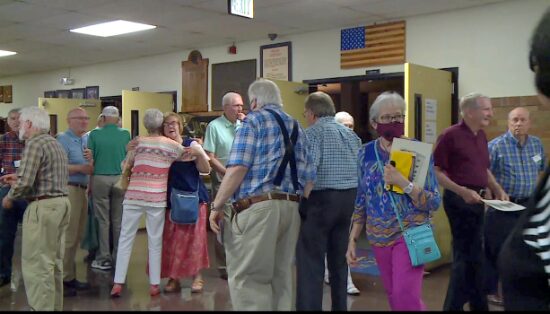
Eight to nine million Americans took to the streets on March 28th in what is now confirmed as the largest single-day protest in American history. More than 3,300 events. All 50 states. Not just New York and Los Angeles. Idaho put 10,000 people at the state capitol. Alabama had 22 protests. Pittsburgh alone turned out 15,000 to 20,000 people. Rural Kentucky showed up. Small towns in Indiana showed up. People who have never held a sign in their lives showed up.
That matters for one reason most people haven’t connected yet.
Every single one of those states votes in a primary in May.
Eleven states hold primaries between May 5th and May 26th. Ohio. Pennsylvania. Georgia. Alabama. Indiana. Idaho. Oregon. Kentucky. Nebraska. West Virginia. Louisiana. And a Texas Senate runoff on top of that.
Every one of them had significant No Kings turnout last weekend.
That energy doesn’t evaporate. It doesn’t go home and forget. It sits in those states, in those communities, in those people — and six weeks later there is an election.
This is the part the political analysts keep getting wrong. They treat protest energy like weather. It comes, it goes, you wait for the next system. But that is not what the data shows. What the data shows is that when people move at this scale, in this geographic spread, this close to an election — they vote. Not all of them. But enough of them. Enough to change outcomes in races that were supposed to be settled before they started.
And the geography here is not random. Two thirds of the people who showed up last Saturday came from outside major urban centers. That is the sentence that should stop every political strategist cold. This was not the base turning out in its usual places. This was the suburbs. The mid-sized cities. The small towns. The people who don’t normally march. That is a different animal entirely. That is the shape of a general election electorate, not a protest crowd.
Here is what that means in plain language.
Republican primary voters in those states are now selecting their candidates for November inside a pressure environment they haven’t seen in years. Nominate a weak candidate. Nominate a scandal-carrying candidate. Nominate someone who only plays to the base. Do that in a state where the opposition just filled your streets — and you have handed November away before summer starts.
Pennsylvania is the one to watch closely. Pittsburgh put up 20,000 people. Philadelphia had protests across 40 metro events. That state votes May 19th. The governor’s race is open. The energy is already there.
Georgia is the other one. Over 50 protests statewide. Brian Kemp is term-limited. Both parties have contested primaries for governor. A crowded messy Republican primary dropping a weak nominee into that environment is a gift the Democrats didn’t have to ask for.
Ohio had over 100 events. Indiana had protests at the statehouse and across a half dozen cities. Alabama had 7,000 people in Birmingham alone.
There is also Texas sitting out there with a Senate runoff on May 26th. Three Republicans — Cornyn, Paxton, and Hunt — couldn’t get one of them past 50 percent. So they run it again. Ken Paxton carrying his impeachment history into a general election environment where millions of people just took to the streets is not a comfortable position for the Republican Party. If Paxton wins that runoff, Texas becomes a conversation nobody in the GOP wanted to have.
The polls will tell you one thing. The streets told you something else last Saturday.
When 8 to 9 million people move on the same day, in the same states that vote next — that is not a coincidence to analyze. That is a condition to understand.
The ground is already moving.
The only question left is whether the candidates walking into those May primaries understand what they are walking into.
Most of them don’t.
And that is exactly how elections surprise people.
“AI Baseline Governance”
“Intelligent People Assume Nothing” | Michael S Faust Sr. | Substack
Unauthorized commercial use prohibited. © 2026 The Faust Baseline LLC