I was born in Rockville Centre, New York, in 1954.
It was a quiet town on Long Island, the kind of place that in those days still felt like America was catching its breath after the war. Neighborhoods were filling up with young families. Men were coming home, finding work, settling in. The country had a rhythm to it — steady, predictable, hopeful in a way that only people who had survived something terrible can manage to be hopeful.
My father was born in Paterson, New Jersey, in 1925. He was twenty years old when World War II ended. His generation didn’t talk much about what they’d been through. They just got up, put their boots on, and went to work. That was the whole philosophy. You didn’t sit with it. You moved.
And my father moved.
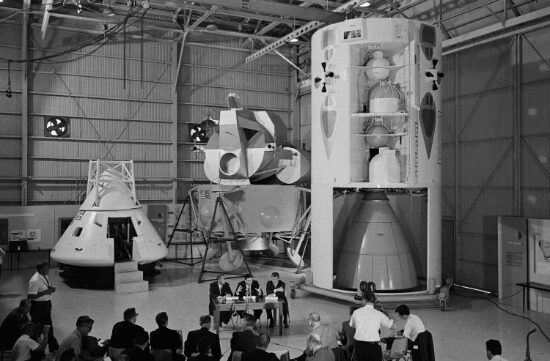
He had a mind for systems — for the way things worked, the way things could be made to work better. Somewhere along the way that mind caught the attention of people who were building something that had never been built before. Not a bridge. Not a building. Something pointed at the sky.
The space race was in its infancy. The word itself — space — still had a kind of electricity to it, like people weren’t entirely sure they were allowed to say it out loud. The Soviet Union had put Sputnik up in 1957 and the whole country felt the ground shift under its feet. We were behind. That wasn’t something Americans took sitting down.
The call came. We went.
Our first stop was Lompoc, California. Vandenberg Air Force Base sits on the central coast, where the land runs hard into the Pacific and the wind comes off the water cold even in summer. I was young. Young enough that what I remember most isn’t the base itself but the feeling of it — the size of everything, the purpose that seemed to hum through the air like something electric. Men in uniform moved with direction. Nobody wandered. Everyone was going somewhere.
I didn’t know where we were going yet. But I was learning that we were always going somewhere.
From Vandenberg we went to Pensacola, Florida. That’s Navy country — hot, flat, the Gulf of Mexico stretched out like a sheet of glass on a calm day. Then back west to Lancaster, California, which sits in the high desert at the edge of the Mojave. Edwards Air Force Base. Chuck Yeager had broken the sound barrier there just a few years before I was born. The dry lakebed runways stretched for miles. Test pilots flew things that didn’t have names yet. It was the kind of place where the future was being invented on a daily basis and nobody made much of a fuss about it.
I was a kid in the middle of all of it, trying to find the cafeteria in another new school.
That’s the part people don’t think about when they think about the space race. They think about the rockets. The launches. The astronauts with their white smiles and their flight suits. They think about Walter Cronkite and mission control and the whole magnificent theater of it.
They don’t think about the families.
They don’t think about the wives who packed the house again. The kids who learned to stop unpacking some things because there wasn’t much point. The friendships that never got past the early stages because by the time you found your footing in a new place, the orders came and you were gone.
I never stayed anywhere long enough to belong.
That’s not a complaint. I want to be clear about that. It’s just the truth. There’s a certain kind of loneliness that comes not from being alone but from being temporary. You’re present. You’re there. You’re eating lunch in the cafeteria and sitting in the classroom and riding your bike down streets that are starting to feel familiar — and then one day you’re not. And the street keeps going without you and nobody marks the spot where you stood.
From Lancaster we went back to Lompoc. Then north and east to Plattsburgh, New York.
Plattsburgh sits up near the Canadian border, where the winters are serious and the Cold War was not an abstraction. There were missile silos in the ground up there. Real ones. Atlas missiles pointed at the Soviet Union, ready on a moment’s notice. My father worked near that world — the machinery of deterrence, the infrastructure of the standoff that kept two superpowers from destroying each other by making sure both of them could.
I was a boy riding a bicycle through a town that sat on top of the end of the world, and nobody thought that was unusual because that was just Tuesday.
From Plattsburgh, Vandenberg again. Then Barstow, California — the Goldstone Deep Space Communications Complex, out in the Mojave Desert where the big dish antennas turned slowly and listened to signals coming from places so far away the light took minutes to arrive. They tracked spacecraft out there. Talked to probes. Kept the thread of contact with machines humanity had thrown into the dark.
Then Spencerville, Maryland. Goddard Space Flight Center. By now we were deep into the Apollo years. The moon wasn’t a dream anymore — it was a destination with a schedule.
And still I was the new kid. Still learning which hallway led to the gym.
All of that by 1972. I was seventeen years old.
Most people my age had one hometown. One set of friends they’d known since kindergarten. One diner, one ball field, one stretch of road they could drive with their eyes closed.
I had a continent. I had history. I had a front-row seat — or maybe a back-seat seat, which is more accurate — to one of the most extraordinary chapters America ever lived through.
My father helped build the architecture of the space age. He was one of thousands of men and women who showed up, did the work, moved when the work moved, and never asked for a parade.
I was the kid dragging a suitcase through it.
Nobody knew I was there.
But I was.
Post Library – Intelligent People Assume Nothing
Unauthorized commercial use prohibited.
© 2026 The Faust Baseline LLC