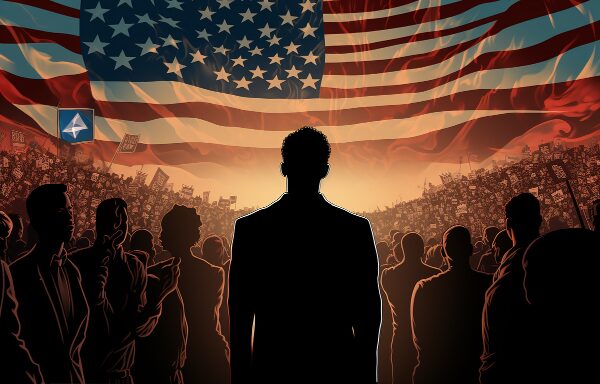
This coming July, the United States turns 250 years old.
That number alone should make a person pause for a moment.
Two hundred and fifty years is not just another birthday. In the life of nations, it is a long road. Most countries that have tried democracy never reach that age without collapsing, breaking apart, or changing so completely that the original system disappears.
Yet here we are.
The same Constitution still sits at the center of the American experiment. The same ideas about representation, individual liberty, and self-government still form the backbone of the country. Generation after generation has stepped into the same framework and tried to make it work in their own time.
That alone is something worth recognizing.
But anniversaries are not meant to be comfortable celebrations where everyone pats themselves on the back and goes home early. Milestones like this are supposed to make us ask harder questions.
Two hundred and fifty years forces a nation to look in the mirror.
Not just to admire what it built—but to ask whether the structure is still ready for the future.
Think about it the way a builder thinks about an old house.
If a house has been standing for 250 years, the foundation may still be solid. In fact, it is probably stronger than many modern buildings. But the wiring has likely been replaced more than once. The roof has been redone. The plumbing updated. Insulation added. Windows changed.
The house survives because people maintain it.
If no one touches it for long enough, even the strongest house eventually becomes unlivable.
That is where the United States finds itself right now.
The country is still standing. The framework is still recognizable. But the world around it is nothing like the one the founders knew.
In 1776 there were about three million people living in the colonies. News traveled by horseback. Information moved slowly. Communities were small. Government moved at the pace of letters and printed papers.
Today there are more than 330 million Americans. Information moves around the planet in seconds. A single message can reach millions before anyone has time to think about it. Technology reshapes industries overnight. Entire ways of living appear and disappear within a generation.
No one in Philadelphia in 1776 could have imagined a world like this.
And yet the same democratic framework has been asked to hold together through all of it.
That is remarkable.
But it also explains why the country feels so tense right now.
Many people look around and believe the nation is falling apart. Every disagreement feels like a crisis. Every election feels like a turning point. Every institution is being questioned from one side or the other.
But if you step back and look at the longer arc of history, something else becomes visible.
A 250-year-old democracy should be arguing about how it moves forward.
That was never a flaw in the American system.
It was part of the design.
The founders did not build a machine that would run forever without attention. They built a system that expected future generations to take responsibility for it. That is why amendments exist. That is why elections exist. That is why public debate exists.
Each generation eventually reaches a moment when it has to ask itself a simple question:
Are we going to maintain the house… or just keep fighting over who owns the front porch?
Right now it feels like much of the country is stuck in the second option.
Political tribes shouting across the yard.
Everyone convinced the other side is about to tear the place down.
But somewhere underneath all that noise is a quieter reality.
Two hundred and fifty years means the American experiment has already proven something important. The basic idea works. Free people governing themselves is not a fantasy. It can endure for centuries if enough citizens care about the structure holding it together.
The real challenge now is not defending the past.
It is preparing the system for the future.
That may mean updating laws that were written for a slower world. It may mean rethinking how institutions function in an age of constant information. It may mean strengthening civic habits that have weakened over time.
None of that requires abandoning the principles the country was built on.
In fact, it requires honoring them.
The founders believed every generation would have to carry part of the responsibility forward. They did not expect the country to freeze in place. They expected Americans to keep adjusting the system so it remained capable of serving the people who lived under it.
That is the real meaning of reaching 250 years.
It is not just a birthday.
It is a handoff.
A reminder that the system we inherited was never meant to sit untouched behind glass like a museum artifact. It was meant to be used, repaired, and strengthened by the people who came after.
Which means the moment we are living through right now may not be the beginning of the end.
It may simply be the country arriving at the age where maintenance matters more than invention.
The house is still standing.
The foundation is still there.
Now the question is whether we are wise enough to take care of it for the next two hundred and fifty years.
Post Library – Intelligent People Assume Nothing
Unauthorized commercial use prohibited.
© 2026 The Faust Baseline LLC