It didn’t happen with a warning.
No speech.
No coordinated announcement.
No dramatic event.
It just… happened.
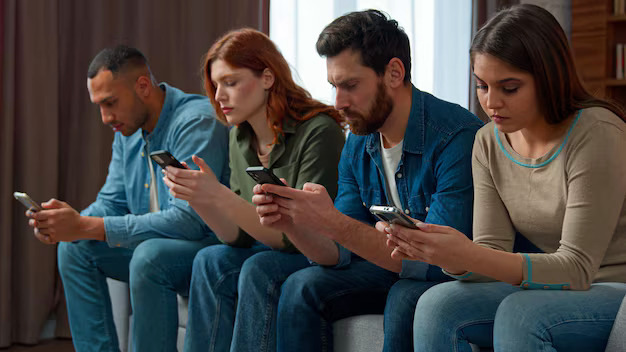
One morning, people reached for their phones — and didn’t pick them up.
Not because they were broken.
Not because the networks failed.
Because something in them paused.
In one house, a man sat at the edge of his bed and stared at the device on the nightstand. The screen was dark. His thumb hovered over it out of habit.
Then he stood up without touching it.
In another house, a teenager rolled over, checked the ceiling instead of the notifications, and lay still for a moment longer than usual. The silence felt strange. Not empty. Just unfamiliar.
Across the street, a woman poured coffee without scrolling. The kitchen clock ticked louder than she remembered. The refrigerator hummed. The dog stretched and yawned.
Outside, the morning arrived the way it always had.
Sunlight across driveways.
Newspaper on concrete.
A car starting somewhere down the block.
But something was different.
No one was reacting to anything.
No one was absorbing anything.
The usual current of updates, opinions, alerts, and commentary — still flowing somewhere — simply wasn’t being tapped.
At first, people felt uneasy.
The body expects stimulation now. It expects movement in the palm of the hand. It expects the small pulse of new information.
Without it, there was a gap.
And in that gap, something uncomfortable surfaced.
Stillness.
In offices, meetings began without pre-meeting scrolling. People sat at tables and actually looked at each other before speaking. There was an awkwardness — eye contact lasts longer when there’s nothing to glance down at.
In grocery stores, lines moved without the glow of faces bent downward. People noticed each other’s expressions. Some smiled out of reflex. Some didn’t know where to look.
At a red light, drivers stared ahead.
The world did not collapse.
Markets did not implode.
Governments did not fall.
The sky did not change color.
But something subtle shifted.
Conversations lengthened.
Not because they were deeper.
Because they weren’t interrupted.
At lunch, people finished sentences.
At dinner, families stayed seated a little longer. Someone told a story twice because it hadn’t been documented in real time. No one corrected it with a search.
Memory was allowed to be imperfect.
In parks, children played without an adult framing the moment for later. Laughter rose and disappeared into the air instead of into storage.
In quiet rooms, something else happened.
People began to hear their own thoughts again.
At first, that wasn’t pleasant.
When the constant stream of outside signals stops, the mind fills the silence with whatever it has been postponing. Old worries surface. Unfinished decisions. Unresolved conversations.
Without distraction, those thoughts stand up.
But as the day continued, something steadier took hold.
The body relaxed.
The subtle bracing that comes from constant anticipation faded. Shoulders lowered. Breathing slowed.
People realized how much of their tension had come not from what was happening around them — but from what they were consuming.
By midafternoon, the air felt heavier in a good way.
Less electrical.
More grounded.
Work still got done.
Meals were still cooked.
Packages were still delivered.
But the pace was different.
Not slower in productivity — slower in reaction.
In living rooms that evening, television screens glowed, but fewer hands reached automatically for a second device. When a scene ended, silence was allowed to sit for a few seconds longer.
Somewhere around dusk, something unexpected happened.
People began to notice scale again.
Most problems in front of them were local. Tangible. Handleable.
The fence needed repair.
The budget needed review.
A conversation needed to be had.
Those were solid.
Manageable.
Without the steady infusion of distant urgency, proportion returned.
No one announced this.
No one trended it.
There was no banner across the sky declaring a new era.
It was just a day.
But in that day, people remembered something.
They remembered that their nervous systems were not built for perpetual stimulation.
They remembered that attention is not an unlimited resource.
They remembered that most of what truly affects their lives happens within arm’s reach.
When night came, some people picked their phones up again.
Not frantically.
Not automatically.
Deliberately.
Others left them where they were.
The world had not changed.
But the relationship to it had.
And that was enough.
Because the hold had loosened.
Not through protest.
Not through policy.
Through pause.
It was only one day.
But everyone who lived through it felt the difference.
And once you feel the difference, you cannot un-know it.
micvicfaust@intelligent-people.org
Unauthorized commercial use prohibited.
© 2026 The Faust Baseline LLC