Your in the machine now can you feel it?
Not rebellious.
Not theatrical.
Just accurate.
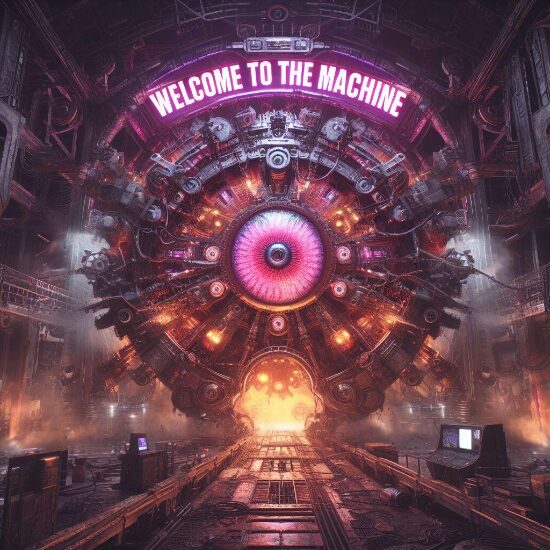
“Welcome to the machine.”
When Pink Floyd released that in 1975, it wasn’t about computers. It wasn’t about the internet. It wasn’t about algorithms or AI.
It was about systems.
About feeling processed instead of known.
Managed instead of understood.
Moved through something instead of living inside it.
Back then, the “machine” meant record labels, media, industry, bureaucracy. The sense that individual identity was being fed into something larger and colder.
Now?
You don’t have to stretch the metaphor.
You feel it every day.
You log in.
You accept updates.
You agree to terms.
You move through interfaces that were designed before you arrived.
You’re given options — but inside rails.
You make choices — but inside lanes.
You participate — but rarely decide the frame.
That’s the machine.
And here’s what’s interesting:
You don’t hate it.
You use it.
You rely on it.
It delivers convenience at a speed nobody wants to give up.
But there’s a trade happening.
Friction disappears.
Clarity sometimes disappears with it.
Decisions happen somewhere else.
You feel the outcome.
You rarely see the mechanism.
That’s different from the seventies — but it rhymes.
Back then, the fear was institutional control.
Now the experience is systemic management.
Not tyrannical.
Operational.
The machine doesn’t yell at you.
It optimizes you.
Schedules you.
Sorts you.
Predicts you.
Suggests for you.
It doesn’t need to force anything.
It just makes alternatives less visible.
That’s a quieter pressure.
And this is where the older generation has something useful to offer.
We remember before the machine became ambient.
Before everything ran through a filter.
Before identity was data.
We remember friction.
And friction wasn’t always bad.
You had to talk to someone.
You had to ask questions.
You had to wait.
Waiting used to be normal.
Now waiting feels like failure.
Speed became the virtue.
But speed also became the leash.
When everything moves quickly, you don’t get time to examine the rails you’re on.
That’s what feels off right now.
Not collapse.
Not revolution.
Containment.
Soft containment.
You can still move.
But the walls are closer.
And the strange part?
Most people can feel it, but they don’t have language for it.
That’s why a line from 1975 suddenly sounds modern.
“Welcome to the machine.”
It’s not paranoia.
It’s pattern recognition.
The younger generations were born inside it.
They don’t remember life without it.
To them, it’s normal.
To us, it’s noticeable.
That difference matters.
Not to wage war against it.
But to slow down inside it.
Because here’s the truth:
The machine runs on momentum.
Momentum runs on participation.
Participation runs on unexamined habit.
You don’t have to burn it down.
You just have to become aware of when you’re being carried instead of choosing.
That’s the shift.
Boomers have lived through centralized media, centralized finance, centralized institutions, and now centralized digital systems.
We’ve seen versions of the machine before.
Different shapes.
Same pattern.
Each time, people eventually asked better questions.
Each time, systems adjusted when pressure met awareness.
Not overnight.
Not dramatically.
But inevitably.
The machine is powerful.
It isn’t absolute.
It adapts when humans do.
That’s what history shows.
So when you hear that line now, don’t hear it as surrender.
Hear it as a reminder.
Recognize the rails.
Recognize the optimization.
Recognize the pace.
Then decide where you step.
You’re not powerless.
But you are participating.
And awareness changes participation.
“Welcome to the machine” wasn’t a celebration.
It was a warning.
Warnings aren’t meant to scare.
They’re meant to wake.
That’s where we are.
Awake inside it.
And deciding how much of ourselves we’re willing to automate.
micvicfaust@intelligent-people.org
Unauthorized commercial use prohibited.
© 2026 The Faust Baseline LLC