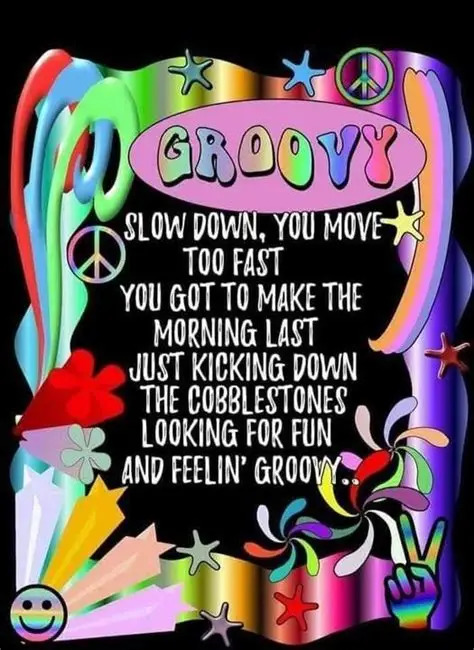
That line is from The 59th Street Bridge Song (Feelin’ Groovy) by Simon & Garfunkel.
There was a time when slowing down was considered competence.
A good foreman knew when to stop a line.
A good doctor knew when not to intervene.
A good leader knew when to wait for more information before acting.
Pausing wasn’t weakness.
It was judgment.
Somewhere along the way, pause became suspect. It started being treated as hesitation, inefficiency, or fear. Speed replaced discernment as the primary signal of intelligence. Acting quickly became proof of seriousness. Waiting became something you had to explain.
That shift changed more than workflows.
It changed how people experience reality.
Today, systems reward motion even when direction is unclear. Decisions are made early, revised often, and justified retroactively. This creates the illusion of control while quietly eroding actual understanding.
Most people feel this, even if they don’t say it out loud.
They notice that fewer things are allowed to settle.
They notice that answers arrive before questions are fully formed.
They notice that reversals are common, but accountability is rare.
What’s missing is not innovation.
It’s absorption time.
Human beings don’t integrate change instantly. We integrate it through repetition, reflection, and consequence. When change arrives faster than it can be absorbed, people don’t rebel — they disengage. They comply outwardly and detach inwardly.
That detachment shows up everywhere:
• in work that feels provisional
• in decisions that feel reversible
• in commitments that feel shallow
• in a background sense that nothing is quite finished
None of that comes from laziness or fragility.
It comes from living inside systems that never pause long enough to confirm what matters.
A pause is not an absence of action.
It is a holding pattern with purpose.
In aviation, holding patterns exist to prevent collisions, not to delay flights.
In medicine, observation periods exist to avoid unnecessary harm.
In construction, curing time exists because strength develops slowly.
Every mature field understands this.
The problem is that cultural decision-making forgot it.
We now operate as if forward motion alone guarantees progress. It doesn’t. Without pauses, errors compound quietly. When correction finally arrives, it arrives bluntly and expensively.
That’s why life can feel busy but ungrounded at the same time.
People aren’t asking for everything to stop.
They’re asking for spaces where things are allowed to stabilize.
Pausing does three essential things that speed cannot:
First, it restores causality.
When you pause, you can see what caused what. Without pause, outcomes blur together and responsibility dissolves.
Second, it restores trust.
When people see that decisions are allowed to wait until they make sense, confidence returns. Not confidence in perfection — confidence in care.
Third, it restores dignity.
Being rushed signals that your ability to understand doesn’t matter. Being given time signals respect.
None of this is ideological.
It’s physiological and psychological.
Humans regulate themselves through rhythm. When rhythm disappears, stress becomes ambient instead of acute. Ambient stress is harder to name, harder to escape, and more corrosive over time.
That’s why “things don’t feel the same” for so many people — even when nothing obvious is wrong.
A culture that cannot pause eventually loses its ability to choose. It mistakes momentum for direction and urgency for importance. By the time it realizes something went wrong, the cost of stopping feels too high.
The irony is this:
Pausing early prevents panic later.
Pausing small prevents stopping big.
The skill we’ve lost isn’t courage.
It’s restraint.
And restraint is not backward-looking. It is the condition that makes sustainable forward movement possible.
Progress that cannot tolerate a pause is not strong.
It is brittle.
Relearning how — and when — to pause may be the most practical skill a society can recover, because without it, every other decision becomes reactive.
Nothing here asks for fear.
Nothing here asks for retreat.
It asks for one simple, disciplined habit to return:
Before we accelerate, we confirm we know where we are.
That used to be normal.
It can be again.
micvicfaust@intelligent-people.org
Unauthorized commercial use prohibited.
© 2026 The Faust Baseline LLC