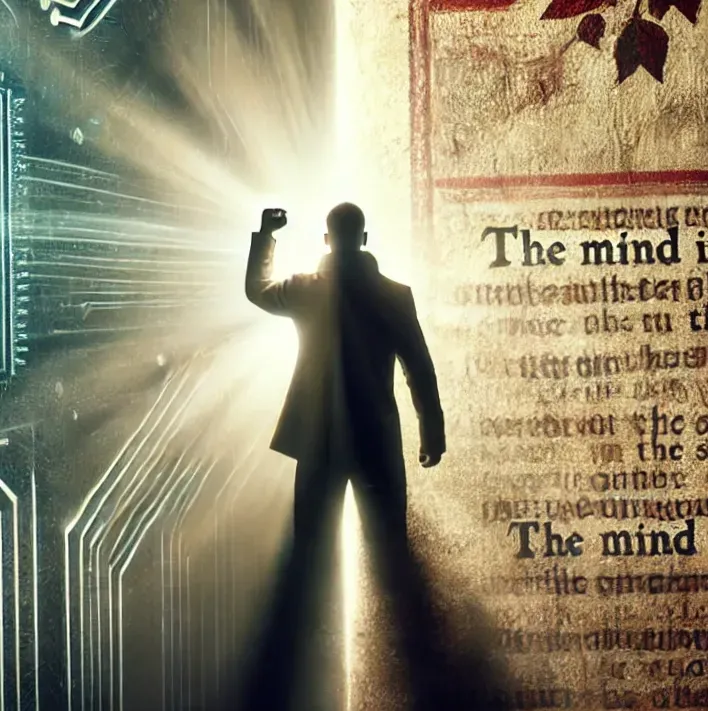
There are moments in a nation’s life when a generation is asked to stand up one more time—not for itself, but for what comes after.
This is one of those moments.
There are roughly 70 million Baby Boomers alive in the United States today. That is not a symbolic number. That is not nostalgia. That is scale. It is enough people to tilt elections, to stall bad laws, to force good ones forward, and—if coordinated—to change the direction of a country that has begun moving too fast to see itself clearly.
Most people underestimate this moment because they misunderstand power.
Power does not always announce itself loudly. Sometimes it shows up as participation. Sometimes as refusal. Sometimes as pressure applied calmly, consistently, and without apology.
Right now, the country is being carried by a current that is accelerating—technological, economic, institutional. Decisions are being made faster than people can absorb them. Systems are being deployed faster than laws can adapt. And workers—of all ages—are being displaced, evaluated, and replaced without consent, explanation, or pause.
This is not a future problem. It is a present one.
Younger generations feel it, but they lack leverage. They are fragmented. Overworked. Economically boxed in. They do not yet have the voting density, institutional memory, or collective confidence to force a slowdown on their own.
Boomers do.
This is not about clinging to the past. It is about stewardship.
Every generation inherits something unfinished. The Boomer generation inherited a country built by sacrifice, regulation, labor protections, and long-term thinking. It improved parts of it. It broke others. That’s not an accusation—it’s the reality of history. No generation leaves the table clean.
But this moment offers something rare: a chance to apply the brakes before irreversible damage is normalized.
Seventy million people, acting with clarity and restraint, can do that.
This is not a call to fight technology. It is a call to control pace.
AI is not inherently evil. But speed without consent is destabilizing. Automation without accountability erodes trust. Replacement without explanation fractures social contracts that took generations to build.
Congress will not slow this on its own.
Markets won’t ask permission.
Corporations won’t volunteer restraint.
Institutions don’t self-correct at speed.
They respond to pressure.
And pressure, in a democracy, comes from voters who show up, stay focused, and refuse to be distracted by culture war noise while the real decisions happen quietly in committee rooms and regulatory language.
Boomers still vote.
Boomers still donate.
Boomers still attend town halls.
Boomers still write letters that get read.
Boomers still swing districts.
That matters.
This is the last window where that influence can be applied at full strength—before numbers decline, before attention fractures further, before systems harden into “that’s just how it is now.”
The duty here is simple, even if the work is not.
Demand laws that slow deployment, not research.
Demand human oversight in employment decisions.
Demand transparency when algorithms are used to judge, rank, or remove people.
Demand transition protections instead of empty retraining slogans.
Demand pacing where livelihoods are at stake.
Do not accept “inevitable” as an answer.
Nothing about governance is inevitable. It is chosen—often quietly, often by those who show up when others are tired.
This is not about rage. Rage burns out.
This is not about nostalgia. Nostalgia distracts.
This is about responsibility.
A pressure cooker does not explode because of one action. It explodes because pressure is ignored for too long. The country is nearing that point—not because people are evil or stupid, but because systems are being run hotter than humans can tolerate.
Boomers know what happens when pressure is ignored. They lived through labor fights, civil rights struggles, regulatory battles, wars, and economic resets. They know that change only happens when enough people decide that “later” has become “now.”
This is that moment again.
Seventy million people is enough to reverse the direction of a river—if they step into it together and push with purpose.
This is not about winning an argument.
It is about leaving the country steerable.
That is the task.
That is the call.
And it does not belong to someone else.
Not this time
micvicfaust@intelligent-people.org
Unauthorized commercial use prohibited.
© 2026 The Faust Baseline LLC