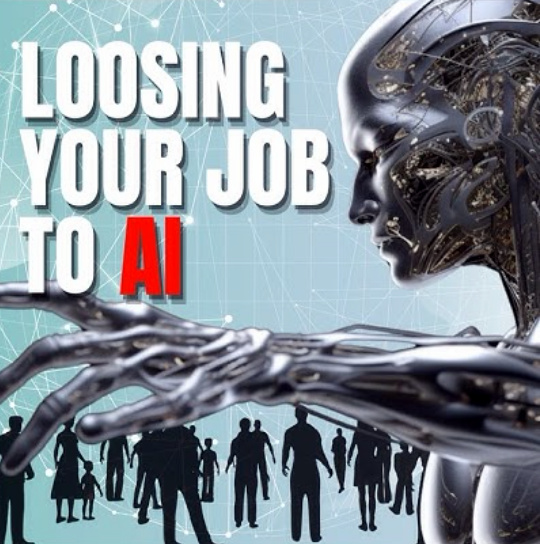
Something important needs to be said plainly, without slogans or panic.
Workers who are being displaced or cornered by AI are not powerless.
But the way they’ve been told to respond is wrong.
Right now, most people feel this pressure individually. One layoff here. One “role restructured” there. One team quietly shrunk. One skill suddenly “no longer needed.” That fragmentation is not accidental. It keeps people isolated, doubting themselves, and unsure whether what they’re experiencing is real or just bad luck.
It is real.
And it is shared.
The problem is not AI itself. The problem is pace without consent.
Technology has always changed work. That part is not new. What is new is how quickly decisions are being made, deployed, and normalized without time for workers, institutions, or laws to adapt. People aren’t being asked to transition. They’re being expected to absorb shock silently.
That’s where pressure builds.
History shows something very consistent: when large numbers of people feel their livelihood is being altered without voice or recourse, they don’t immediately revolt. First, they pull back. Then they organize. Then they demand structure.
We are between the first and second stage right now.
Many workers are asking a quiet question:
“Do we actually have any leverage here?”
The answer is yes—but only if it’s used correctly.
Workers don’t gain leverage by attacking technology. That gets dismissed as fear. They don’t gain leverage by demanding bans. That gets labeled unrealistic. And they don’t gain leverage by turning this into a partisan shouting match. That gets absorbed into noise.
Leverage comes from forcing accountability around deployment, not invention.
That distinction matters.
No serious lawmaker believes AI research can be stopped. Knowledge doesn’t reverse. But deployment can be slowed, staged, conditioned, and supervised—especially when it directly affects employment, evaluation, access, or livelihood.
This is where pressure becomes effective.
In the United States, the political reality is simple: workers who are economically uncertain and politically mobile scare politicians more than any lobbyist memo. They swing districts. They show up when something hits close to home. And they don’t need to agree on ideology to agree on one thing:
“Don’t make decisions about our lives faster than we can adapt.”
That message cuts across party lines, but it lands most sharply inside the Democratic Party, because of an internal tension they can’t avoid.
Democrats publicly stand for labor protection, fairness, and worker rights. At the same time, they are deeply tied to tech donors, innovation narratives, and competitiveness framing. That contradiction creates a pressure point. When voters press calmly and consistently on pace and protection, it forces a choice.
And that’s where laws start moving.
What should workers actually demand?
Not grand speeches. Not abstract ethics. Mechanisms.
First: deployment pacing in employment systems.
Any AI used for hiring, firing, scheduling, performance scoring, or promotion should be subject to staged rollout requirements. Notice periods. Pilot phases. Reporting obligations. Cooling-off windows before full replacement. These are not radical ideas. They already exist in other high-impact domains like aviation, medicine, and infrastructure.
Second: mandatory disclosure and human review.
Workers should never discover after the fact that an algorithm evaluated, downgraded, or eliminated them. Disclosure should be required, and any adverse decision should be reviewable by a real human with authority. Not a form. Not a chatbot. A person.
That single requirement restores dignity and slows reckless use immediately.
Third: transition accountability, not empty retraining promises.
“Reskilling” has become a slogan that hides responsibility. Workers should demand that employers who deploy AI at scale fund real transition pathways tied to actual jobs—not vague certificates or inspirational webinars. Outcomes should be tracked. Failure should be visible.
This shifts cost back where it belongs.
Now the harder truth: none of this happens unless workers stop treating this as a private failure.
You don’t need outrage. You need coordination.
Pressure works when:
– Workers tell specific, verifiable stories
– Those stories are tied directly to AI deployment decisions
– Demands are framed around pace, oversight, and accountability
– The language stays calm and specific
Politicians are trained to ignore chaos. They are not trained to ignore organized, reasonable demands that large numbers of voters share.
This is why the next year matters.
As economic anxiety rises, as AI displacement becomes more visible, and as elections approach, lawmakers become more sensitive to organized signals. Not Twitter storms. Not viral clips. Structured pressure.
Letters. Testimony. Local meetings. Union and professional group coordination. Public commitments extracted from candidates. Clear questions asked repeatedly:
Will you support pacing rules?
Will you protect human review?
Will you prevent fully automated job loss decisions?
Once those questions are on record, silence becomes costly.
Here’s the most important thing to understand:
Slowing the pace is not resisting the future.
It is shaping it so humans survive the transition with agency intact.
People are not asking for miracles.
They are asking not to be run over.
If enough workers say that plainly—and refuse to be shamed for it—the system will respond. It always does. Not out of kindness, but out of necessity.
The brakes aren’t about stopping the machine.
They’re about making sure the people inside aren’t thrown out while it’s still moving.
That is not fear.
That is civic responsibility.
micvicfaust@intelligent-people.org
Unauthorized commercial use prohibited.
© 2026 The Faust Baseline LLC